_edited.png)
Packaged Sandwiches Wholesale: Vending Buyer's Guide

You're staring at the same problem every route owner runs into sooner or later. The machine is full of chips and candy, the staff still complains about lunch, and the “fresh food” option keeps failing because nobody wants a sad, lukewarm sandwich that sat too long. Packaged sandwiches wholesale fix that if you buy and run them like a real food program, not like an afterthought.
The category is bigger than a backup snack. The global pre-packaged sandwiches market was valued at USD 1.74 billion in 2023 and is projected to grow at a 4.9% CAGR from 2024 to 2030 (Grand View Research). In the U.S., packaged-sandwich demand was estimated at USD 513.61 million in 2024 and forecast to reach USD 816.78 million by 2033 (Deep Market Insights). If you're serving break rooms, hospitals, campuses, or transit-heavy sites, this is a traffic driver, not a niche SKU.
Why Packaged Sandwiches Are a Vending Game Changer
The first time an operator swaps stale convenience items for a chilled sandwich door, the difference shows up fast. Employees stop treating the machine like a last resort. Facilities managers stop hearing complaints about “nothing to eat,” and your route starts looking less like a snack run and more like a food service program.
From passive vending to real meal coverage
A good sandwich program changes what people expect from the machine. Instead of a low-commitment snack, you're offering something substantial enough for lunch, late shifts, and in-between classes. That matters because the broader market data shows real demand behind it, the global category is not fringe, it's established and growing (Grand View Research).
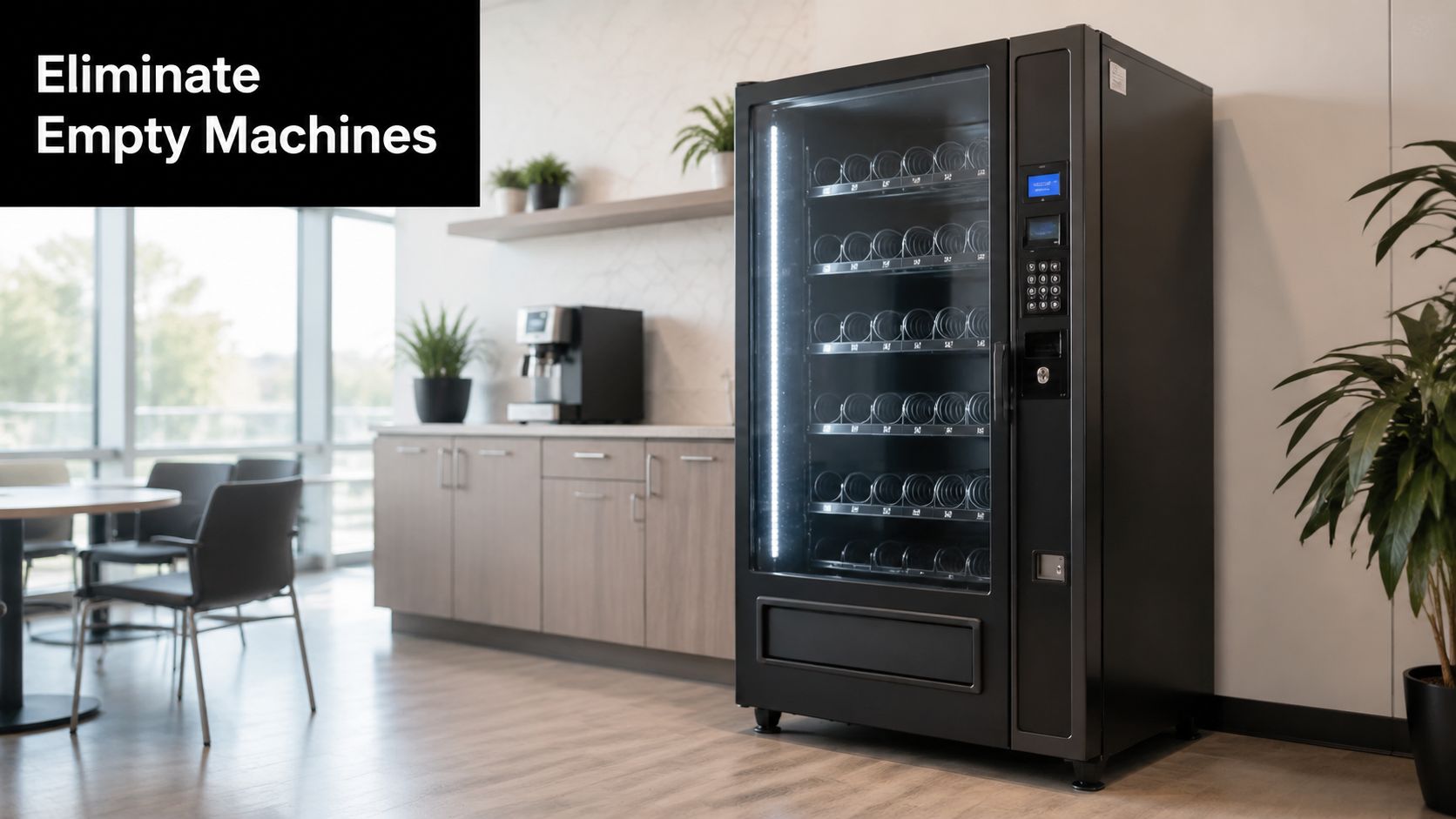
I've seen the same pattern across office parks and healthcare sites. The machine that sells only shelf-stable snacks gets ignored after lunch. The one with a legitimate chilled food option gets visited before shifts, during breaks, and again on the way out.
Practical rule: If the product doesn't feel like lunch, don't expect lunch-level engagement.
Why premium food changes the economics
Cashless payment makes this easier, because people buying lunch don't want friction. If the machine accepts modern payment methods and the sandwich looks fresh, the buyer is far more willing to pay for convenience. The category's size in major markets supports that behavior, especially in channels that already sell ready-to-eat food at scale (Deep Market Insights).
The strategic mistake is treating sandwiches like a novelty add-on. They're not. They're the item that turns a vending machine into a repeat-use stop, which is exactly what you want in a break room. If your goal is more traffic, better contract retention, and less churn on location performance, sandwiches belong in the core plan.
Market Demand and Revenue Potential
The numbers support a stronger sandwich assortment, but only if you use them correctly. Don't buy chilled food because it sounds premium. Buy it because the category has enough scale to justify cold-chain handling, faster replenishment, and a better sales story when you pitch a location manager.
The market is large enough to matter
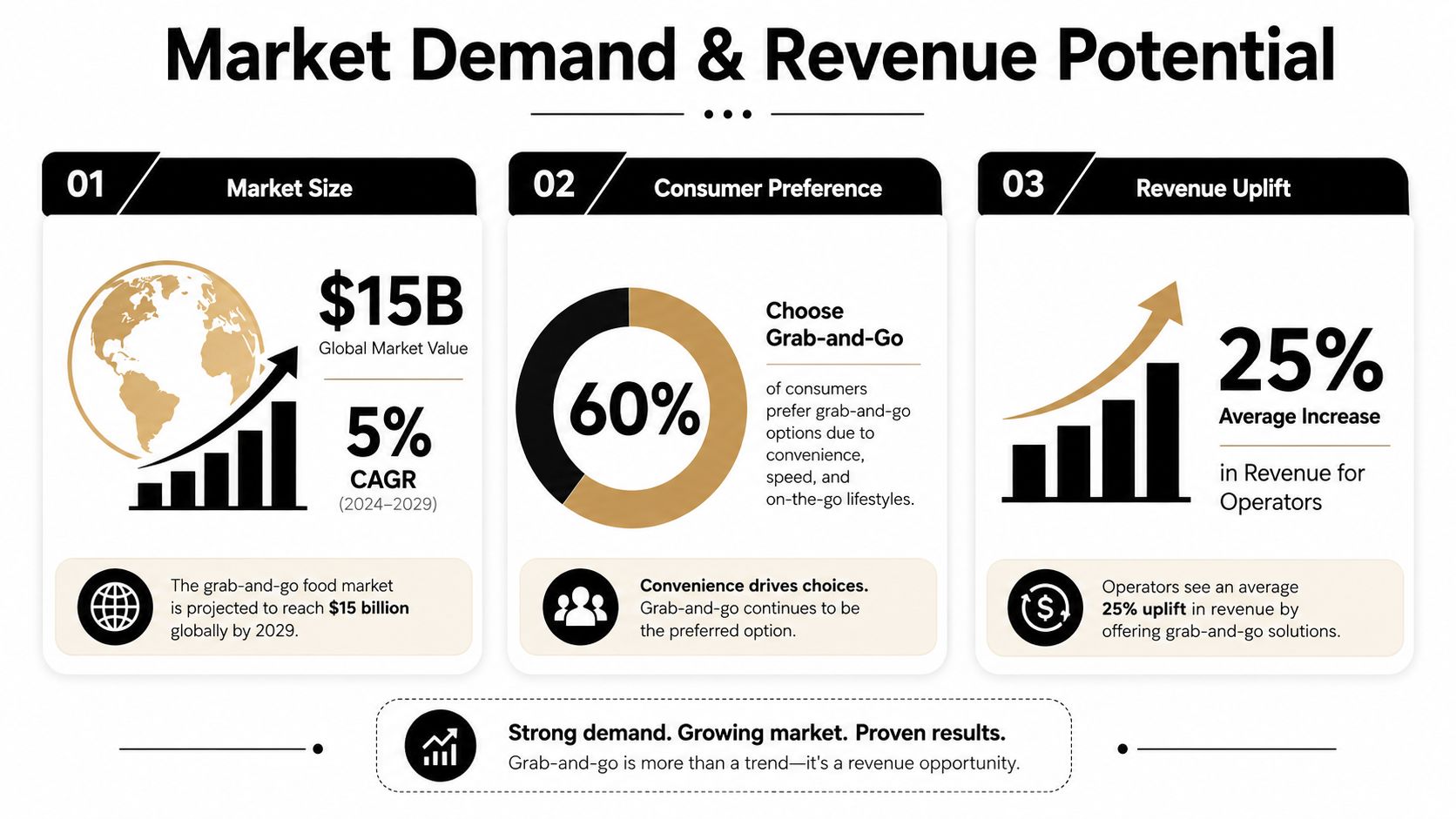
The clearest signal is that multiple market trackers place packaged sandwiches in serious revenue territory. One estimate values the global pre-packaged sandwiches market at about US$1.9 billion in 2024, with growth to US$2.3 billion by 2030 at a 3.8% CAGR (Market Research). Another global forecast puts the category at US$18.4 billion in 2024 and US$28.7 billion by 2034, a 4.5% CAGR (Emergen Research).
Those estimates differ, but the direction is the same. Demand is growing, and buyers keep pulling the category toward convenience. That gives you room to justify chilled vending in workplaces, schools, hospitals, and travel-oriented locations.
The product mix matters too. The global market data says the non-vegetarian segment accounted for 71.1% of revenue in 2023 (Grand View Research). For a route owner, that means protein-forward, meat-based items are still the commercial center of gravity. If you load a cabinet with only specialty vegetarian choices, you're fighting the market instead of serving it.
Why regional concentration helps operators
North America keeps showing up as the lead market in the available estimates. An earlier Grand View Research release placed North America at 30.0% of global revenue in 2018, and later estimates still identify it as the leading regional market (Grand View Research). That matters because routes in the U.S. and Canada can lean on a mature buyer base that already understands grab-and-go food.
For vending operators, the key takeaway is simple. A sandwich program is easier to defend financially when you can point to category scale and a clear buyer preference for ready-to-eat food. If you need to support a pricing conversation with a facilities director, start with the break room pricing framework and connect it to the fact that lunch buyers will pay for convenience when the product looks safe, clean, and worth it.
Packaging Technology and Shelf Life Realities
A bad package can wreck a good sandwich program fast. Bread softens, fillings shift, seals fail in the cooler, and the whole route starts bleeding margin through waste and refunds. Wholesale sandwich packaging has to be treated as part of the operating system, not as a box on top of the product.
Oxygen and moisture control beat simple containment
A useful patent for bulk sandwich packaging says the pack should be inexpensive, transparent, flexible, and provide a barrier to oxygen and moisture while staying tough enough for casual handling and storage for 3 to 5 weeks (US6245368B1). That is the right operating standard for vending. The goal goes beyond preventing crush damage, it is about actively managing the microenvironment around each sandwich.
Lower oxygen transmission slows oxidation and helps hold the product together longer. Moisture control protects the bread from staling and keeps the filling from turning the pack soggy. If the film, seal, or tray is weak, the freshness window shrinks even when the product starts out clean.
The package buys time only when the cooler, seal, and rotation discipline stay tight.
Operators lose money when they chase the cheapest pack and then absorb the waste later. A better film, a stronger seal, or a better tray often protects more margin than saving a few cents on unit cost. If you are running a refrigerated program, tie packaging choices to your smart cooler vending setup so the product and the machine work together instead of fighting each other.
What to look for on a spec sheet
The wholesale side has to stay reproducible. One product spec for a chicken-cheese-mayo sandwich lists an average product weight of 180 g with an acceptable range of 170 to 190 g (Moco Food Services PDF). That tolerance tells you the supplier is controlling portions, and it tells you your inventory and pricing assumptions need to be built around a consistent unit, not a guess.
The same sourcing discipline shows up in labeling. Prepacked sandwiches need the food name, ingredients list, allergen details, quantitative ingredient declarations, nutritional declaration, durability date, manufacturer details, and storage instructions. This documentation requirement drives supplier discipline. It forces wholesalers to standardize assembly, dose ingredients accurately, and keep chilled handling consistent so the label still means something at the point of sale.
Packaging specs matter too. Use compliant food and drug films where the application calls for it, then check that the supplier can prove the film, seal, and storage requirements line up with the product's shelf-life target. For a broader packaging framework, product quality standards should sit beside your cold-chain checklist. If the supplier cannot document the package, the label, and the handling expectations, do not load their product into a machine customers trust for lunch.
How to Vet Wholesale Suppliers and Distributors
Price matters, but it's not the first filter. If you buy sandwiches from the wrong supplier, you're signing up for spoilage, unhappy buyers, and a lot of route corrections you didn't budget for. A strong supplier passes three tests before you even talk about menu fit, cold-chain integrity, and delivery discipline.
National distributor or local producer
National distributors usually win on consistency and route coverage. They're better when you need predictable replenishment across a broader footprint and fewer surprises on ordering. Local bakeries and sandwich shops often win on freshness, flexibility, and faster reaction when a location suddenly sells through faster than expected.
That's not a moral choice. It's a logistics choice. If your route sits in one metro and you need short lead times, a local partner can be a huge advantage. If you manage multiple sites spread across a region, the national player may be the safer backbone.
The supplier checklist that prevents expensive mistakes
Use a hard checklist and stick to it.
Verify cold-chain handling: Ask how the product stays chilled from production to delivery, and don't accept vague answers.
Check delivery cadence: Make sure the supplier can match your route frequency without forcing overstock.
Review minimum order quantities: If MOQs are too high, waste will eat your margin.
Inspect packaging performance: Look for moisture resistance, seal quality, and durability under handling.
Confirm documentation: Demand ingredient, allergen, and storage information before a first order.
That packaging standard matters enough that it's worth understanding the materials side too. If you're sourcing containers or film systems, the guidance around compliant food and drug films is a useful reference point for thinking about barrier properties and food-contact expectations.
What a good supplier relationship actually looks like
A reliable supplier doesn't just drop boxes and disappear. They tell you how long the product can sit in your cooler, how it should be rotated, and what happens when a delivery is short or delayed. If they can't answer those questions clearly, you'll spend your time managing their mistakes.
Bottom line: buy from suppliers who can support your route, not just quote it.
Integrating Fresh Food into Smart Vending Programs
A smart vending program breaks the guesswork out of packaged sandwich sales. Telemetry shows what sold, what sat too long, and which chilled items are moving before the machine looks bare. That matters because perishable stock punishes slow decisions and sloppy replenishment.
Use data to match assortment to location behavior
A break room beside a warehouse does not buy like an office lobby. A hospital night shift does not shop like a campus crowd during the day. The machine needs to reflect that, and the assortment needs to change when the sales pattern changes.
Telemetry is the operational edge here. If a sandwich sells early every Monday and barely moves on Thursday, you need a data-driven reorder rule. If one filling stalls while another disappears, the mix should change. That is how you cut spoilage without starving the machine.
The old habit is to load the same lineup everywhere and hope each site accepts it. That is lazy and expensive. A smarter program watches the sales velocity of each chilled item, then refills based on actual demand instead of habit.
Feedback loops keep the menu honest
Customer feedback matters because the people using the machine will tell you what the numbers do not explain. A location may want more turkey and fewer breakfast options. A site with shift workers may want heavier lunch items and less variety. You do not need a massive survey to learn that, you need a consistent way to listen.
A useful vendor setup connects machine performance with direct comments from the site manager and the end user. That catches small problems before they turn into dead inventory. If you want a practical reference for faster stock decisions, real-time inventory tracking gives you the kind of visibility that shortens response time.
The biggest mistake is treating fresh food like a fixed planogram. The menu requires ongoing review, trimming, and adjustment based on who is buying. That is how you keep a premium item profitable in a refrigerated machine.
Strategic Takeaways for Vending Growth
If you want fresh food to improve a route, stop thinking like a snack buyer. Think like an operator building a repeat-use meal destination. Packaged sandwiches wholesale can lift traffic, but only when you buy for freshness, manage by data, and protect the cold chain like it matters.
The strategic move is simple. Start with a disciplined product mix, favor the items your market already prefers, and hold suppliers to real documentation and delivery standards. Then let the machine data tell you what to expand, what to cut, and what to replace.
That approach is especially useful when you need to justify the program to a customer. Corporate buyers care about consistency, cleanliness, and employee satisfaction. A machine that reliably offers fresh lunch options is easier to renew than one that only looks good on install day.
For operators who want a tighter management loop, performance reporting should be part of the normal review cycle, not an optional extra. The machines that win long term are the ones that stay stocked with products people buy, then prove it in the numbers.
If you're building or upgrading a fresh food vending program, Vendmoore Enterprises can help you put the right mix, telemetry, and service rhythm in place for better break room engagement. Visit Vendmoore Enterprises to see how a smarter vending setup can support your location strategy and keep traffic moving.
Comments