_edited.png)
Unlock Growth with Inventory Management Best Practices for Vending Services

An empty vending slot is more than just a missed sale; it's a moment of disappointment in the break room. For businesses in Oklahoma, from corporate offices in Tulsa to manufacturing sites in Oklahoma City, the quality of their on-site break room and vending services is a direct reflection of their company culture and commitment to employee well-being. What separates a merely 'stocked' machine from a smart, responsive vending hub that your team actually values? The secret is a sophisticated, data-driven approach to inventory, the hallmark of a premier vending operator.
This guide moves beyond basic stock-checking to explore the top 10 inventory management best practices tailored specifically for the modern vending service landscape. Mastering these techniques is crucial for any vending operator aiming to deliver flawless break room solutions. When implemented correctly, these strategies ensure that every vending machine is consistently filled with the products your employees, students, or visitors want most, eliminating stockouts and minimizing waste—key signs of a professional vending service.
We will detail actionable strategies that transform your break room from a simple convenience into a seamless, satisfying experience. From AI-powered demand forecasting that predicts popular items to just-in-time replenishment that keeps products fresh, these methodologies are the engine that powers leading vending operators. For organizations seeking reliable and intelligent vending services or break room solutions, understanding these core principles is key. Discover how a commitment to superior inventory management can elevate your workplace amenities, turning them into a powerful tool for employee engagement and operational excellence.
1. Real-Time Inventory Tracking and Automation
Real-time inventory tracking is a cornerstone of modern inventory management best practices for vending services. This method leverages technology like IoT sensors and cloud-based software to monitor stock levels in every machine instantly. By eliminating manual counts and guesswork, a vending operator gains an accurate, up-to-the-minute view of the entire inventory, from the warehouse to individual vending machines, ensuring your break room is always ready.
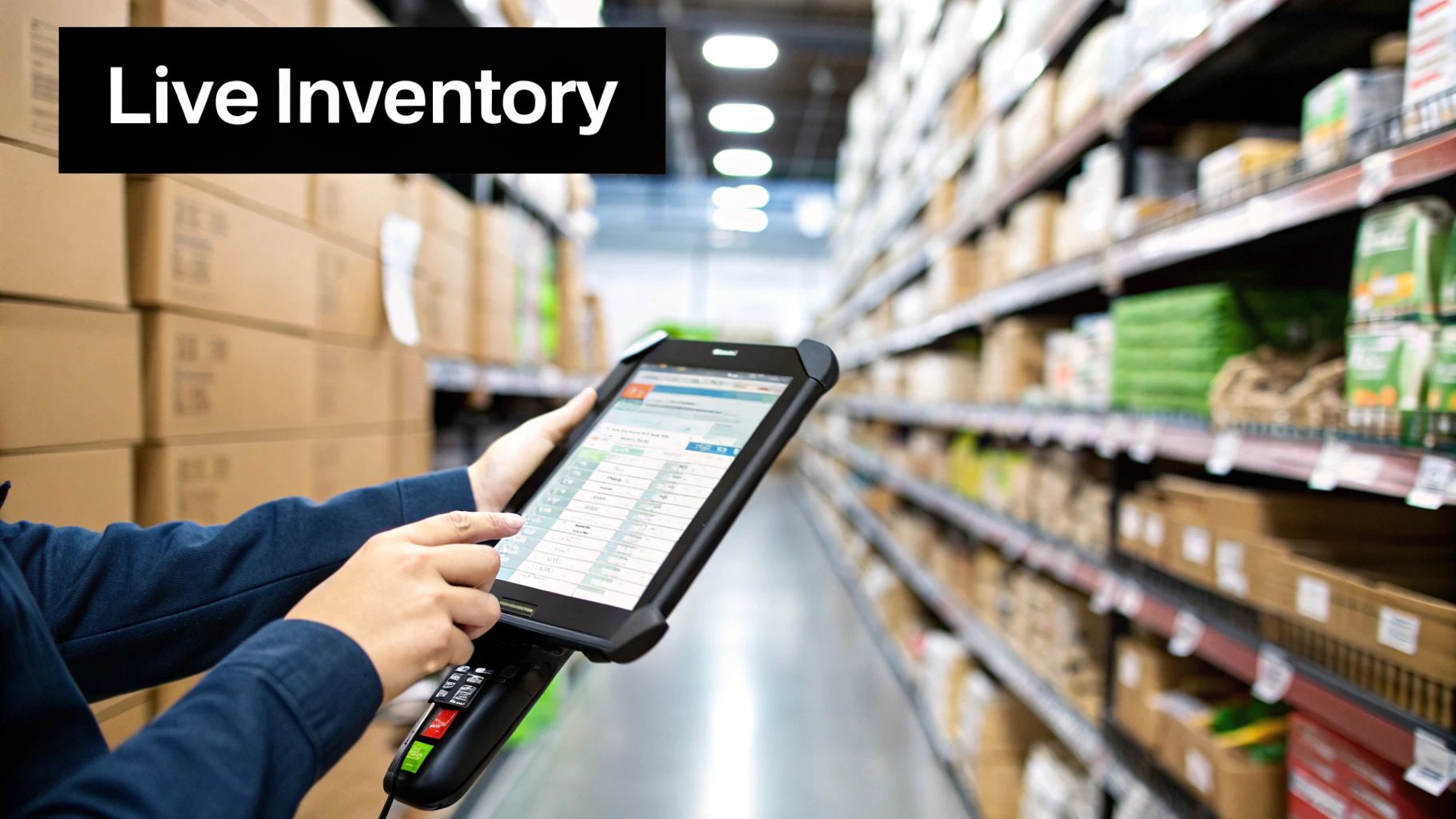
This continuous visibility is transformative for vending operations, enabling data-driven decisions that reduce stockouts and prevent overstocking of perishable items. For facilities like hospitals or busy corporate offices, ensuring popular items are always available directly impacts employee satisfaction and showcases a high-quality vending service.
How to Implement Real-Time Tracking
Implementing this practice involves integrating smart technology into the vending service workflow. For smart vending, this means outfitting machines with sensors that report sales and stock levels back to a central system. This data can automatically trigger replenishment alerts or even generate pick lists for route drivers, optimizing their daily schedules to keep break rooms perfectly stocked. To gain a deeper understanding, you can explore the various inventory management systems designed for vending services.
Actionable Tips for Vending Operators:
Start Small: Begin by piloting real-time tracking on your highest-traffic machines or with your fastest-selling products to prove the concept and ROI.
Ensure Integration: Select a system that integrates seamlessly with your existing management software to create a unified data ecosystem for your vending business.
Automate Alerts: Configure your system to send automated notifications for low stock, expiring products, or machine malfunctions, enabling proactive vending service.
By adopting real-time tracking, a vending operator shifts from a reactive to a predictive operational model. This not only enhances efficiency but also ensures your break room solutions consistently meet the demands of your clients, whether they are in a university, manufacturing plant, or a bustling airport.
2. ABC Analysis (Inventory Categorization)
ABC analysis is a fundamental inventory management practice that categorizes products based on their value and importance to your vending service. This technique, rooted in the Pareto Principle (the 80/20 rule), divides your stock into three distinct classes: 'A' for high-value, top-selling items, 'B' for moderate-value items, and 'C' for low-value items. By segmenting inventory this way, a vending operator can allocate management resources more effectively, focusing intense control on the products that matter most to the bottom line.

For a vending operator, this means not all products are treated equally. A premium energy drink (an 'A' item) driving significant revenue requires tighter monitoring than a slow-moving candy bar (a 'C' item). This prioritization ensures your most profitable products are never out of stock, directly protecting your revenue streams in high-traffic locations like hospitals and corporate break rooms.
How to Implement ABC Analysis
To implement this practice, a vending service starts by calculating the annual consumption value for each product (annual demand multiplied by item cost). Rank your products from highest to lowest value. 'A' items typically represent the top 20% of your products that account for 80% of consumption value. 'B' items are the next 30% of products accounting for 15% of value, and 'C' items are the remaining 50% of products making up the final 5% of value.
Actionable Tips for Vending Operators:
Establish Clear Categories: Define the value thresholds for your A, B, and C items. For example, A-items are your top 15% of SKUs by revenue, B-items are the next 35%, and C-items are the bottom 50%.
Tailor Replenishment Strategies: Apply stricter reorder points and more frequent cycle counts for your 'A' items. 'C' items can be managed with more relaxed controls, such as periodic or visual reviews.
Review and Reclassify Regularly: Consumer tastes change. A professional vending operator reviews ABC classifications quarterly to ensure they accurately reflect current sales trends and product performance.
By adopting ABC analysis, you transition from a one-size-fits-all approach to a strategic, tiered system of inventory control. This focus ensures that your management efforts are always aligned with your most critical products, optimizing stock levels and maximizing profitability across your entire network of vending machines.
3. Safety Stock Optimization
Safety stock optimization is one of the most critical inventory management best practices for preventing costly stockouts in vending machines. This strategy involves maintaining a calculated buffer of inventory to safeguard against unforeseen fluctuations in demand and supply, such as sudden product popularity spikes or unexpected supplier delays. The objective is to strike a precise balance between the cost of holding extra products and the lost revenue and customer dissatisfaction caused by an empty machine in the break room.
For a vending operator, this means ensuring high-demand items in a busy hospital or university break room are always available, even if a delivery is late. By using data-driven methods instead of guesswork, you protect your revenue streams and maintain a reputation for reliable vending services, which is paramount in corporate and healthcare environments.
How to Implement Safety Stock Optimization
Implementing this practice requires a shift from arbitrary buffer levels to a more scientific approach. A vending service analyzes historical sales data, supplier lead times, and demand variability to calculate the ideal amount of extra stock for each specific product. For example, a popular energy drink with consistent sales may require less safety stock than a new, seasonal snack with unpredictable demand.
Modern inventory management software automates these complex calculations, recommending optimal levels. This ensures that your investment in extra inventory is placed exactly where it's needed most, minimizing waste from expired products while maximizing sales opportunities. For more details on building a resilient break room supply chain, consider our insights on enhancing your vending services.
Actionable Tips for Vending Operators:
Segment Your Products: Classify items based on sales velocity and profit margin (ABC analysis). Apply higher safety stock levels to your fast-moving, high-profit "A" items.
Analyze Supplier Performance: Track lead time variability for each supplier. The less reliable a supplier is, the more safety stock you will need for their products.
Review and Adjust Regularly: Market trends and consumer preferences change. Vending operators should review and recalculate safety stock levels quarterly to align with current demand patterns.
By optimizing your safety stock, you create a resilient vending operation that can handle unpredictability without disappointing customers. This strategic buffer is your insurance against the unexpected, ensuring your vending solutions in airports, manufacturing plants, and offices remain a dependable source of refreshment.
4. Real-Time Inventory Tracking and Automation
Real-time inventory tracking is a cornerstone of modern inventory management best practices. This method leverages technology like IoT sensors, RFID tags, and cloud-based software to monitor stock levels, locations, and movements instantly. By eliminating manual counts and guesswork, you gain an accurate, up-to-the-minute view of your entire inventory, from the warehouse to individual vending machines.
This continuous visibility is transformative for vending operations, enabling data-driven decisions that reduce stockouts and prevent overstocking of perishable items. For facilities like hospitals or busy corporate offices, ensuring popular items are always available directly impacts satisfaction and revenue. This practice is so effective that retail giants like Walmart have used it to boost inventory accuracy to over 95%, a standard of excellence vending services strive to replicate.
How to Implement Real-Time Tracking
Implementing this practice involves integrating smart technology with your operational workflow. For smart vending, this means outfitting machines with sensors that report sales and stock levels back to a central system. This data can automatically trigger replenishment alerts or even generate pick lists for your route drivers, optimizing their daily schedules. To gain a deeper understanding, you can explore the various inventory management systems designed for vending services.
Actionable Tips for Vending Operators:
Start Small: Begin by piloting real-time tracking on your highest-traffic machines or with your fastest-selling products to prove the concept and ROI.
Ensure Integration: Select a system that integrates seamlessly with your existing management software to create a unified data ecosystem.
Automate Alerts: Configure your system to send automated notifications for low stock, expiring products, or machine malfunctions, enabling proactive service.
By adopting real-time tracking, you shift from a reactive to a predictive operational model. This not only enhances efficiency but also ensures your break room solutions consistently meet the demands of your clients, whether they are in a university, manufacturing plant, or a bustling airport. This commitment to advanced inventory management best practices guarantees a superior and reliable vending experience.
5. Demand Forecasting and Predictive Analytics
Demand forecasting is a critical component of modern inventory management best practices, moving beyond simple historical averages to predict future sales with greater accuracy. This method uses historical data, seasonal trends, and advanced algorithms to anticipate what customers will want and when. For a vending business, this means knowing which snacks will be popular in a university library during finals week versus a manufacturing plant during a heatwave.
This predictive insight allows vending operators to stock machines with precision, maximizing sales and minimizing waste from expired products. By analyzing variables like location, time of day, and even local events, predictive analytics can forecast demand for individual items in specific machines. This data-driven approach ensures optimal product placement and availability, directly boosting revenue and customer satisfaction in any break room.
How to Implement Demand Forecasting
Implementing this practice involves leveraging data collected from your vending management system. Modern systems can analyze sales patterns and integrate external data points to generate sophisticated forecasts. For example, your software might predict a surge in demand for cold beverages based on a weather forecast, prompting you to adjust your inventory accordingly. You can discover more about how this technology works by exploring the advantages of smart vending solutions.
Actionable Tips for Vending Operators:
Use Multiple Forecasting Methods: Combine quantitative data from your system with qualitative insights from route drivers who observe customer behavior firsthand.
Track Forecast Accuracy: Regularly measure how accurate your predictions are using metrics like Mean Absolute Percentage Error (MAPE) to refine your models over time.
Account for Known Events: Manually adjust forecasts for holidays, seasonal changes, or specific client events like a large corporate meeting or a campus-wide function.
By adopting demand forecasting, a vending operator transitions from guessing what to stock to knowing what will sell. This strategic shift not only makes your operations more efficient but also ensures your break room services are perfectly aligned with the needs of your clients, whether they are in a busy hospital, a corporate office, or an airport terminal.
6. Economic Order Quantity (EOQ) Model
The Economic Order Quantity (EOQ) model is a fundamental formula in inventory management best practices that calculates the ideal quantity of stock to order. Its purpose is to minimize the total costs associated with ordering and holding inventory, striking the perfect balance between purchasing too frequently in small batches (which increases ordering costs) and purchasing too much at once (which inflates holding costs).
For vending operators, mastering EOQ means you can determine the most cost-effective amount of a specific snack or beverage to order from your suppliers. This prevents tying up capital in slow-moving items and reduces the risk of products expiring on warehouse shelves, directly protecting your profit margins and optimizing your vending service.
How to Implement the Economic Order Quantity Model
Implementing EOQ begins with gathering three key data points: annual demand for a product (D), the cost per order (S), and the annual holding cost per unit (H). The standard formula is EOQ = √(2DS/H). For example, a vending business can use historical sales data to determine the annual demand for a popular soda, calculate the administrative cost of placing an order with a distributor, and estimate the cost of storing that soda for a year.
Running this calculation gives you a data-backed order size that is optimized for financial efficiency. This approach moves replenishment from guesswork to a strategic, cost-saving process, which is a key component of improving operational efficiency in vending services.
Actionable Tips for Vending Operators:
Review and Recalculate: Update your EOQ calculations quarterly to account for changes in supplier fees, storage costs, and product demand.
Prioritize with ABC Analysis: Apply the EOQ model first to your 'A-category' items (high-value, high-demand products) to achieve the most significant cost savings.
Adjust for Real-World Factors: Use the EOQ result as a baseline. You must then adjust for practical constraints like supplier minimum order quantities, available warehouse space, or special quantity discounts.
By leveraging the EOQ model, vending operators can make smarter, more profitable purchasing decisions. This ensures that vending machines in high-traffic locations like manufacturing plants, airports, or university campuses are stocked efficiently, minimizing costs while maximizing product availability.
7. Cycle Counting and Regular Audits
Cycle counting replaces the disruptive, once-a-year physical inventory count with a more manageable and continuous auditing process. This method involves counting small, specific subsets of inventory on a rotating schedule throughout the year. By doing so, a vending operator maintains a constant state of high inventory accuracy, identifies discrepancies as they occur, and avoids the operational shutdown required for a full wall-to-wall count.
This systematic approach is one of the most effective inventory management best practices for maintaining data integrity. For vending operations managing hundreds of SKUs across multiple locations, from busy airports to corporate break rooms, regular cycle counts ensure that the data driving your automated replenishment system is reliable. This prevents costly errors like sending a driver to restock an item that is already full or failing to replenish a product that has been unexpectedly depleted.
How to Implement Cycle Counting
Implementing cycle counting effectively requires segmenting your inventory and establishing a regular schedule. A common approach is to use ABC analysis, where high-value, fast-moving 'A' items are counted more frequently than slower-moving 'C' items. This focuses your efforts where they have the most impact. For example, a hospital’s vending service could count its most popular snacks weekly, ensuring high-demand items are always tracked accurately.
Actionable Tips for Vending Operators:
Establish a Schedule: Count high-demand 'A' items monthly, moderate 'B' items quarterly, and slow-moving 'C' items semi-annually.
Use Blind Counts: To ensure unbiased results, have staff count items without first seeing the quantity recorded in the system.
Investigate Discrepancies Immediately: When a count is off, find the root cause. It could be a machine malfunction, unrecorded spoilage, or theft. Documenting these causes helps prevent recurrence.
Set Accuracy Targets: Aim for 95% or higher accuracy for your most critical products. Track performance over time to identify problem areas or machines.
By integrating cycle counting into your routine, you create a self-correcting system that reinforces accuracy and accountability. This practice turns inventory management from a massive annual project into a consistent, low-impact operational task, ensuring your vending service remains efficient and reliable.
8. First-In, First-Out (FIFO) and Last-In, First-Out (LIFO) Methods
Managing the flow of products is a critical component of inventory management best practices, particularly for vending operators dealing with expiration-sensitive items. The First-In, First-Out (FIFO) method is a fundamental principle that ensures the oldest stock is sold before newer stock. This approach is essential for maintaining product quality, minimizing waste, and ensuring customer satisfaction in any break room environment.
While LIFO (Last-In, First-Out) exists as an accounting method, FIFO is the operational standard for any reputable vending service. It directly impacts the freshness of perishable goods like sandwiches, yogurt, and fresh juices. Implementing FIFO correctly prevents the sale of expired products, protecting both your customers' health and your company’s reputation. For clients in sensitive environments like hospitals or corporate headquarters, this level of quality control is non-negotiable for their vending services.
How to Implement FIFO
Proper FIFO implementation combines physical organization with systematic processes. When restocking a vending machine, route drivers must place new items behind existing ones, ensuring older products are positioned at the front for selection. This simple physical rotation is the core of effective FIFO management and is vital for reducing spoilage and associated financial losses for a vending business.
Actionable Tips for Vending Operators:
Label Everything: Mark all cases and individual products with receipt or expiration dates. This provides a clear visual cue for stockers to identify older inventory.
Train Your Team: Ensure all route drivers and warehouse staff understand the importance of FIFO and are trained on the correct procedures for stocking both the warehouse and the machines.
Design for Flow: Organize your warehouse storage with flow-through racking or designated areas for incoming and outgoing stock to enforce a natural FIFO process.
Conduct Regular Audits: Periodically check machines and warehouse stock to ensure FIFO compliance and identify any training gaps or process breakdowns.
By mastering the FIFO method, you build a reliable and trustworthy vending service. This commitment to quality not only reduces operational waste but also strengthens client relationships, whether you're serving a university campus, a manufacturing facility, or a busy airport terminal.
9. Vendor-Managed Inventory (VMI)
Vendor-Managed Inventory (VMI) is a collaborative supply chain strategy where the supplier takes on the responsibility for monitoring and replenishing a customer's stock levels. In the vending industry, the vending operator grants product suppliers access to their real-time inventory data. The supplier then uses this information to automatically ship products when stock hits a predetermined reorder point, effectively shifting the management burden from the operator to the vendor.
This partnership is one of the most effective inventory management best practices for optimizing the entire vending supply chain. By allowing your key suppliers, like a major beverage or snack company, to manage their own products within your warehouse, you reduce administrative overhead and minimize the risk of stockouts. This ensures that high-demand products are always available for your routes, keeping corporate break rooms and hospital cafeterias fully stocked.
How to Implement Vendor-Managed Inventory
Implementing VMI requires establishing a deep partnership with trusted suppliers, built on shared data and clear communication. The process begins with creating a formal agreement that outlines responsibilities, key performance indicators (KPIs), and inventory ownership. Robust data-sharing systems are crucial, providing suppliers with the visibility they need to make accurate replenishment decisions. For more details on building these relationships, you can review the top best practices for vendor management.
Actionable Tips for Vending Operators:
Start with a Pilot Program: Test the VMI model with one trusted, high-volume supplier to refine the process and demonstrate its value before a wider rollout.
Establish Clear SLAs: Define service level agreements (SLAs) that specify fill rates, lead times, and required stock levels to ensure performance standards are met.
Ensure System Compatibility: Before implementation, confirm that your inventory management software can integrate seamlessly with your supplier's systems to allow for secure and automated data exchange.
By leveraging VMI, a vending operator can streamline procurement and strengthen supplier relationships, allowing them to focus more on service delivery and client satisfaction. This proactive approach ensures your operations are lean, efficient, and always stocked with the right products.
10. Inventory Turnover Optimization
Inventory turnover optimization is a critical practice that measures the rate at which stock is sold and replaced over a specific period. It is a key performance indicator of a vending service's operational efficiency. A high turnover rate signifies strong sales and effective inventory management, while a low rate can indicate overstocking, poor product selection, or declining demand. For vending operators, achieving the right balance is essential for maximizing cash flow without compromising service levels in the break room.
Optimizing turnover means ensuring products in your vending machines, micro-markets, or office coffee stations are moving quickly. This practice is vital for perishable goods like fresh sandwiches or dairy products, where slow turnover leads directly to waste and lost revenue. It also ensures that your capital isn't tied up in slow-selling items, freeing up resources for more profitable investments in your vending business.
How to Implement Inventory Turnover Optimization
The first step is to consistently calculate and monitor your turnover ratio. The basic formula is Inventory Turnover = Cost of Goods Sold (COGS) ÷ Average Inventory. This calculation reveals how many times your entire inventory has been sold and replenished during a period. From here, a vending operator can identify which items are performing well and which are lagging. This data-driven approach is fundamental to making smarter purchasing and stocking decisions.
Understanding this financial metric is crucial for long-term success. To improve your grasp of how turnover impacts your bottom line, it's beneficial to review how these figures are reflected in your financial reports. You can delve deeper into understanding profit and loss statements for your vending business to see the direct connection.
Actionable Tips for Vending Operators:
Set Category-Specific Targets: Establish different turnover goals for various product categories. Perishable items like salads should have a much higher turnover rate than non-perishable items like canned sodas.
Identify Slow Movers: Use your inventory management software to regularly run reports on slow-moving items. This helps you identify products that need to be replaced or promoted.
Implement Markdown Strategies: For products nearing their expiration date or those identified as slow sellers, consider creating promotions or bundles to move them quickly and recover some cost.
Use Data to Guide Purchasing: Let your turnover analysis inform future purchasing decisions. Avoid reordering products with consistently low turnover and invest more in high-performing items.
By mastering inventory turnover, you transform your inventory from a static asset into a dynamic, revenue-generating engine. This practice is a cornerstone of advanced inventory management best practices, ensuring your break room solutions are always fresh, in-demand, and profitable.
10 Inventory Management Best Practices Comparison
Method | Implementation Complexity 🔄 | Resource Requirements ⚡ | Expected Outcomes 📊 | Ideal Use Cases 💡 | Key Advantages ⭐ |
|---|---|---|---|---|---|
Just-In-Time (JIT) Inventory Management | 🔄 High — requires tight supplier coordination & accurate forecasting | ⚡ Moderate — lean stock reduces storage but needs reliable suppliers & real-time systems | 📊 Lower carrying costs, faster response; higher stockout vulnerability | 💡 Vending services with predictable demand and dependable suppliers | ⭐ Major inventory cost reduction and improved efficiency |
ABC Analysis (Inventory Categorization) | 🔄 Low–Moderate — straightforward classification process | ⚡ Low — requires value data and periodic reviews | 📊 Prioritized control of SKUs; better focus on high‑value items | 💡 Vending businesses with many SKUs needing prioritized management | ⭐ Efficient allocation of management effort and inventory controls |
Safety Stock Optimization | 🔄 Medium — statistical models and service-level targets | ⚡ Moderate — forecasting tools and frequent recalculation | 📊 Fewer stockouts and steadier service levels at increased holding cost | 💡 Critical items for break rooms, variable lead times, and high service level needs | ⭐ Balances service levels against carrying costs using data |
Real-Time Inventory Tracking & Automation | 🔄 High — complex integration and change management | ⚡ High — upfront tech investment (RFID, IoT, cloud) and training | 📊 Instant visibility, fewer errors, faster replenishment, lower labor | 💡 High-volume, multi-location vending operators | ⭐ Best-in-class accuracy, automation, and operational speed |
Demand Forecasting & Predictive Analytics | 🔄 High — model selection, tuning, and cross-functional inputs | ⚡ High — historical data, analytics platforms, ML expertise | 📊 Improved forecast accuracy, reduced excess stock and stockouts | 💡 Data-rich vending businesses, seasonal products, and promotional planning | ⭐ Proactive demand insight enabling optimized inventory decisions |
Economic Order Quantity (EOQ) Model | 🔄 Low — simple mathematical formula and periodic review | ⚡ Low — basic cost inputs and calculation tools | 📊 Optimal order quantities for stable items; lower total ordering+holding cost | 💡 Stable-demand, non-perishable items with predictable lead times | ⭐ Clear, quantitative ordering guidance and cost minimization |
Cycle Counting and Regular Audits | 🔄 Medium — disciplined scheduling and root-cause processes | ⚡ Moderate — staff time, procedures, and possibly software | 📊 Ongoing inventory accuracy, reduced disruption from full counts | 💡 Vending operators with high-value SKUs or large warehouses | ⭐ Continuous accuracy and faster detection of discrepancies |
FIFO / LIFO Methods | 🔄 Low — procedural plus accounting considerations | ⚡ Low — labeling, training, and layout adjustments | 📊 FIFO reduces spoilage/obsolescence; LIFO affects tax/COGS (where allowed) | 💡 Vending of perishables and pharmaceuticals (FIFO); tax strategy (LIFO) | ⭐ Ensures correct rotation (FIFO) and predictable accounting treatment |
Vendor-Managed Inventory (VMI) | 🔄 High — collaborative contracts and system access | ⚡ High — IT integration, data sharing, and supplier capability | 📊 Reduced buyer workload, improved fill rates, and lower customer carrying costs | 💡 Long-term supplier relationships and high-volume vending replenishment | ⭐ Shifts replenishment burden to supplier, improving supply chain efficiency |
Inventory Turnover Optimization | 🔄 Medium — requires analytics, policy changes, and trade-offs | ⚡ Moderate — sales data, reporting, and purchasing adjustments | 📊 Higher turnover improves cash flow; risk of stockouts if over-optimized | 💡 Vending operators focusing on cash conversion and SKU rationalization | ⭐ Better cash flow, reduced obsolescence, and measurable performance metrics |
Elevate Your Break Room with Data-Driven Vending Excellence
Mastering modern inventory management is no longer a peripheral task; it's the core engine driving a successful, modern vending service. As we've explored, the journey from a basic vending machine to a strategic break room asset is paved with intelligent, data-driven practices. Moving beyond the simple goal of keeping slots full, today's leading vending operators focus on creating a dynamic, responsive ecosystem that anticipates needs, minimizes waste, and maximizes employee satisfaction. This is where the true value of exceptional vending services reveals itself, not just as a convenience but as a tangible contributor to workplace culture and operational efficiency.
The inventory management best practices we've detailed, from real-time tracking to sophisticated demand forecasting, are not just theoretical concepts. They are practical, actionable strategies that separate the average vending service from an exceptional vending partner. By implementing these techniques, a vending service transforms from a reactive necessity into a proactive amenity that understands and adapts to the unique preferences of your team, whether you're in a bustling Oklahoma City corporate office, a fast-paced hospital, or a large-scale manufacturing plant.
From Theory to Tangible Results
Let's distill these powerful concepts into their essential takeaways for your break room vending. The true impact of these strategies lies in their synergistic effect, creating a system that is far greater than the sum of its parts.
Precision and Personalization: Techniques like ABC Analysis and demand forecasting move beyond a one-size-fits-all approach. They enable a curated product mix that reflects what your employees actually want, reducing stale inventory and ensuring popular items are always available. This level of personalization shows employees their preferences are valued by their vending service.
Reliability and Consistency: The implementation of safety stock optimization, real-time tracking, and cycle counting builds a foundation of unwavering reliability. This means no more frustrating empty slots or malfunctioning machines, ensuring the break room is a dependable source of refreshment and a positive touchpoint in the workday.
Efficiency and Sustainability: Principles like the Economic Order Quantity (EOQ) model and inventory turnover optimization are crucial for operational excellence. They ensure that resources are used wisely, minimizing holding costs, reducing food waste, and creating a more sustainable and cost-effective vending service for your facility.
Adopting these inventory management best practices is the definitive step toward elevating your break room from a simple convenience to a strategic advantage. It’s about creating an experience that feels seamless, thoughtful, and perfectly aligned with the rhythm of your workplace. For businesses and institutions in Oklahoma City, Norman, and Edmond, partnering with a vending operator that has mastered these principles is the key to unlocking this potential. It's about choosing a partner who sees inventory management not as a logistical chore, but as the cornerstone of delivering a superior refreshment experience that boosts morale, fuels productivity, and enhances your company's appeal.
Ready to see how a data-driven approach to vending can transform your break room? Vendmoore Enterprises leverages these advanced inventory management best practices with AI-powered telemetry to deliver unmatched reliability and customized selections for your Oklahoma facility. Contact Vendmoore Enterprises today to build a smarter, more satisfying refreshment service for your team.
Comments