_edited.png)
8 Waste Reduction Strategies for Break Room Vending

A break room machine is stocked for the week, but employees keep walking past the same snacks. A nearby shelf holds products nearing their expiration dates, and the waste bin mixes bottles, cups, and wrappers together. In that scene, the waste often began before anything reached the machine: someone chose the assortment, ordered the quantity, selected the packaging, and planned how to power and service the equipment.
Effective waste reduction strategies for vending start with those operational decisions. They don't require empty machines or a weaker refreshment program. They require matching stock to demand, protecting food quality, choosing packaging thoughtfully, and making disposal convenient for the people who use the break room.
The strategies below follow a practical sequence, from purchasing and stocking to equipment care and route planning. They apply to workplaces, schools, healthcare facilities, airports, and other public spaces. Small changes can also make reusable habits easier: for example, a visible bottle-filling station can complement vending and support reusable bottle bands as a way to identify personal drinkware.
1. Telemetry-Driven Par Levels for Break Room Vending
A machine shouldn't receive the same fill because it's Tuesday. Connected vending equipment can report sales, inventory, and sold-out events, giving operators a better basis for setting par levels, the target quantity of each product to keep on hand.
Overstock and stockouts create different problems. Overstocked snacks can expire unsold, while an empty slot can frustrate employees and send them looking elsewhere. Track both outcomes so a reduction in waste does not become a reduction in availability.
Adjust targets to the location
At a new site, review sales reports weekly during the first 90 days, then shift to monthly reviews once demand becomes clearer. Lower par levels for slow sellers before their remaining shelf life becomes a concern, and use feedback from employees to guide assortment changes alongside sales data.
Practical rule: A product with low sales and no stockouts is a stronger candidate for a smaller par than a popular product that sells out regularly.
For example, a machine in a manufacturing break room may sell chilled meals during a particular shift, while an office machine may move more coffee and snacks. Location-specific sales patterns are more useful than a uniform stocking plan. Vendmoore uses data-driven replenishment across locations in the Oklahoma City metro, Norman, and Edmond.
Operators and facilities managers can learn more about how vending telemetry data is collected and use that information to tune machine-level stock targets. The trade-off is that telemetry needs regular attention: data won't prevent waste if nobody reviews it or changes the order quantities.
2. Expiration Date Management and Surplus Food Donation
A snack can be safe and sellable today, then become waste because the next service visit comes too late. Stock rotation helps, but rotation alone won't fix ordering that consistently exceeds demand.
At each service visit, place older products at the front of each slot and check expiration dates while replenishing. Track near-date items separately from expired items so the operator can act while a product may still be sold or donated. Use FIFO, first-in, first-out, as a routine, and follow first-expire, first-out when dates differ.
Keep donation practical and safe
Source reduction comes first: don't order more than the machine is likely to sell. When sealed, shelf-stable products remain within date, ask local food banks what they can accept and arrange collection to match the service route. The Regional Food Bank of Oklahoma is a relevant local organization for operators serving Oklahoma, while Feeding America works with food banks nationwide. Platforms such as Too Good To Go can also connect businesses with customers seeking surplus food at reduced prices.
Donation works only when the food is eligible, safe, and picked up on time.
Document donated quantities for client reporting, and route food that can't be donated to an appropriate recovery option where available. Clear product quality standards help operators make consistent decisions about what stays in the machine and what must be removed. For products where packaging and shelf life are being reconsidered, vacuum packing and trim loss offer a separate example of how preservation choices can influence waste.
3. Bottle-Filling Stations and Reusable Drinkware Programs
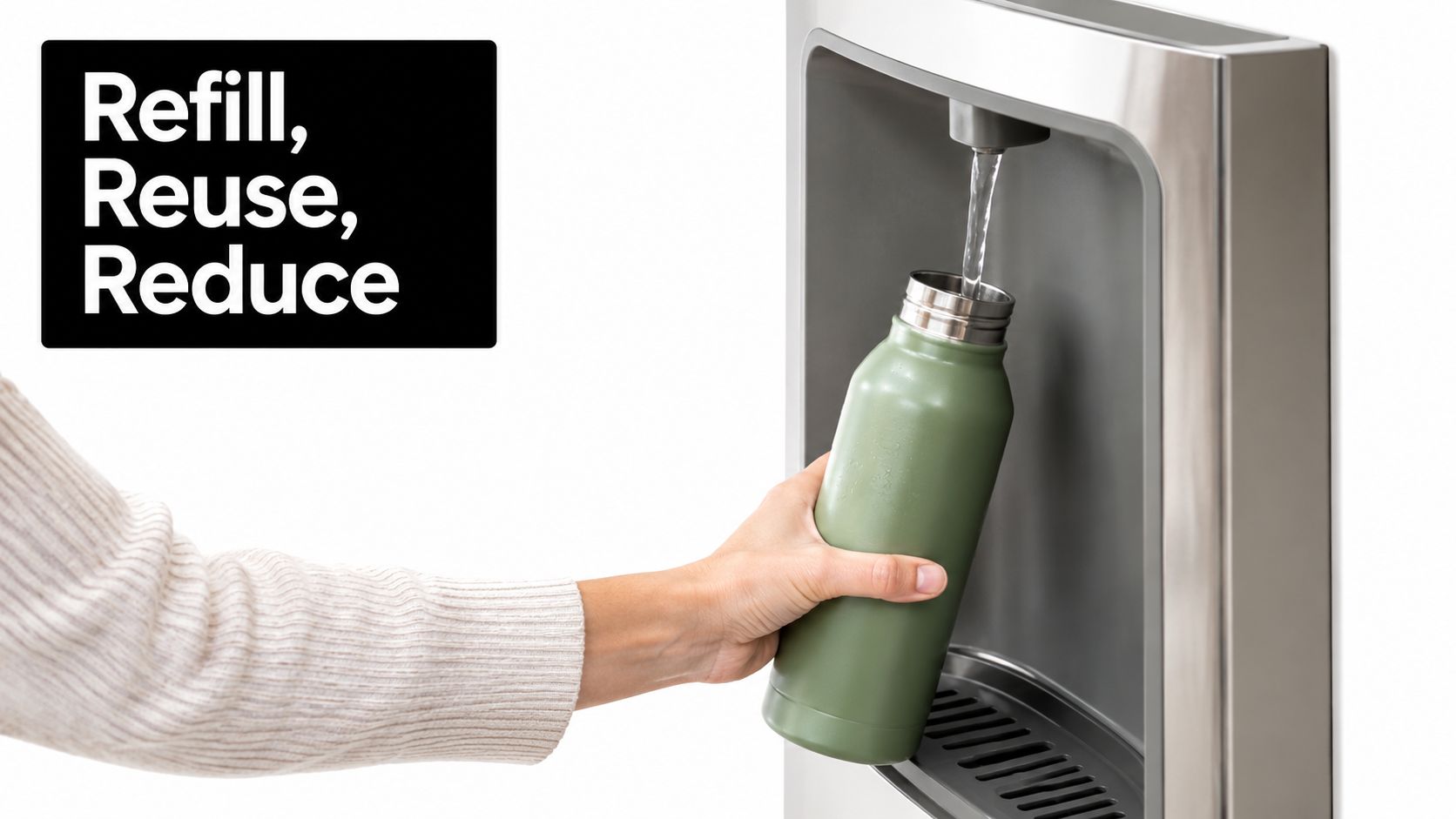
Bottled water is easy to stock and easy to sell, but every single-use bottle adds packaging to the break room's waste stream. A bottle-filling station near the vending area gives employees another option without requiring the operator to remove every packaged beverage.
Coordinate placement with facilities staff. Put the station near a high-traffic machine, make sure users can reach it easily, and agree on who replaces filters and monitors the equipment. Elkay and Oasis make bottle-filling water coolers used in workplaces, schools, and healthcare settings.
Measure the change without overpromising
Before changing the beverage assortment, track bottled water sales at the location. Review sales after installation to see whether demand shifted, and ask users whether the station is convenient. If the host wants to keep packaged drinks, a mix that includes aluminum cans can offer another recyclable option, subject to the local hauler's accepted-material rules.
There's a real trade-off: a refill station takes space and needs maintenance, while packaged drinks are convenient and don't depend on a nearby fixture. A station that's hard to find, poorly maintained, or separated from the vending area may not change purchasing habits. Work with the facilities team on upkeep and promote reusable drinkware at the point of use.
For a vending area, the goal is to make refilling as convenient as buying a drink. Vendmoore's guide to an eco-friendly water dispenser describes how water access can complement a refreshment program while reducing repeated bottle handling and disposal.
4. Packaging Optimization and Supplier Take-Back Programs
Packaging choices are made when products are selected, not when wrappers land in the bin. Ask suppliers about material, layers, and recyclability before adding a product to the machine. Where customers prefer them, consider replacing individually wrapped multi-packs with single-serve options, but check whether the switch reduces packaging per item sold.
The trade-off is that the package with less material may not preserve product quality or suit customer preferences. A vending assortment also needs packaging that withstands handling and keeps food protected. Compare options with the supplier rather than assuming that a recyclable label makes one choice better in every local waste system.
Make specialty collection easy to use
Some wrappers aren't accepted in standard recycling. If a specialized program such as TerraCycle's Snack Wrapper Brigade is available and practical for the site, place a dedicated collection bin beside the machine and explain what belongs in it. Confirm the program's current acceptance rules and collection arrangements before advertising it to users.
A specialty bin without a reliable collection plan can become another mixed-waste container.
Ask suppliers whether they accept packaging back or participate in material-recovery programs. Record assortment or packaging changes in client reports so the facilities manager can see what changed and whether the new products continue to sell. The packaging approaches used to cut waste can help frame supplier conversations, but local acceptance rules should determine what goes into each collection bin.
5. Energy-Efficient Machines and Smart Power Management
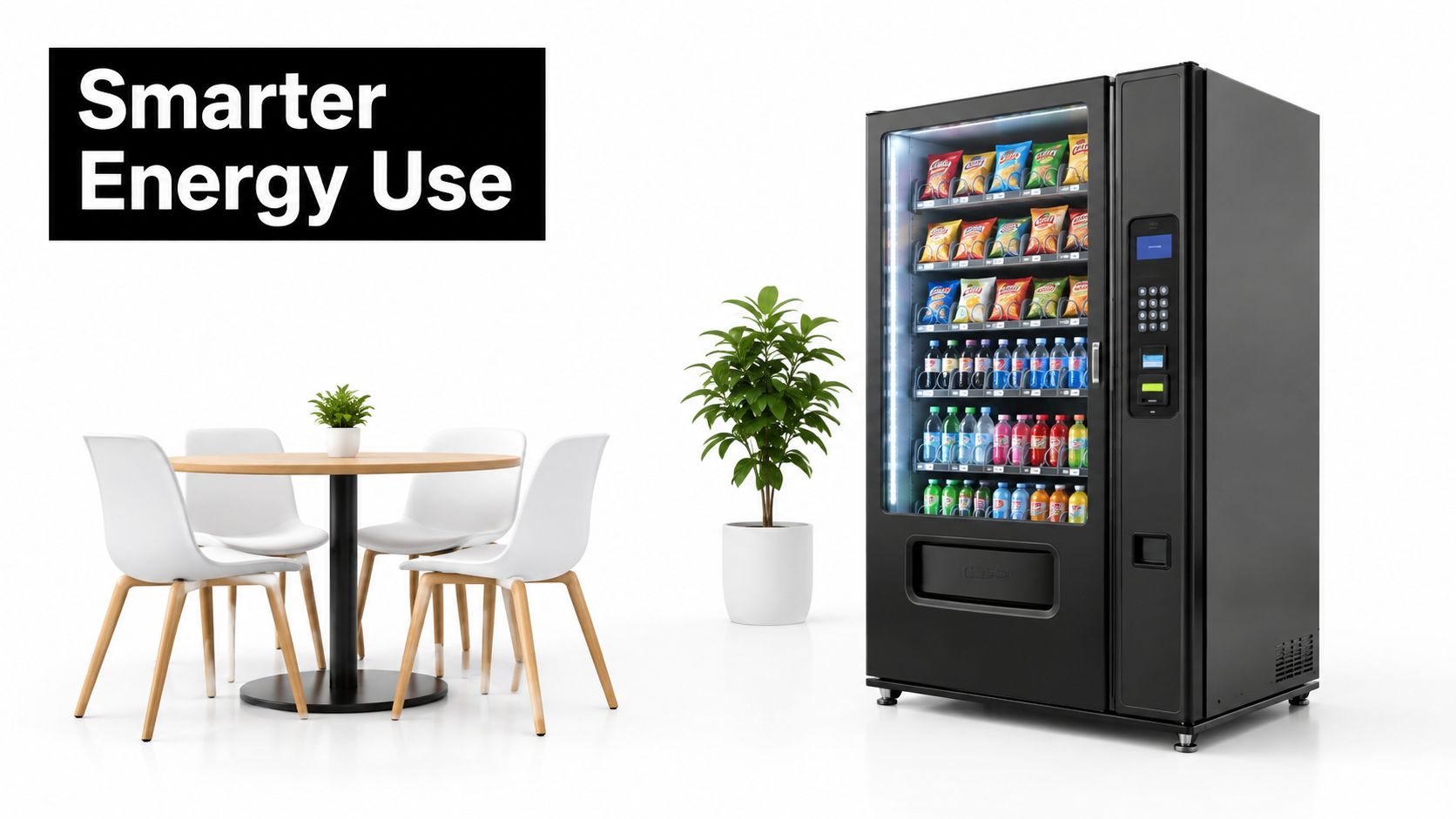
A refrigerated vending machine has to keep products at safe temperatures, even when nobody is in the break room. Energy management should reduce unnecessary power use without compromising product safety or machine performance.
When purchasing or replacing equipment, check the ENERGY STAR product list for eligible vending machines. LED lighting can reduce lighting power needs compared with older lighting, and an energy-saving controller can dim or power down parts of a machine during quiet periods. Vending Miser is one example of a device used to manage vending-machine energy during inactivity.
Protect the product while managing power
The key trade-off is clear: a lower-power setting must not push chilled products outside safe temperature conditions. Ask the equipment supplier to confirm which features suit the machine and its products, then verify temperature behavior after changes. Don't switch off refrigeration overnight unless the machine is designed and configured to maintain food safety under that schedule.
At an unattended site, timed lighting may make sense, but test the settings against actual use and security needs. For facilities managers, request energy information in routine client reporting and distinguish measured equipment use from estimates. That gives the host a more useful basis for energy decisions than a broad claim that a machine is efficient.
6. Low-GWP Refrigerants and Equipment Lifecycle Management
A vending machine's environmental footprint includes more than the electricity it uses. Refrigerant leaks, service practices, and end-of-life handling matter too, especially for older refrigerated machines.
When evaluating equipment, ask the supplier which refrigerant a model uses and its global warming potential. The United States is phasing down hydrofluorocarbons under the American Innovation and Manufacturing Act, which affects refrigerants used in new equipment. For existing machines, routine maintenance can help technicians identify problems before they become larger service issues.
Repair, recover, and retire responsibly
There's a trade-off between extending a machine's life and replacing it with newer equipment. Refurbishment may avoid premature replacement, but an older unit that needs repeated repairs or has poor operating performance may no longer be the practical choice. Compare the machine's condition, service history, and energy needs before deciding.
Use EPA-certified technicians for refrigerant service and recovery, as required under Section 608 of the Clean Air Act. At retirement, arrange proper recovery before disposal and send electronic components and metals to appropriate recycling channels. A preventive maintenance schedule can help operators plan inspections, identify leaks, and avoid waiting for a breakdown to address equipment concerns.
A retired machine shouldn't be treated as ordinary bulk waste. Plan removal with the technician or recycler so refrigerants and electronics are handled through the right channels.
7. Recycling and Sorting Stations at Vending Locations
Users make sorting decisions in seconds, often while leaving the break room. Put clearly labeled recycling and waste bins beside the machines, where people finish their drinks and snacks, rather than across the room or behind a door.
First, ask the host facility's waste hauler which materials it accepts. Then use simple labels, consistent colors, and pictures alongside words. A bin marked for a material the hauler doesn't collect can confuse users and contaminate an otherwise usable stream.
Match the station to traffic
Bin size and pickup frequency should match the location. A compact office break room and a busy hospital common area won't have the same traffic or collection needs. During service visits, check for overflow and contamination, and coordinate with the site team if bins need more frequent attention.
The trade-off is space and labor. More bins can improve separation, but they also need room, clear maintenance ownership, and reliable collection. Start with materials the hauler confirms it can process, then review how people use the station before adding more categories.
Facilities teams can include diversion and contamination observations in client reports rather than relying only on the presence of recycling bins. The waste sorting station setup can help teams consider placement and clear disposal instructions.
8. Route Optimization and Cashless Operations to Cut Trips and Paper Waste
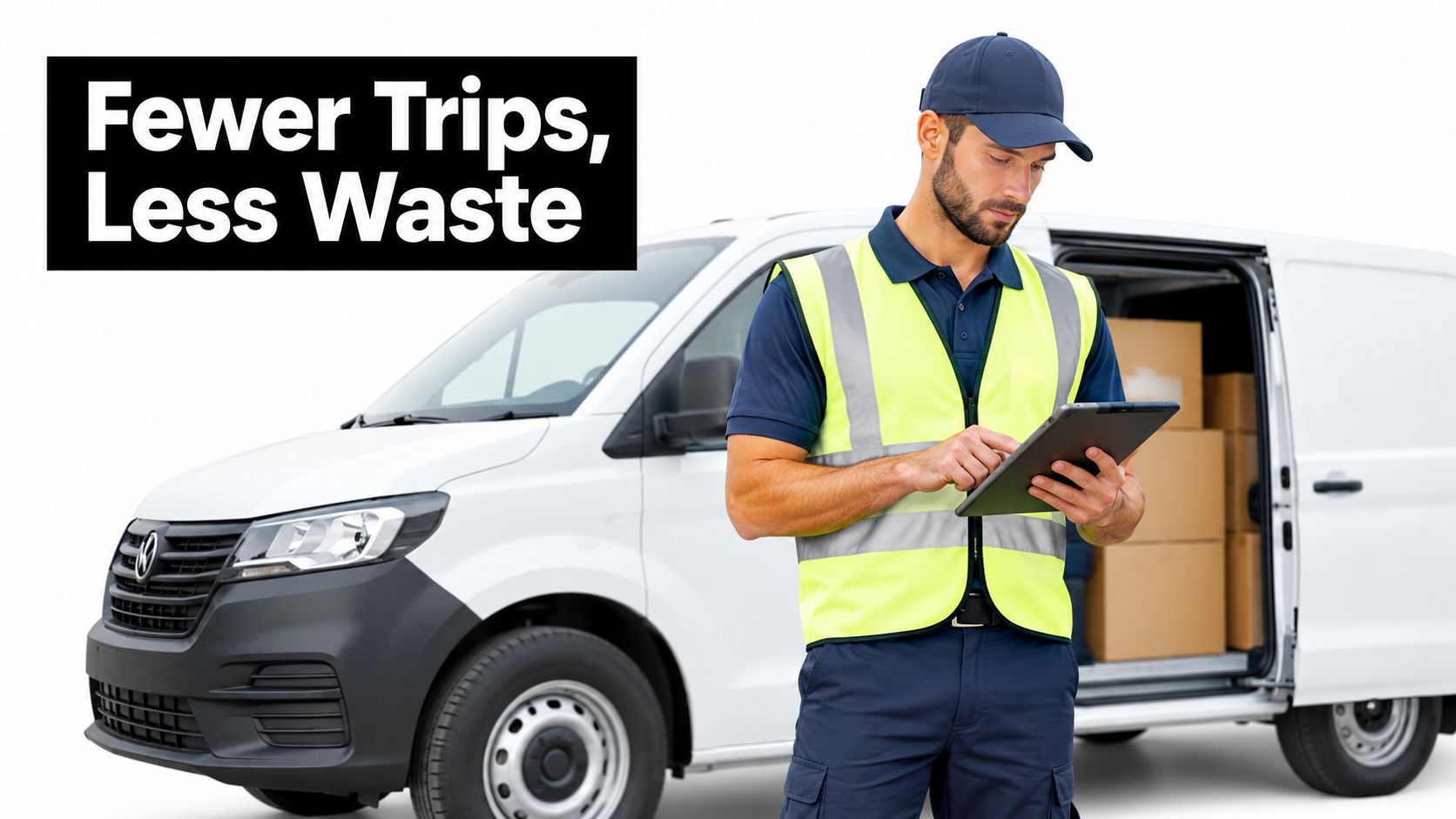
A service visit uses vehicle time and fuel, so a route should reflect what the machines need rather than rely only on fixed calendar stops. Telemetry and sales records can show which machines need replenishment, letting operators group nearby service calls and avoid unnecessary visits.
For a location manager, reliability still matters. If a route is optimized so aggressively that popular items repeatedly sell out, the service plan has traded fewer trips for a worse break room experience. Track sold-out events alongside visits and adjust the route when availability suffers.
Make each visit more useful
Group stops by city or ZIP code and schedule visits using sales and stock information. Track route mileage over time to understand whether the new schedule is changing driving demands. Cashless payments, including Apple Pay and Google Wallet, can reduce coin handling and support digital receipts where the payment system offers them.
The trade-off is that digital options don't suit every user, and payment technology still needs support. Keep the payment instructions visible at the machine and confirm that accepted methods work reliably. Vendmoore serves locations across the Oklahoma City metro, Norman, and Edmond with connected machines, mobile payments, and data-informed service planning.
Facilities managers can review the operator's approach to vending route optimization and agree on which service measures matter most: product availability, response time, and visits that match real demand.
8-Point Waste Reduction Strategies Comparison
Waste-Reduction Strategy | 🔄 Implementation Complexity & Resources | 📊 Expected Outcomes | ⭐ Ideal Use Cases | 💡 Key Advantage |
|---|---|---|---|---|
Telemetry-Driven Par Levels | Medium; connected machines, software, and regular data reviews | Less expired stock and fewer stockouts; fewer unnecessary service trips | Locations with connected machines and variable product demand | Matches inventory to observed sales |
Expiration Management & Food Donation | Medium; FIFO routines, date tracking, staff training, and donation partners | Less food sent to landfill; safe surplus feeds people | Sites with packaged products and accessible food-bank partners | Combines waste prevention with community support |
Bottle-Filling Stations & Reusable Drinkware | Medium–high; stations, plumbing, filter maintenance, and user participation | Fewer single-use plastic bottles; more reusable drinkware use | Workplaces, schools, and other high-traffic sites | Offers a visible hydration alternative |
Packaging Optimization & Supplier Take-Back | Medium; supplier coordination, product reviews, and collection arrangements | Less packaging waste and improved recycling potential | Operators able to influence product assortment or supplier terms | Reduces packaging before products reach the machine |
Energy-Efficient Machines & Smart Power Management | Medium; efficient equipment, controls, and temperature checks | Lower electricity use, operating costs, and emissions | Refrigerated machines with long operating hours | Can pair efficient cooling with LED lighting |
Low-GWP Refrigerants & Equipment Lifecycle Management | High; equipment planning, preventive maintenance, certified technicians, and recycling | Lower refrigerant climate impact and less equipment waste | Equipment upgrades, repairs, and end-of-life disposal | Extends equipment life while supporting compliant refrigerant handling |
Recycling & Sorting Stations | Low–medium; labeled bins, signage, and coordination with the waste hauler | Better sorting and less recyclable material sent to landfill | Break rooms and shared spaces with suitable waste collection | Simple to add near vending machines |
Route Optimization & Cashless Operations | Medium; telemetry, route-planning tools, payment systems, and digital receipts | Fewer service miles, lower fuel use, and less paper waste | Operators serving multiple locations or using connected machines | Combines more efficient service visits with convenient payment options |
Building a Waste Reduction Plan You Can Measure Next Quarter
A practical plan doesn't need to start with every machine, every product, and every waste stream. Choose one change that a facilities manager and operator can measure together, such as setting par levels from sales telemetry or adding a clearly sorted recycling station beside the busiest machine.
Before changing anything, agree on what the site will count and who will review it. For food and drink vending, useful measures include expired units and sold-out frequency. Route mileage can show whether service planning is changing vehicle use, while quantities of recyclables diverted can help the host assess whether a new collection station is being used.
Keep the measures distinct. Lower expired-product counts don't necessarily mean waste has fallen if stockouts have increased and customers have lost access to popular items. More material placed in recycling bins also doesn't prove that more material was recycled if the bins are contaminated or the hauler doesn't accept those items. Pair results with short operational notes, such as an assortment change, a revised delivery schedule, or a maintenance adjustment.
A useful client report should connect each result to an action. If a slow seller keeps approaching its date, reduce its par or test another product. If popular items sell out before the next visit, adjust the target or service timing. If a recycling station fills faster than the site can collect it, change the bin capacity or pickup arrangement. That kind of review helps operators protect availability while preventing avoidable purchasing and disposal.
Break rooms also benefit when the people who use them can share feedback. Ask whether products are missing, whether the bins are clear, and whether the bottle-filling station is convenient. Combine those comments with machine data instead of treating either as a complete picture on its own.
At the quarterly client report, review the same measures, note what changed, and decide whether to continue, revise, or expand the intervention. Pick the two strategies with the fastest payback at your highest-traffic break room, assign an owner for each, and set a 90-day review date.
Vendmoore Enterprises provides managed vending and flexible machine options for workplaces and public spaces across Oklahoma, with cashless payments, connected inventory insights, and assortments matched to each location. To discuss waste-aware replenishment, refreshment equipment, and service for your break room, visit Vendmoore Enterprises.
Comments