
Apartment Amenities Ideas: 8 Resident-Friendly Perks

A resident gets home at 9 pm. The pool gate is locked, the leasing office is dark, and the only errand left is a cold drink or a detergent packet before tomorrow's laundry. That ordinary night is the test I use for apartment amenities ideas. If nobody reaches for it without staff help, it is a brochure feature, not a working perk.
Three filters decide what stays. Resident value means a real, recurring, unplanned need in a place people already pass. Space, power, and connectivity means the spot can run the equipment. The operating model means you can name who restocks it, who services it, and who pays when a coil jams on Sunday.
The ideas that clear that test cluster around self-serve refreshment and grab-and-go essentials. A 2025 Buildium renter survey of nearly 2,000 households found that 94% consider building or community amenities when they choose a rental. Interest is not the same as Tuesday-night use. Each item below covers placement, upkeep, and how to launch it.
1. Smart Cashless Vending Kiosks and Fully Managed Programs
A lobby kiosk earns its floor space when someone buys a drink at 9:15 pm without calling anyone. Put it where the path already bends, inside the leasing sightline, beside the mail wall, or on the elevator wall. A back alcove fails because residents will not hunt for snacks.
Cashless is the default now. 451 Alliance, citing William Blair, Mastercard, and S&P Global 451 Research, reported tap-to-pay at nearly 50% of Visa in-person U.S. transactions, 67% of Mastercard transactions as contactless, and 53% of U.S. consumers preferring contactless in-store payments. A coin-first machine sits idle with people who only carry a phone.
Connected cabinets should report inventory, sales, and faults so the route arrives before the best sellers go empty. Confirm a dedicated outlet and a stable network drop before you pick the box. In 2024, NMHC research found 90% of surveyed apartment renters were interested in, or unwilling to rent without, high-speed internet. That connection has to reach the kiosk, not only the units. Landlords adding connected gear should also read California smart home compliance for landlords where those rules apply.
Survey rhythm: Rotate products quarterly from sales and comments, not a generic planogram.
Reports: Require monthly sales and fill-rate reports, references, and a sample performance report before you sign.
Contract edges: Write response time and restock frequency into the agreement, then read length, exit, and exclusivity.
Compare cabinet styles in this look at smart vending machines. A fully managed program means the operator owns install, stocking, and service, usually for a revenue share, so the property does not become a retail shop.
Practical rule: If you cannot name who restocks it and how fast a sold-out alert gets answered, do not order the machine.
2. Refrigerated Package Lockers with Vending Integration
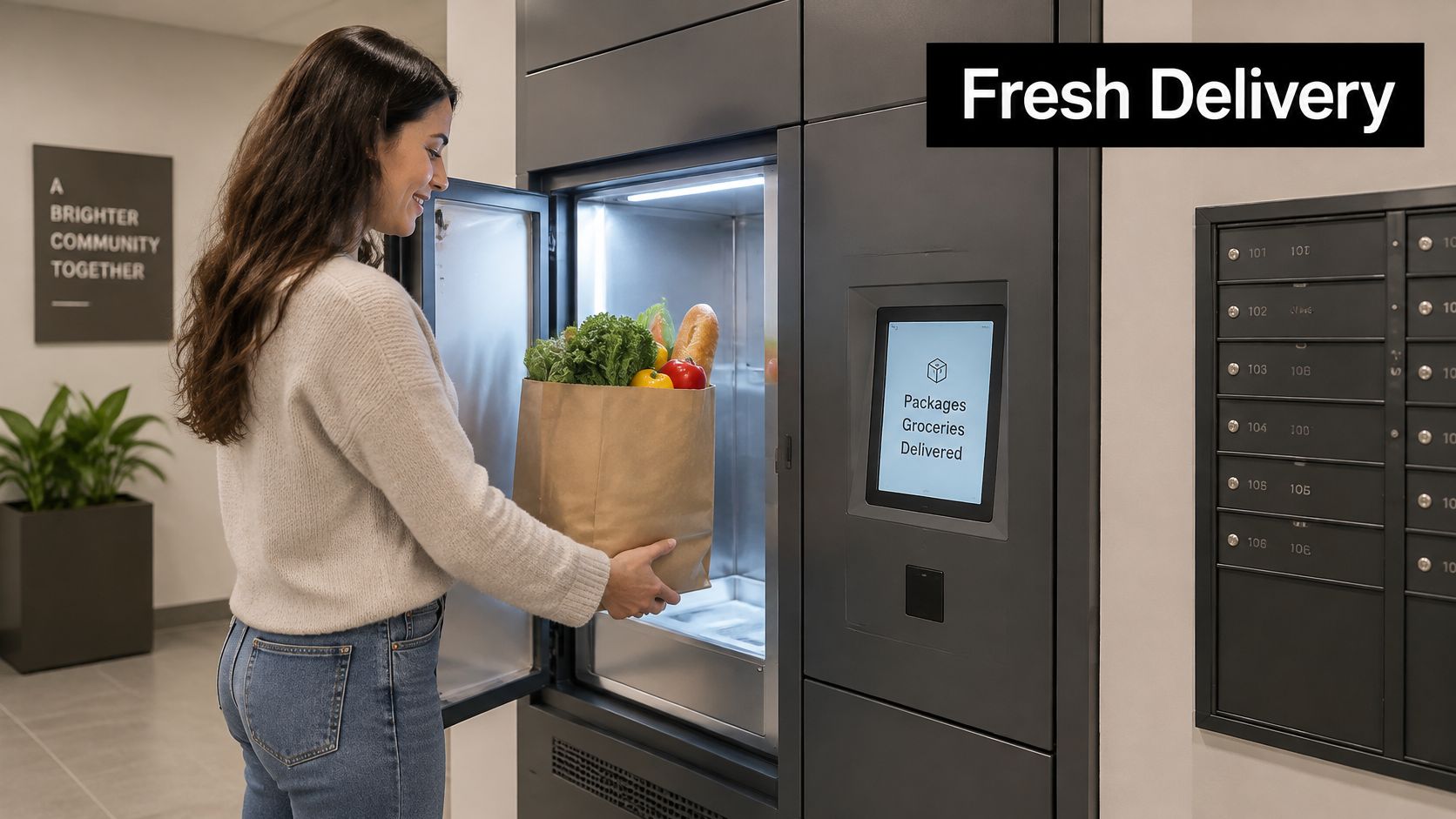
Package lockers work because delivery is already a daily habit. The 2015 NMHC/Kingsley Apartment Resident Preferences Survey, with nearly 120,000 responses, found 88% of property offices accepted packages and 72% of residents wanted a dedicated holding area. Refrigerated compartments extend that habit to groceries and meal kits that spoil in a warm lobby.
Pair the bank with a nearby cooler or grab-and-go unit and you get one resident hub instead of two lonely corners. A 200-unit community might run modular ambient lockers plus a smaller refrigerated bay for same-day grocery. Student housing often does the same beside the mailroom, with drinks one step away so nobody crosses the lobby twice.
Sizing and placement
Count occupied units, add a growth buffer, and do not size only for today's parcel peak. Choose a vendor that supports refrigerated compartments if grocery delivery is common in your market. Place the bank where residents already pass, at the mailroom or elevator core, in a lit, access-controlled zone. A side corridor looks tidy on a plan and then fills with missed pickups.
Power and condensate are the unglamorous parts. Cold compartments need their own circuit, a drain plan, and a vendor who will answer temperature alarms after hours. Ambient lockers are mostly software and doors. Cold lockers are equipment you service.
Staffed package desks feel helpful until 6 pm. After that, a locker plus a stocked cooler still answers the errand.
For the cooler half of that hub, review smart cooler vending before you commit the footprint. One operator for lockers and one for vending can work, as long as both publish a restock and repair window.
3. Frozen Food and Meal Vending in Resident Lounges
Say the clubhouse closes at 8 and a resident wants dinner without a delivery fee. A freezer vendor in the lounge, game room, or beside the clubhouse kitchen covers ice cream, frozen meals, and quick-heat items in a single stop. Dual-zone chill-and-freeze cabinets do drinks and frozen food in one footprint, which matters when you only have one outlet and one patch of floor.
Frozen goods usually outlast fresh sandwiches, so a missed restock day is less likely to become a waste write-off. That does not make the machine carefree. Freezers pull hard on startup, and a tired clubhouse panel will trip when the HVAC and the cabinet start together. I would not buy the unit until an electrician confirms the load.
Temperature alerts: Send them to the operator and to on-site staff, not to a shared inbox nobody owns.
Seasonal facing: Ice cream in summer, hearty meals in winter, with slow movers pulled before they frost over.
Feedback: A QR code on the glass beats a suggestion box in the office.
Resort-style properties often park a frozen-treat machine by the clubhouse, not on the pool deck, where heat and splash ruin electronics. Workplace lounges use the same dual-zone idea for cold drinks and frozen snacks between shifts. Either way, the service question is who has a freezer truck route and how often they open the door. Telemetry that only emails you after three empty rows is too late. Read the hardware options in this guide to frozen food vending machines, then match shelf life to your actual traffic, not to a catalog photo.
4. Beverage Vending Near Fitness Centers and Pools
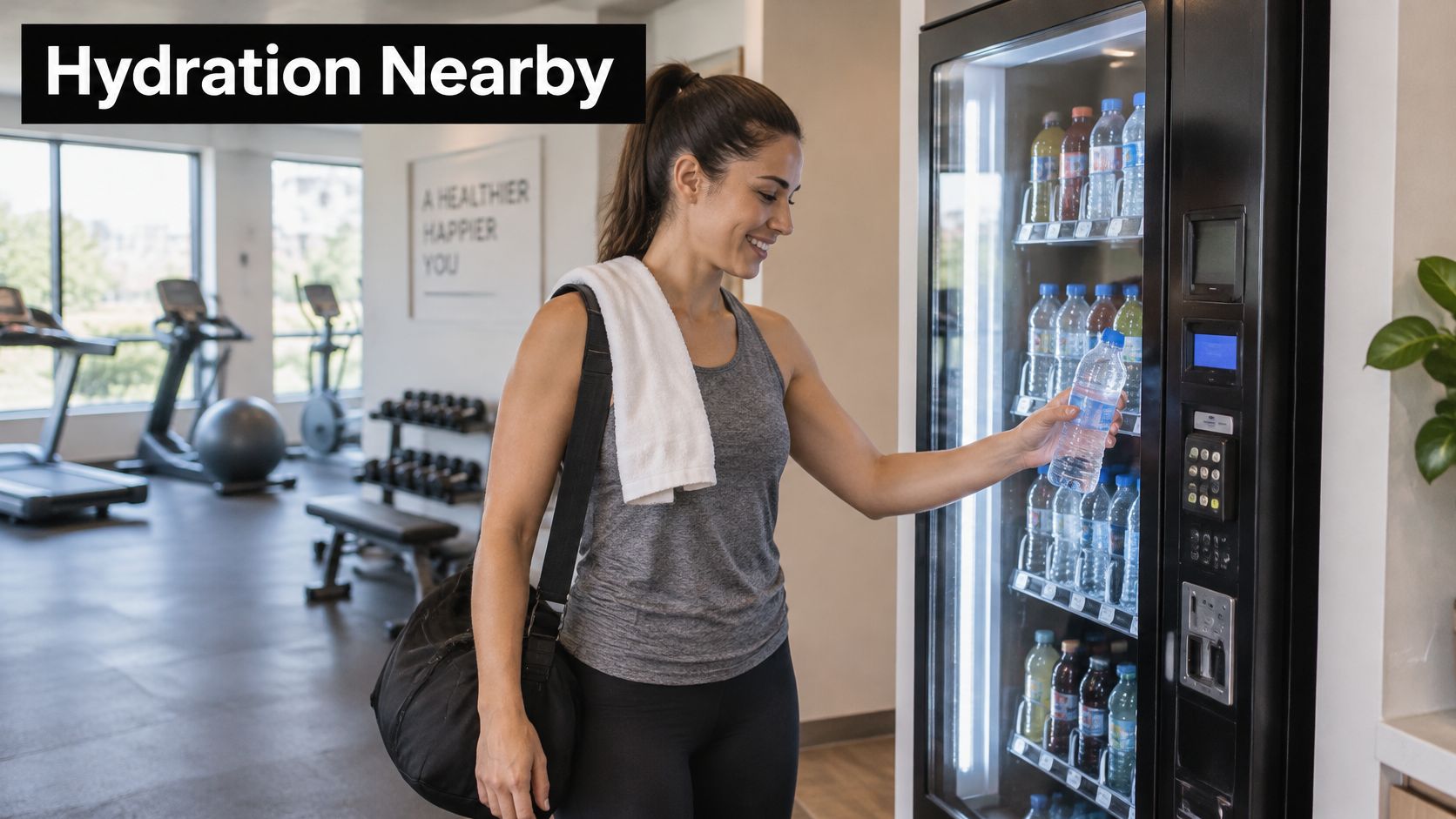
A gym without water nearby feels unfinished, but only if people work out there. Multifamily Dive, citing 2024 NMHC/Grace Hill research, reported that 76% of surveyed renters were interested in a pool while 23% called one a must-have. Interest fills a brochure. A bottle-and-can vendor only earns its keep on the nights and mornings the room is used.
Place the machine just outside the fitness door or at the indoor approach to the pool, never in a humid mechanical closet and never where splash hits the glass. If the spot is semi-outdoor, the cabinet has to be rated for that moisture. Stock water, electrolytes, and a couple of protein drinks, plus one familiar soda. A wall of niche wellness brands looks thoughtful and sells slowly.
Restock during quiet hours so you are not blocking the doorway at 6 pm. Pull a monthly sales read by selection. If a flavor sits for weeks, drop it. Hotels do this beside seasonal pools because foot traffic is obvious. Apartments should copy the placement, not the resort assortment, unless your own numbers say otherwise.
A useful pairing is a small seating ledge so someone can open a drink without dripping on cardio equipment. Power is usually easy here. Condensation and floor drains are the main maintenance items. See practical drink mixes in this note on healthy cold beverages. If the gym is locked more often than it is busy, spend the outlet on the lobby instead.
5. Laundry Essentials Vending in Shared Laundry Rooms
The machine that gets used is the one in sight while a washer is spinning. Detergent, softener, dryer sheets, stain sticks, and a lint roller cover the "I forgot" trip. Single-load packets suit students and anyone without a car. Larger bottles suit families if your price still feels fair next to a corner store.
Apartments.com's 2026 renter search survey found that 67% of respondents prioritized in-unit laundry, ahead of many shared lifestyle features. Where units already have washers, a laundry-room vendor will starve. Where laundry is still shared, that same preference is your demand signal. People would rather not leave the building for soap.
Price the packet: Keep single loads close to convenience-store reality or repeat buys die after one annoyed purchase.
Face the wait: Mount or place the machine where residents stand during a cycle, with plain labels, not tiny coil tags.
Read the tape: Expand what sells and drop what does not. Stain pens often surprise operators. Bulk detergent often does not.
College housing is the clean example: one packet, one load, no storage closet in the dorm room. A 40-unit walk-up with two washers can run a narrow cabinet on the same circuit plan as the machines, after you confirm the panel. Avoid scented-only assortments. Offer one fragrance-free option so the machine is usable by more of the building. Wipe the deck weekly. Laundry rooms are lint and humidity, and a sticky selection button is how a good idea dies in year two.
6. Micro-Market Pantry in Resident Business Centers
Shared work demand is no longer a niche. Grace Hill and NMHC's 2024 renter preferences survey put interest in shared workspaces at 48%, up from 35% in the prior survey. A business center without food still sends people out at noon. A micro-market is an unattended shop, open shelving or coolers, cashless checkout, and a wider mix than a glass-front snack machine.
Start smaller than the brochure. Breakfast items, a short sandwich or salad set, drinks, and a few snacks. Expand only from purchase data. Fresh food fails when date rotation is a hope instead of a route. Write the food-safety and pull schedule into the operator agreement, including who dumps expired product and how often the case is cleaned.
Position the market in sight of the desks, not behind a door marked "pantry." Resident-only or credentialed checkout cuts shrink in mixed-use buildings where the public can wander in. Office campuses have used this model to retire a sad vending bank. A ground-floor coworking room in a mixed-use property can serve residents and nearby workers on the same case, if access rules are explicit.
Watch this short walkthrough of how an unattended market is laid out, then decide whether your room has the depth for coolers plus a checkout kiosk.
Ownership means you buy the fixtures and own the waste. A managed market trades margin for labor. If the room is empty on weekdays, you do not have a market, you have a fridge. Equipment ranges are outlined under micro markets for sale.
7. Pet Supply and Treat Vending Near Dog Runs and Pet Wash Stations
The Tuesday test here is a walk, not a purchase impulse. Someone reaches the dog run and realizes the waste bags are upstairs. A small machine or dispenser with bags, a few dog treats, and a basic wipe covers that moment. Treats are the nice extra. Bags are why people stop.
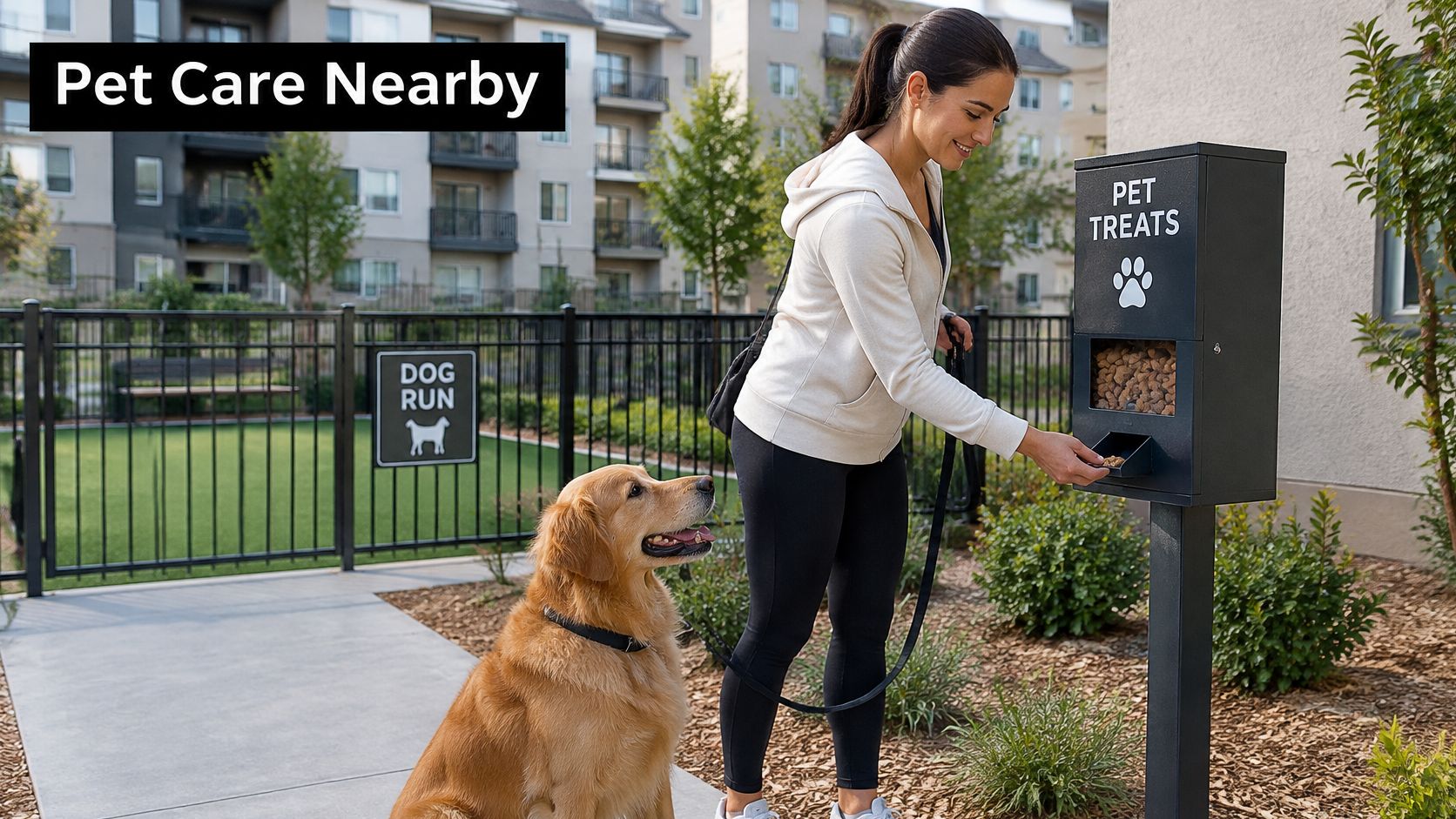
Put it under cover. Rain and afternoon heat kill card readers and screens faster than any other apartment location I would approve. A wall beside the pet wash, inside the run's shade structure, beats a sunny post at the fence. Keep the keypad and the tray at a height a standing adult can use without crouching in mud, and leave a clear path for strollers and wheelchairs. Apartments.com's 2026 amenities research treats accessible units, ground-floor living, and disability-friendly parking as essential considerations, and the same standard should apply to a shared pet spot.
Stock bags deep. They drive the trips. Limit treats to two or three that survive heat, and ask which ones residents want with a card on the machine, not a long survey. Mention the spot in pet-friendly leasing sheets so new residents know it exists, then let the bag column tell you if the location is right.
Service is light but regular. Outdoor dust packs into bill paths and card slots. A monthly function check matters more than a pretty wrap. If the run is rarely used, do not add a machine to "support pets." Empty dog parks do not need retail.
8. Emergency Essentials Vending for Residents
This is a small, boring machine, and that is the point. Phone chargers, a basic first-aid pouch, an umbrella, and a few personal-care items solve problems that show up when stores are closed. It belongs in the lobby or at the elevator, on the path people already use when something goes wrong, not in an amenity room that requires a fob and a walk.
Keep the set over-the-counter and labeled in plain language. Do not drift into anything that needs advice, age checks, or a medical claim. Rotate with the season: umbrellas in storm months, hand warmers when the weather turns, and then pull what did not move. Storm-prone buildings often do well with chargers and compact rain gear. An office lobby can run the same short mix for visitors who forgot a cable.
Low volume, high annoyance: These items sell slowly, so telemetry matters more than it does on soda. An empty charger row during a power flicker is the whole failure mode.
Placement: Elevators and exits, eye level, with enough light to read a package at night.
Scope control: A focused set is easier to keep honest. A junk drawer with forty facings becomes a dusty cabinet.
The operating trade-off is simple. Margins on chargers and umbrellas will not carry a route by themselves, so this cabinet works best beside a drink machine on the same service stop. Alone, it is a courtesy that still needs a human to refill it. Pair it with the lobby kiosk if you want it to survive past the first winter.
How the 8 Apartment Amenity Ideas Compare
Amenity | Best Placement | Resident Need Solved | Maintenance Load | Revenue Potential |
|---|---|---|---|---|
Smart Cashless Vending Kiosks and Fully Managed Programs | Lobby, leasing office, or mail area | 24/7 access to snacks, drinks, and everyday essentials | Low with managed service; requires connectivity and service coordination | Revenue share or commission can offset amenity costs |
Refrigerated Package Lockers with Vending Integration | Mailroom or near elevator bank | Secure package pickup and storage for perishable deliveries | Moderate; refrigeration requires energy and regular maintenance | Ancillary fees or vending partnerships |
Frozen Food and Meal Vending in Resident Lounges | Clubhouse, lounge, or game room | Convenient after-hours meals, snacks, and frozen treats | Moderate; freezer power, temperature monitoring, and inventory rotation required | Vending sales from meals and treats |
Beverage Vending Near Fitness Centers and Pools | Near fitness center or pool | Convenient hydration and recovery drinks | Low to moderate; frequent restocking and cleanup may be needed | Steady beverage sales |
Laundry Essentials Vending in Shared Laundry Rooms | Beside shared washers and dryers | On-site access to detergent and other forgotten laundry supplies | Low to moderate; regular restocking needed | Modest sales; some products have limited margins |
Micro-Market Pantry in Resident Business Centers | Business center or coworking lounge | Convenient meals, snacks, and drinks for remote workers | High; fresh food rotation, maintenance, and loss monitoring required | Sales potential supported by a broad product range |
Pet Supply and Treat Vending Near Dog Runs and Pet Wash Stations | Covered area by dog run or pet wash | Convenient access to waste bags, treats, and basic pet supplies | Low to moderate; weather protection and treat rotation required | Steady demand for basic pet supplies and treats |
Emergency Essentials Vending for Residents | Lobby or near elevators | Short-notice access to chargers, first aid, umbrellas, and personal care items | Low to moderate; focused inventory still needs monitoring and restocking | Lower and less predictable than snack or beverage vending |
Pick One High-Traffic Spot, Launch It, Then Let the Data Choose the Next
Do not fund the whole list. Walk the building and mark where residents already go on a weeknight: mail, laundry, fitness, or the lobby. Pick the sharpest unplanned need at one of those doors, then confirm power and a network drop before anyone orders equipment. A freezer on a shared clubhouse breaker, or a kiosk with no signal, fails in month one no matter how good the product looks.
Run it as a 30-day trial with one short resident note and a monthly look at sales and fill rate. Expand, rotate, or pull the concept from that evidence. A 2025 Creda multifamily study of nearly 1,500 renters found more than 70% willing to pay an extra $100–$199 a month for a mix of neighborhood, in-unit, and shared features, and fewer than 5% unwilling to pay more for amenities. That willingness still depends on something people use. Cold equipment also hits the utility bill, so factor load into managing utilities across multifamily portfolios before you add another compressor.
Managed service versus owning the box is the other decision. A managed program removes the capital outlay and the restocking labor in exchange for a revenue share. Ownership keeps product mix and pricing in your hands, and it also keeps the spoiled inventory and the Sunday service call. For apartment community areas, Vendmoore Enterprises can run a managed break-room style program or set up machines a property prefers to own, with the menu fitted to that room.
List the three busiest resident touchpoints, match each to one idea here, and ask for a walkthrough plus sample performance reporting before you sign. The amenity that survives year two is the one a resident can use alone, on a Tuesday, without a staff key.
Vendmoore Enterprises installs and services cashless vending for apartment community areas, offices, and similar shared rooms, including snacks, drinks, and frozen items with inventory monitoring and assortments adjusted to the space. If you are weighing a lobby kiosk, a laundry-room cabinet, or a managed program instead of owning the equipment, start with a walkthrough of the busiest spot in the building. Visit Vendmoore Enterprises to see machine options and how a managed route is set up.
Comments