_edited.png)
Best Vending Machine Drinks: A Smarter Restocking Strategy

A practical starting point is 40–45% water, 35–40% soft drinks, and 15–20% caffeinated products, then adjust the mix according to the facility, sales velocity, and service data. The best vending machine drinks balance what sells with what's safe, compliant, properly chilled, and relevant to the people standing in front of the machine.
A facility manager usually discovers the problem at the worst possible time. Employees complain that the machine has nothing worth buying, a hospital visitor chooses a sugary drink because water is sold out, or a manufacturing team reaches for an energy drink that isn't appropriate for every person on the floor. Meanwhile, the operator sees a machine that appears stocked and assumes the assortment is working.
That assumption costs money. A full machine isn't necessarily a productive machine. The right beverages depend on the audience, the workday, the climate, payment habits, equipment performance, and the reasons people need refreshments in that location. After servicing machines across Oklahoma, the practical lesson is clear: beverage vending succeeds when operators treat each site as its own small retail environment rather than copying a generic list of popular drinks.
Why Location Matters for Vending Drink Selection
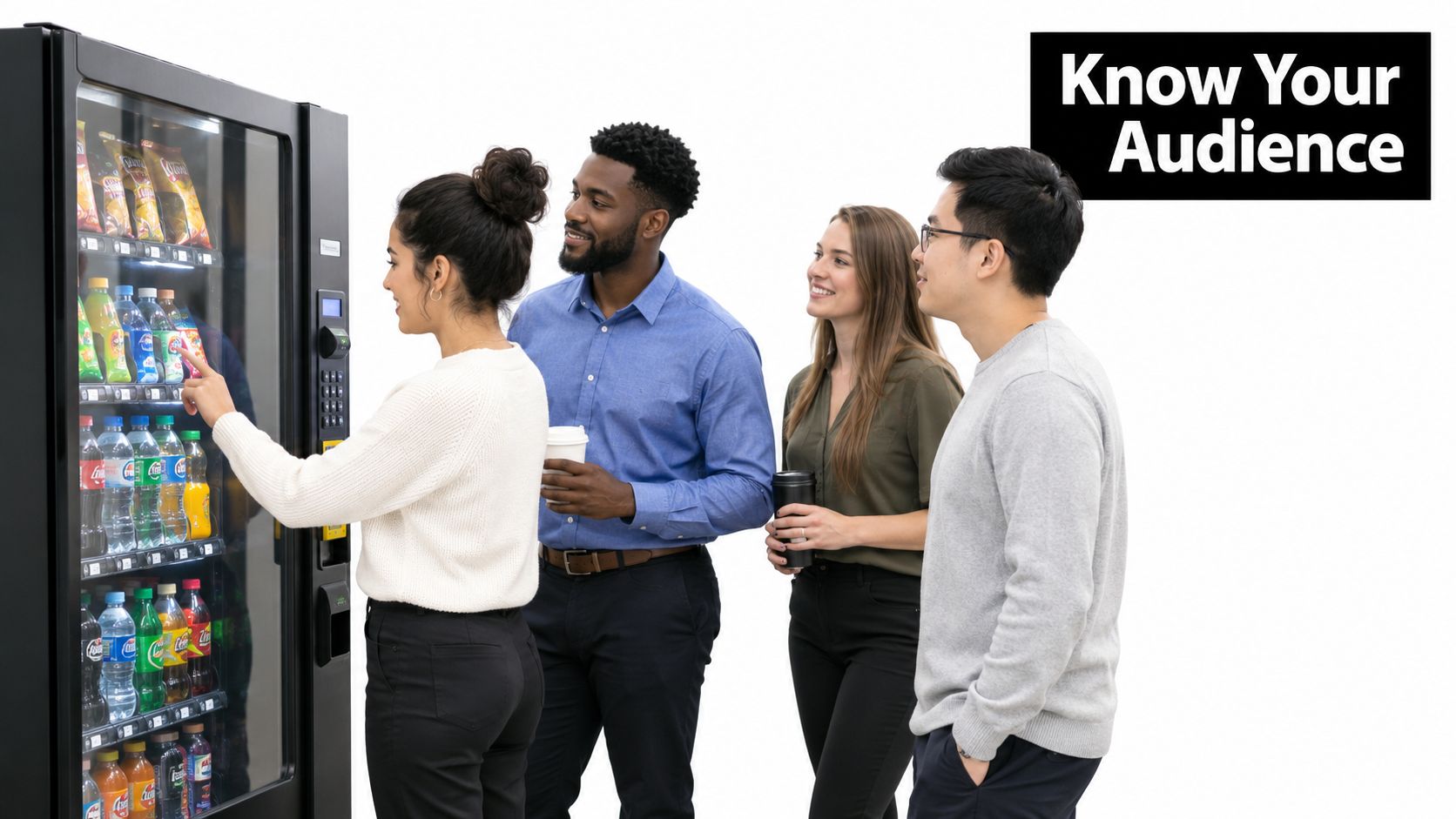
The best vending machine drinks for a hospital aren't automatically the best choices for a warehouse, school, airport, or office. A hospital may need dependable water, lower-sugar beverages, unsweetened tea, and clearly labeled caffeine options for staff, patients, and visitors. A manufacturing floor may generate stronger demand for cold water, electrolyte beverages, and convenient drinks during physically demanding shifts. An office may favor sparkling water, diet soft drinks, coffee, and moderate-caffeine choices that fit meetings and desk work.
Start by identifying who uses the machine and why. Walk the site at different parts of the day, speak with the facility contact, and ask what people currently leave the building to buy. Look for heat exposure, shift changes, exercise areas, patient waiting rooms, student traffic, and nearby food options. These details tell you more than a national popularity ranking.
Build the assortment around the use case
A useful location review answers four questions:
Who is buying? Employees, students, patients, visitors, drivers, travelers, and residents have different expectations.
When are they buying? Morning demand can favor coffee and tea, while afternoon or post-shift demand may favor water and sports drinks.
What are they doing? Desk work, physical labor, travel, exercise, and long waiting periods create different beverage needs.
What constraints apply? Schools, healthcare environments, and family-oriented venues may require stronger controls around caffeine, sugar, and labeling.
A compact refreshment center may suit an office with limited floor space, while a bottle-and-can vendor or dual-zone chill center may fit a high-throughput public venue. The equipment should support the assortment, not force the assortment into a machine that can't present it clearly. Operators planning a new placement can also review Vendmoore's venue setup guidance before deciding where the machine and service area should sit.
Treat feedback as operating data
Customer requests are useful, but they aren't the same as proof of demand. If several employees ask for a particular drink, test it in a defined slot and measure units sold, margin, stockouts, and spoilage. A product that attracts attention but sits in the machine may be less valuable than a less exciting beverage that sells consistently.
The same principle applies to online marketing. A vending operator trying to reach restaurant, cafeteria, and hospitality decision-makers can learn from practical restaurant SEO tips from Outrank, particularly the value of matching content to a specific audience and service context. A page about break room vending should speak directly to employers and facility managers, not recycle a broad list of drinks with no operational guidance.
Operator's rule: Place the machine where the need occurs, then stock it for the people who experience that need every day.
Understanding the Core Beverage Categories
Cold beverages form the commercial center of vending because they combine familiarity, portability, and immediate convenience. Historical industry data shows that soft drinks represented 53.98% of total vending turnover in 1999, demonstrating how closely chilled beverages became associated with the vending format (historical vending sales review).
That history doesn't mean every machine should become a soda cabinet. It means operators shouldn't remove carbonated drinks just because consumer preferences are changing. A reliable core of familiar options creates dependable demand, while water, sports drinks, tea, coffee, juice, and functional beverages extend the machine's relevance.
Use categories to create balance
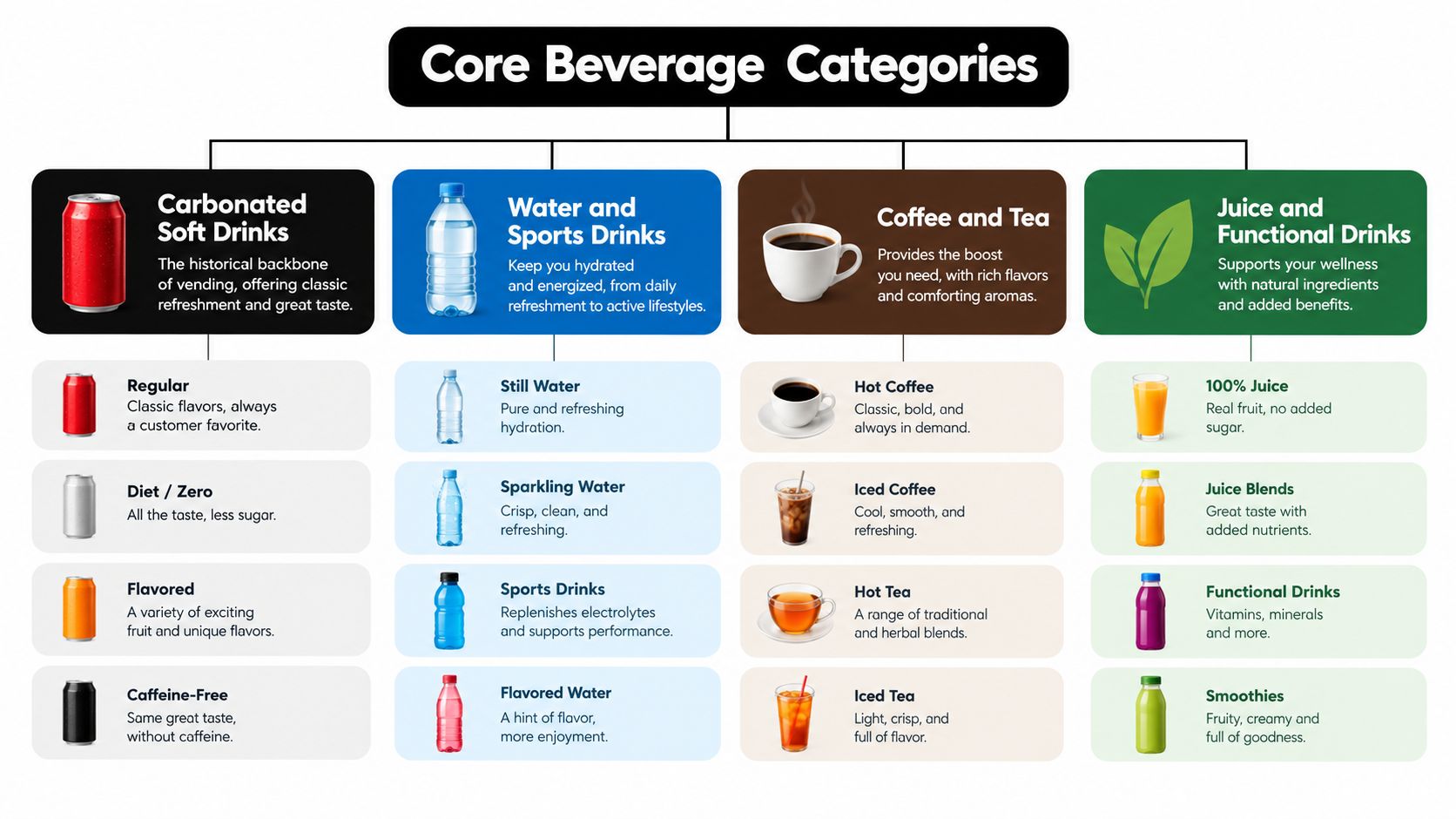
Carbonated soft drinks provide recognizable choices, including regular and zero-sugar variants. They work especially well in locations where customers want an immediate flavor reward, but they shouldn't occupy every prime-facing slot.
Water and sports drinks address hydration. Plain water is the broadest default, while electrolyte products make more sense where heat, physical activity, or extended exertion influences purchasing. Sports drinks need careful selection because some contain substantial sugar, while others use zero-sugar formulas.
Coffee and tea serve a different moment. Ready-to-drink coffee, iced tea, unsweetened tea, and moderate-caffeine options can perform well in offices, campuses, transportation facilities, and sites with early shifts. Their role is often tied to time of day rather than thirst alone.
Juice and functional drinks can add variety, but operators should examine their ingredient panels and shelf performance rather than treating wellness language as a guarantee of demand. For readers comparing modern soda alternatives, a guide to healthy fizzy drinks for 2026 offers useful category context without replacing local sales testing.
A product's category also affects planogram placement. Put broad-appeal hydration where customers can see it quickly, keep caffeinated products organized rather than scattered, and group regular and zero-sugar versions so shoppers can compare them without searching. Operators evaluating ready-to-drink coffee and tea can use this explanation of RTDs to distinguish those products from beverages prepared at the point of sale.
Balancing Popularity with Health and Hydration
A soda-heavy machine can sell well and still miss a large part of its audience. A health-only machine can look responsible and still underperform if it removes familiar choices people expect to find. The practical answer is a balanced beverage program, not a moral judgment about what customers should drink.
The U.S. functional beverage market was valued at approximately $50 billion in 2025, and sports drinks were growing faster than energy drinks, signaling stronger interest in hydration and recovery alongside stimulation (U.S. functional beverage market insights). That direction matters in Oklahoma, where heat can influence demand at manufacturing sites, outdoor-adjacent venues, stadiums, airports, and warehouse facilities.
Compare the job each drink performs
Beverage Category | Market Trend | Key Consumer Driver |
|---|---|---|
Water | Broad, dependable demand | Hydration and convenience |
Soft drinks | Established core category | Flavor, familiarity, and refreshment |
Sports drinks | Growing faster than energy drinks | Hydration and recovery |
Unsweetened tea | Useful alternative to sugary drinks | Refreshment with lower sweetness |
Zero-sugar beverages | Relevant to sugar-conscious shoppers | Familiar flavor with less sugar |
Energy drinks | Stronger governance requirements | Stimulation and alertness |
A practical assortment can pair plain water with lightly sweetened or zero-sugar electrolyte beverages, unsweetened tea, zero-sugar soft drinks, and a limited selection of caffeinated products. The mix should reflect the facility. A hospital or medical office generally benefits from broad hydration and lower-sugar choices, while a hot manufacturing floor may justify more electrolyte options. An office may need more tea, coffee, and sparkling water than a warehouse.
The operator's job is to test those assumptions. Rotate one variable at a time, such as package size, flavor, sugar level, or price, while keeping the machine position and display location stable. Review sales by SKU and time block, separate stockouts from weak demand, and remove products only after the test provides enough information to make a sound decision. Vendmoore's discussion of healthy cold beverages provides additional context for building that type of assortment.
Practical insight: A lower-sugar beverage that sells steadily can be more valuable than a trendy product that generates requests but not repeat purchases.
Mastering Temperature Control and Telemetry
Customers judge a beverage before they taste it. A warm bottle of water, a poorly chilled soda, or a sports drink that feels inconsistent can make the entire machine seem unreliable. Temperature control is therefore both a food-safety responsibility and a retention issue.
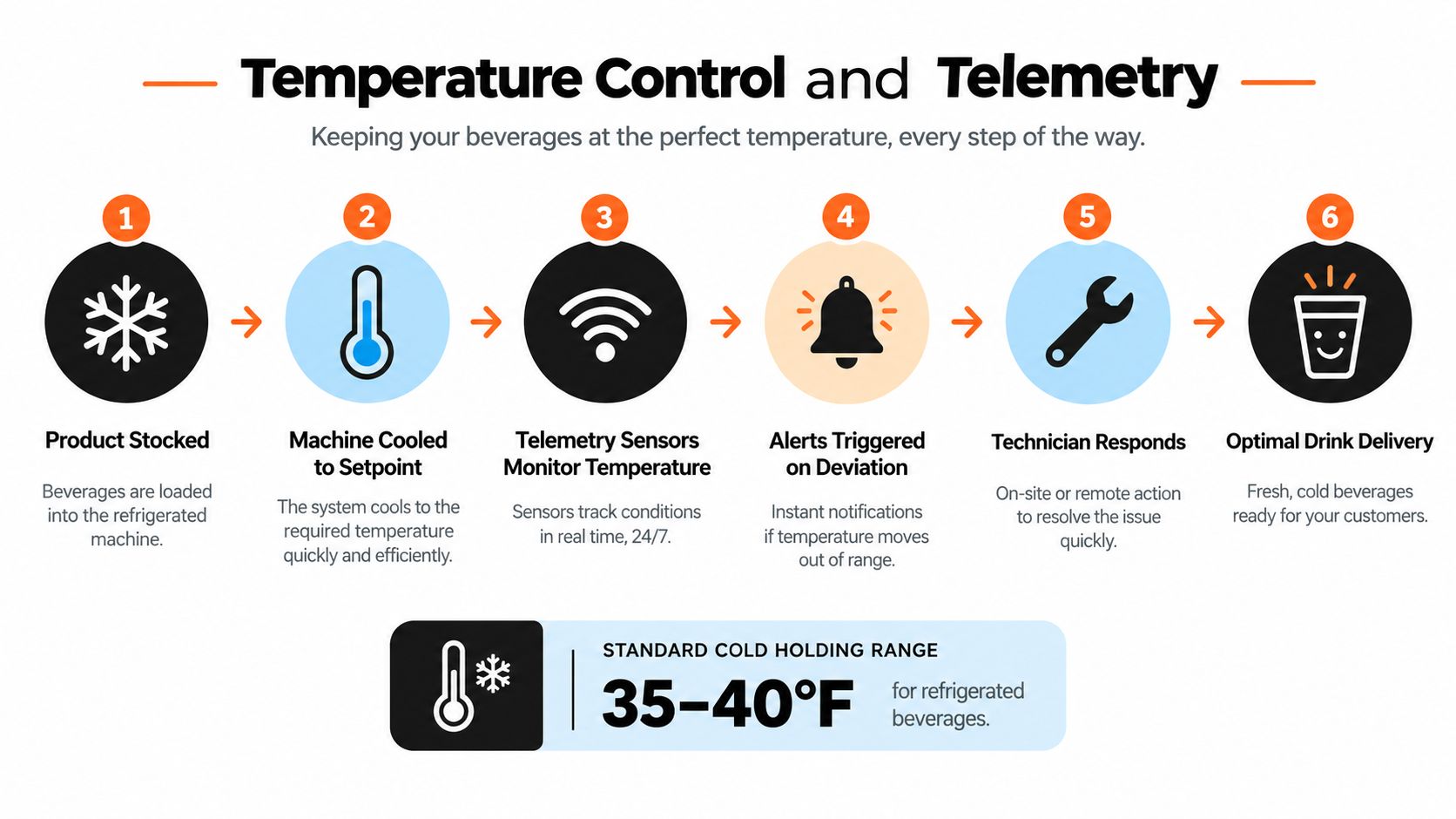
The FDA Food Code specifies that refrigerated vending machines must keep food requiring temperature control at or below 41°F, and the ambient air temperature inside the machine cannot exceed that limit for more than 30 minutes after restocking (FDA Food Code). Operators should distinguish that safety requirement from a consumer-quality preference for a consistently cold drink.
Turn cooling into a service routine
A dependable cold-chain process includes more than checking the display on the front of the machine:
Log temperature continuously. Sensors should record the machine's condition instead of relying only on a technician's occasional visit.
Verify product temperature during service. Ambient air readings don't always reveal how quickly individual products cool.
Record restocking times. Door openings, loading patterns, and recovery periods affect performance.
Monitor airflow and equipment condition. Overloading the evaporator path can restrict cooling and slow recovery.
Create an exception workflow. Repeated excursions, long recovery periods, or compressor problems should generate a service response.
Quarantine products when necessary. A prolonged temperature excursion needs a documented decision, not an assumption that every item remains acceptable.
Telemetry becomes valuable when it connects temperature to commercial outcomes. Track temperature excursions, compressor recovery, door-open duration, service frequency, refunds, stockouts, and beverage sales together. A machine may have good sales but poor recovery performance, or low sales because its drinks are not cold enough to encourage repeat purchases.
For operators and facility managers reviewing supporting equipment, resources covering HVAC and refrigeration products can help explain the broader systems involved in cooling reliability. The operating principle is simple: service teams should respond to evidence before customers turn a quality problem into a complaint.
A walkthrough of the telemetry data collection process can help a prospective client understand which measurements matter and how they support replenishment and maintenance decisions.
Prioritizing Safety and Caffeine Transparency
Zero sugar doesn't mean caffeine free, and a beverage marketed for energy isn't automatically appropriate for every audience. The FDA reports that energy drinks can contain roughly 54 to 328 milligrams of caffeine per 16 fluid ounces, and medical guidance advises against these beverages for children and teens (FDA caffeine guidance).
That range creates a governance issue for schools, universities, hospitals, airports, stadiums, and mixed-age workplaces. An operator shouldn't treat energy drinks as an ordinary flavor extension of soda. The machine needs a clear assortment policy that considers age suitability, caffeine concentration, serving size, sugar, and the setting where the product is sold.
Make the label do useful work
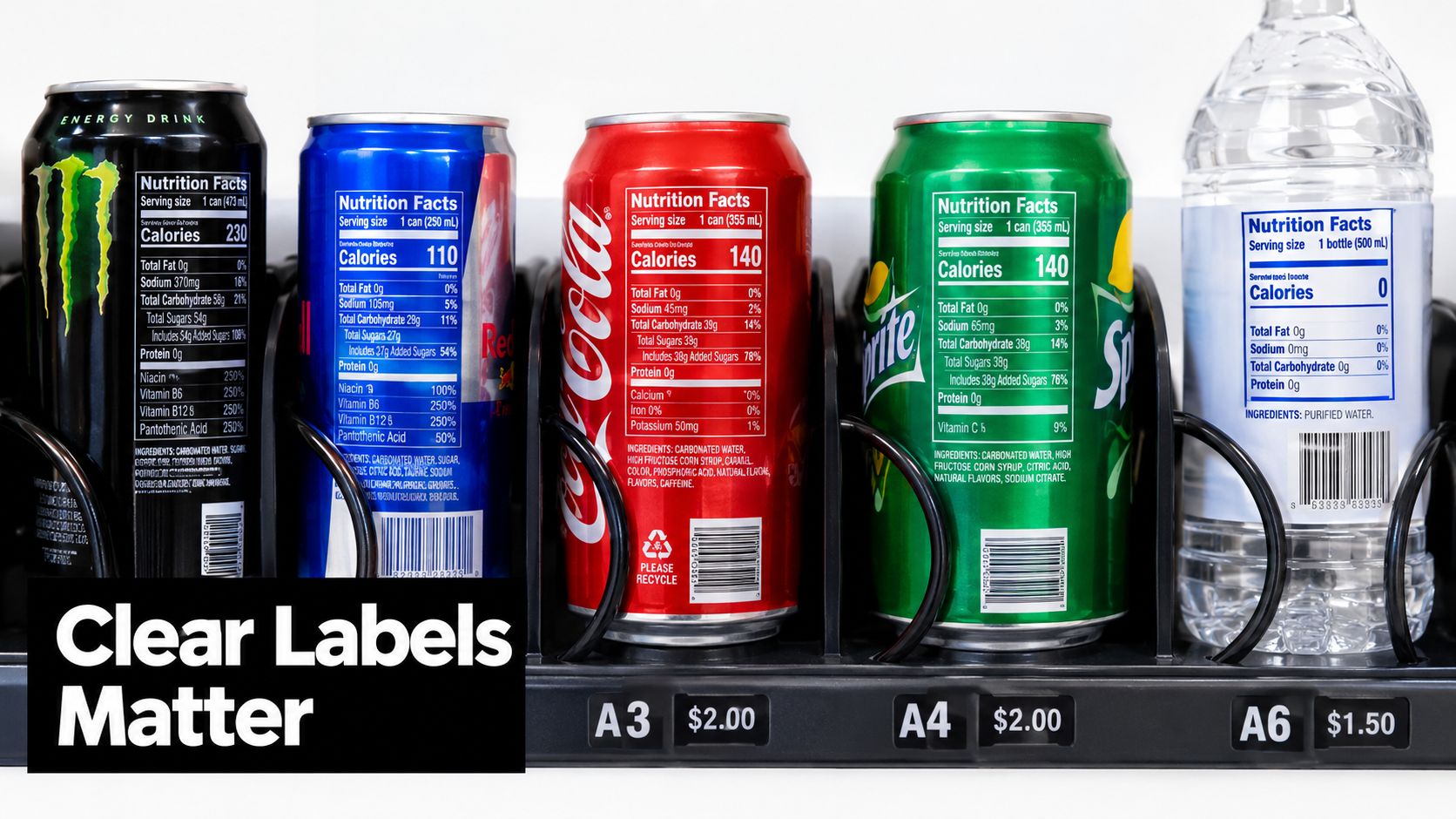
A transparent beverage program can show caffeine milligrams per container, separate coffee, tea, soda, energy drinks, and electrolyte products, and place caffeine-free choices alongside caffeinated products. Product labels should remain visible in the machine or through a digital selection screen whenever practical.
Use a simple review before adding a caffeinated SKU:
Audience: Is the machine used by adults only, or by children and teens as well?
Caffeine: How much caffeine does the full container provide?
Sugar: Does the product's sugar level fit the facility's expectations?
Alternatives: Can shoppers choose water, tea, or a caffeine-free beverage without paying a penalty in visibility?
Policy: Does the client have school, healthcare, wellness, or age-related requirements?
For a school or family venue, caffeine-free defaults should be prominent, while energy drinks may be excluded depending on the client's policy. A university or adult workplace may permit a more varied selection, but clear labeling still matters. A hospital may need to serve staff working demanding shifts without making high-caffeine beverages the visual center of the machine.
Safety principle: The buyer should be able to understand what a drink contains before payment, not after opening it.
The same discipline improves customer trust in every category. Water, zero-sugar soda, sports beverages, coffee, and tea all deserve accurate product information. Clear labeling reduces confusion, gives facility managers a defensible assortment policy, and helps the machine serve people with different health goals without pretending that one product suits everyone.
Optimizing with Data, Payments, and SEO
A vending program improves when operators connect three types of information: what people buy, how they pay, and what prospective clients search for. Sales data tells you what belongs in the machine. Payment data reveals friction at checkout. Search behavior shows which facility managers may be looking for a service provider.
The payment case is practical. U.S. consumers made an average of 48 payments per month in 2024, and adults ages 18 to 24 used mobile phones for 45% of all payments (Federal Reserve payment choice findings). Vending machines serving campuses, younger workforces, stadiums, airports, and public venues should support mobile wallets and cards while retaining cash acceptance where the location requires it.
Build a feedback loop
A workable operating cycle looks like this:
Measure: Review units sold by SKU, time block, location, refunds, stockouts, and margin.
Diagnose: Separate weak demand from an item that was unavailable, warm, poorly displayed, or difficult to purchase.
Test: Change one assortment variable while keeping placement and display position consistent.
Act: Replenish reliable sellers, remove persistent slow movers, and document why each change was made.
Publish: Turn useful operating knowledge into pages for the audiences you serve.
Search content should answer real commercial questions. A page for Oklahoma workplace vending can explain machine types, cashless payments, restocking, cold-chain standards, and how employees provide feedback. A page for healthcare vending should address visitor needs, caffeine transparency, service response, and product labeling. A separate page for manufacturing or warehouse vending can discuss hydration, shift schedules, equipment placement, and temperature monitoring.
Google's guidance favors helpful, reliable, people-first content that demonstrates first-hand expertise and serves an existing audience (Google guidance on helpful content). Its Search Essentials also recommends using the language people search for in prominent locations such as page titles, main headings, image alt text, and link text (Google Search Essentials). That means “break room vending in Oklahoma” is more useful as a clear page topic than vague copy about refreshment solutions.
An operator can support visibility with distinct, useful pages for break room vending, office snack machines, school vending, healthcare vending, and city-specific vending services. Each page should offer original details rather than swapping a location name into the same template. Practical guidance on vending industry best practices can help businesses connect service quality with the content they publish.
The strongest program creates a loop: customer feedback shapes the assortment, telemetry protects quality, payment options reduce checkout friction, and useful search content brings qualified facility managers to the business. That combination supports retention more reliably than chasing a universal list of fashionable beverages.
Vendmoore Enterprises offers managed vending programs for Oklahoma workplaces and public spaces, including beverage assortments, cashless payment support, telemetry, restocking, and maintenance. Visit Vendmoore Enterprises to discuss a break room, healthcare, school, manufacturing, airport, stadium, or residential vending setup built around your location's actual needs.
Comments