_edited.png)
7 Healthy Drink Brands for Better Vending

The break room is full, but the beverage choices are stuck in the past. Employees want something colder, lighter, and more interesting than another full-sugar soda, while the operator still has to protect margin, fit products into existing columns, maintain reliable replenishment, and satisfy different rules across offices, schools, and healthcare locations. Replacing sugary drinks with random “better-for-you” products creates a different problem when package sizes, shelf stability, ingredient standards, and price tiers don't match the account.
The strongest healthy drink brands aren't interchangeable. Liquid Death, Spindrift, OLIPOP, poppi, BODYARMOR LYTE, Vita Coco, and Health-Ade Kombucha each solve a different vending need. This list evaluates them as vending-program decisions, not grocery purchases, including nutrition positioning, package fit, rotation needs, audience suitability, and procurement. Vendmoore Enterprises, for example, can tailor assortments, operate cashless machines with Apple Pay and Google Wallet, use connected telemetry, and adjust selections based on location feedback. The framework at the end covers testing, stocking, rotation, and sourcing so your vending website and program can convert interest into a practical service conversation.
1. Liquid Death
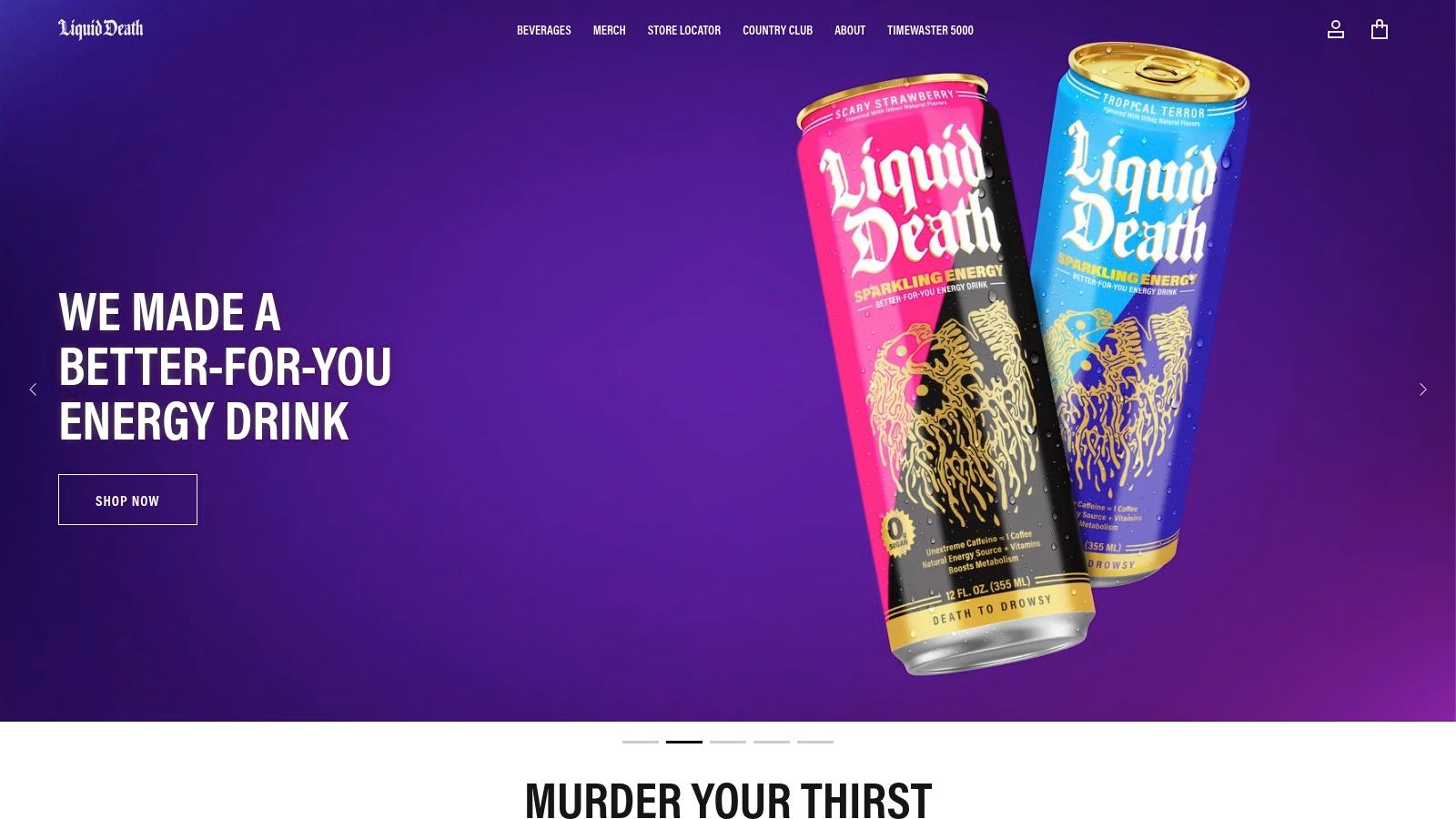
Liquid Death is the easiest anchor product for a vending set that needs a clear zero-calorie, zero-sugar option without looking generic. Its core still and sparkling mountain waters come in recyclable aluminum cans, with available sizes including 12 ounces, 16.9 ounces, and 19.2 ounces. That gives operators flexibility across compact machines, bottle-and-can vendors, and larger refrigerated columns.
The main operational advantage is recognition. A distinctive can can create more trial than an anonymous water label, particularly in offices and public spaces where customers make fast decisions. Aluminum also gives the assortment a visible sustainability angle compared with PET, although operators should still confirm the account's actual recycling and waste-handling setup before making environmental promises. The brand has broad retail distribution through Liquid Death's official website, Walmart, Kroger, Target, and Whole Foods, which can make replenishment less difficult than sourcing a niche beverage.
Where it fits best
Liquid Death works especially well as the hydration baseline in a workplace, school, or health-oriented public-space assortment. Still water supports everyday refreshment, while sparkling water gives customers a soda-like experience without sugar in the core water SKUs. The brand's visual identity can also help a vending machine feel current rather than institutional.
Practical rule: Select only the core zero-sugar water SKUs when an account has strict wellness requirements. Some flavored lines contain sugar, so “Liquid Death” alone isn't enough to approve a product.
Pricing and availability can vary by channel, and branded aluminum cans may sit above basic bottled water in the cost structure. Use the larger sizes where customers value hydration and the smaller formats where column capacity or price sensitivity matters. For offices comparing machine service with separate water delivery, explain the difference between packaged vending convenience and a dedicated office water service, then test demand before expanding the water allocation.
2. Spindrift
Spindrift gives operators a useful middle ground between plain water and soda. Its sparkling water is made with carbonated water and a small amount of real fruit juice, without added sweeteners or “natural flavors” in its sparkling set. Depending on the flavor, a 12-ounce can contains 0 to 20 calories, according to the product positioning supplied for this comparison.
That formulation matters in vending because customers often want flavor first and nutrition second. Spindrift can satisfy the person who rejects plain water but doesn't want a conventional soft drink. It also creates a cleaner ingredient story that staff can understand quickly from the can, which supports the ingredient-transparency trend in beverage purchasing. The Spindrift product range includes sparkling products as well as tea and crafted mocktail lines, giving operators more room to rotate flavors without abandoning the brand.
The vending trade-off
The strength is variety. Classic sparkling flavors can occupy the everyday hydration slots, while tea or mocktail products can provide a more distinctive option in an office or hospitality setting. Walmart and Sam's Club availability may also help operators source replenishment through familiar channels, though a local distributor or foodservice account can still be more efficient for recurring case orders.
The weakness is cost. Per-can pricing is higher than many private-label seltzers, so Spindrift may need to sit in a premium or upper-middle price tier rather than compete directly with economy water. Its calories come from real fruit juice, which is a benefit for customers seeking recognizable ingredients but a drawback for schools, hospitals, or corporate accounts that require every sparkling beverage to be calorie-free.
Operators should keep the label language precise. Don't describe it as zero-calorie across the range, and don't assume every line follows the same ingredient standard.
For accounts exploring flavored hydration beyond packaged cans, Vendmoore's discussion of organic water flavoring can help frame the difference between a flavored water program and a ready-to-drink sparkling assortment.
3. OLIPOP
OLIPOP is a stronger fit for customers who still want a soda experience but are actively looking for lower sugar and added functional positioning. Its products use prebiotic fiber and botanicals, with flavors designed around familiar soda profiles. Depending on the flavor, the 12-ounce cans contain 2 to 5 grams of sugar and 30 to 50 calories, while the product lines supplied for this comparison carry either 6 grams or 9 grams of fiber.
That variation creates both the opportunity and the operational risk. The brand can make a vending set feel more relevant to wellness-focused employees, especially when the machine already stocks water and sparkling water. But an operator who fills a column with mixed OLIPOP lines may unintentionally create inconsistent nutrition messaging. Review every case and SKU before approving it for a school, healthcare location, or formal workplace nutrition policy.
Stocking and storage decisions
OLIPOP is offered in shelf-stable and refrigerated formats. Shelf-stable cans simplify route planning and reduce dependence on machine temperature, while refrigerated options may present better in a cold-drink vendor and give the account a more premium feel. The correct choice depends on the machine configuration, delivery schedule, and customer expectation, not just the product's health positioning.
Choose shelf-stable formats when storage flexibility and route efficiency matter more than maximum cold presentation.
Choose refrigerated formats when the account has a reliable cold machine and customers expect functional beverages chilled.
Separate product lines clearly so the nutrition and fiber claims stay consistent within each machine.
OLIPOP's variety packs can help maintain flavor rotation, but the higher per-can cost than mainstream soda will affect the selling price and likely the purchase pattern. It's better suited to an office, fitness-oriented workplace, or premium micro-market than to an account where every drink must match a low price point.
A beverage dispensing machine needs more than product appeal. Column width, can diameter, vend reliability, and temperature all matter, so review the machine setup through a beverage dispensing machine program before committing to a broad rollout.
4. poppi
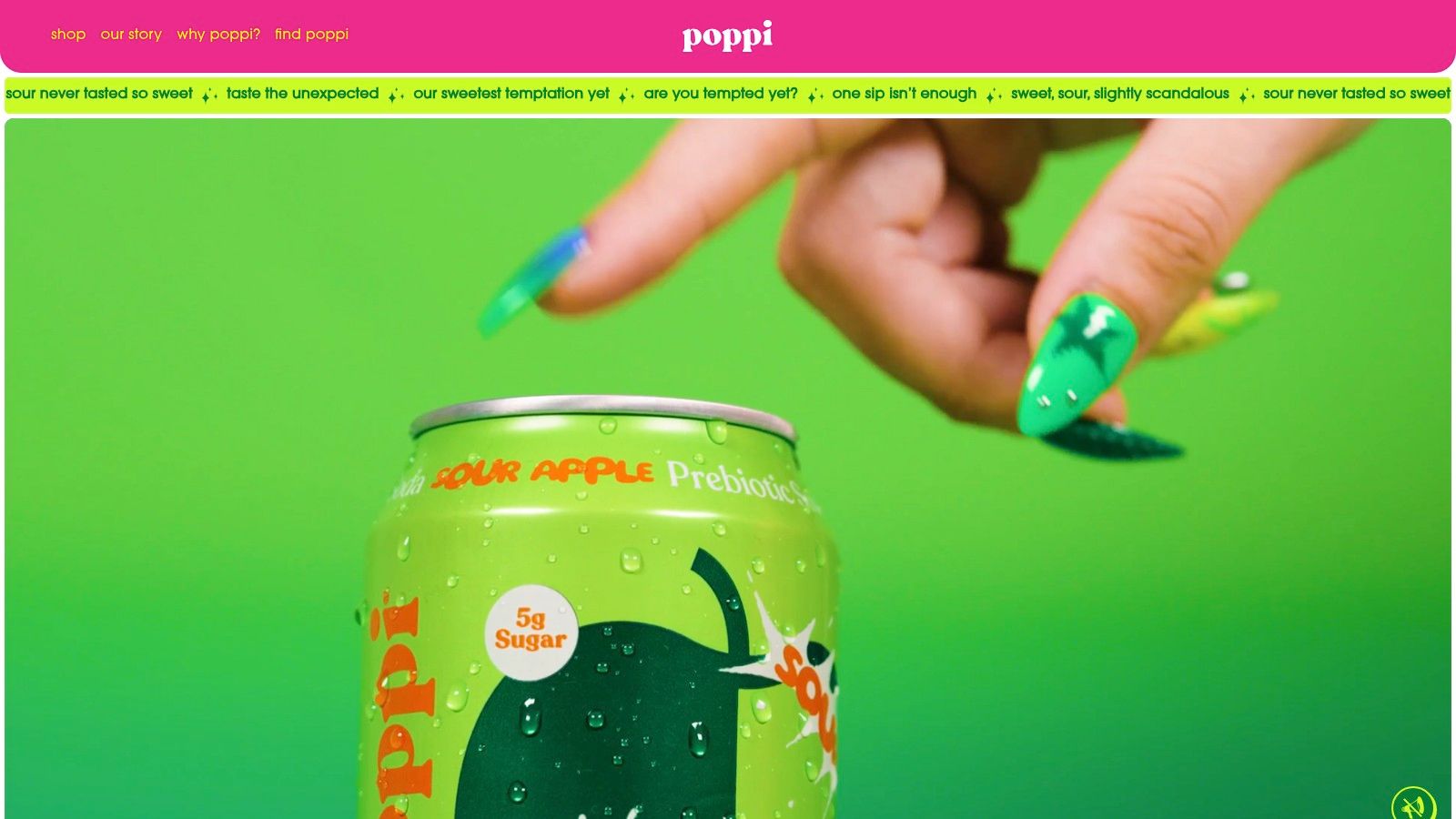
poppi is built for the customer who wants a recognizable soda flavor with a lighter sugar profile. Its apple-cider-vinegar-based prebiotic formula generally provides about 5 grams of sugar and 20 to 35 calories per 12-ounce can, based on the supplied product specifications. The broad flavor range, including limited-time offerings, gives vending operators a straightforward way to create variety without introducing an entirely unfamiliar category.
The procurement story is especially relevant. poppi's distribution alignment with PepsiCo can improve access to national direct-store-delivery and foodservice channels, which may make the brand easier to add to an existing beverage route than a smaller independent product. Operators should still verify local case availability, delivery terms, and account eligibility rather than assuming national visibility guarantees local supply. The poppi brand site is useful for confirming current flavors and product details before building a planogram.
A practical comparison with OLIPOP
poppi and OLIPOP compete for some of the same vending occasions, but they're not identical choices. OLIPOP offers stronger fiber differentiation across the specified lines, while poppi leans into familiar soda taste, lower calories, and broad retail visibility. poppi may therefore be easier to explain to a conventional office audience, while OLIPOP may appeal more strongly to customers actively seeking a functional soda.
The trade-off is price. poppi costs more per can than mainstream soda, and its fiber content is lower than some functional-soda competitors. That means the operator should avoid presenting it as a universal replacement for soda. Use it as a deliberate lower-sugar alternative alongside water, sparkling water, and a conventional best seller where account rules permit.
A cold machine can support trial because customers can immediately distinguish the product from shelf-stable pantry stock. For operators building a ready-to-drink assortment, Vendmoore's explanation of RTDs provides useful category context. Keep the initial flavor selection narrow enough to measure which profiles earn repeat purchases, then add limited-time options only when the data supports the extra complexity.
5. BODYARMOR LYTE
BODYARMOR LYTE is the sports-drink choice on this list, but it's positioned as a lower-calorie option rather than an unsweetened hydration product. The LYTE line supplies approximately 20 calories per 16-ounce serving, with coconut water-enhanced electrolytes and added B vitamins. Vending-friendly formats include 12-ounce and 20-ounce sizes, which gives operators a practical way to serve both quick purchasers and customers seeking a larger post-activity drink.
This category works best when the location has a real active-use occasion. Athletic facilities, manufacturing sites, schools with sports traffic, and workplaces with outdoor or physically demanding roles can justify a sports drink column more easily than a sedentary office. The brand's distribution across mass, grocery, and club channels can support recurring procurement, and case pricing may be competitive through some B2B channels.
Don't confuse lower calorie with no sugar
BODYARMOR LYTE still has a sweet taste and uses sweeteners, with the erythritol and stevia mix varying by SKU. That makes label verification essential for accounts that restrict particular sweeteners, even if they allow low-calorie sports drinks. It also means LYTE shouldn't displace water. A good assortment lets customers choose the product that matches their use case.
For active accounts: Place LYTE near water and coconut water so customers can compare hydration formats.
For schools: Confirm the exact flavor, serving size, and nutrition label against district standards.
For general offices: Start with limited facings unless employees specifically request sports drinks.
The brand is available through BODYARMOR's official site, but operators should source through the channel that provides dependable case replenishment and acceptable margins. The main operational mistake is buying too many flavors because the portfolio looks broad. Begin with a small, recognizable set, monitor sell-through, and reserve additional space for products that satisfy everyday hydration rather than occasional athletic demand.
6. Vita Coco
Vita Coco fills a different role from sports drinks and sparkling sodas. Coconut water brings natural electrolytes, including potassium, and the brand adds vitamin C to its positioning. The U.S. formulation includes a small amount of added sugar, listed as less than 1%, so it can appeal to wellness-focused customers without meeting a strict no-added-sugar policy.
The packaging is practical for vending. Shelf-stable 11.1-ounce Tetra packs can fit refrigerated vending columns and support a compact portion for customers who want something beyond water. Multiple formats and flavors, including Original, Pressed, and Pineapple, create room for trial and rotation. Vita Coco also has strong national distribution and club presence, which can help operators compare sourcing options through retail, wholesale, and foodservice channels. Current product information is available from the Vita Coco website.
The account-fit question
Vita Coco is a strong candidate for offices with wellness-oriented employees, fitness locations, post-activity settings, and public spaces where a recognized coconut-water brand can earn trial. It's less suitable when the account's written policy prohibits added sugar or when customers are highly price sensitive. Operators should also remember that coconut water is not a universal substitute for plain water. Its taste is distinctive, and some customers will reject it regardless of the nutrition profile.
A Tetra pack can be easier to manage than glass, but the operator still needs to confirm column dimensions, vend mechanics, and cold-storage conditions. Packaging should be tested in the actual machine because a product that looks compact in a case may behave differently in a spiral or elevator delivery system.
Place Vita Coco beside water rather than hiding it among sports drinks. That positioning helps customers understand it as a separate hydration choice and gives the machine a more balanced set of recognizable formats. Monitor flavor-level demand before ordering variety cases, since slow-moving flavors can consume valuable refrigerated capacity even when the parent brand performs well.
7. Health-Ade Kombucha
Health-Ade Kombucha is the most specialized product in this group. It uses organic tea and juice blends with live cultures, and the supplied product information states 1 billion CFU at the time of bottling. Available packaging includes 12-ounce cans and 16-ounce bottles, with canned 12-packs offering a useful format for refrigerated vending and variety packs supporting flavor trial.
Kombucha can give a workplace or healthcare-adjacent vending program a strong wellness signal, but it also demands more operational discipline. The product requires cold-chain handling and refrigeration, so an operator must verify machine compatibility, temperature performance, route timing, and storage procedures. Cans simplify vending compared with glass bottles, but the brand's per-unit price remains higher than seltzers and many sports drinks.
When kombucha earns the space
Health-Ade makes the most sense where customers already understand kombucha or where the operator has enough traffic to support a premium refrigerated item. Offices with wellness programs, campuses, fitness environments, and higher-traffic public spaces are more promising than a low-volume location with limited refrigeration. The Health-Ade product range can help operators review current flavors, pack formats, and variety options before placing an order.
The product should be merchandised as a premium fermented tea beverage, not as a guaranteed health treatment. That distinction protects trust and keeps the vending message aligned with what the label communicates.
Cold-chain reminder: If the machine can't hold the product consistently cold, don't add kombucha simply because the category sounds healthy.
Compact machines can work when space is limited, provided the cans and bottles vend reliably. Vendmoore's guidance on small drink vending machines is relevant for locations that need a focused assortment rather than a full-size beverage bank. For buyers comparing external options, these kombucha packs illustrate why pack configuration and flavor rotation should be considered during procurement.
Top 7 Healthy Drink Brands Comparison
Product | Implementation complexity 🔄 | Resource needs ⚡ | Expected outcomes ⭐📊 | Ideal use cases 💡 | Key advantages ⭐ |
|---|---|---|---|---|---|
Liquid Death | Low, shelf-stable cans; must select zero-sugar SKUs | Minimal refrigeration; standard vending space; variable pricing | High brand-driven trial and strong vending stop-rate when zero-sugar SKUs used, ⭐⭐⭐ | Offices, vending, school sets (zero-sugar) | Zero-calorie water; strong brand engagement; recyclable aluminum |
Spindrift | Moderate, calorie varies by flavor; SKU selection matters | Refrigeration recommended for best taste; higher per-can cost | Good flavor authenticity driving repeat purchases; may conflict with strict “zero” policies, ⭐⭐ | Refrigerated vending, premium offices, club/retail | Real fruit juice; clean-label positioning; strong consumer acceptance |
OLIPOP | Moderate, multiple lines with differing fiber/sugar levels | Shelf-stable or refrigerated formats; higher per-can cost; variety packs | Strong taste-to-calorie balance with functional fiber → repeat sales, ⭐⭐⭐ | Wellness-focused vending, curated breakrooms, retail variety sets | Prebiotic fiber + soda-like flavors; functional positioning |
poppi | Low–Moderate, ACV formula; PepsiCo DSD eases distribution | Refrigeration advised; higher price than mainstream sodas; strong DSD availability | Familiar soda profiles with much less sugar; growing visibility, ⭐⭐ | Vending, foodservice, club/retail (benefits from DSD) | ACV prebiotic angle; PepsiCo distribution; frequent flavor rotation |
BODYARMOR LYTE | Low, standard sports-drink setup; verify sweetener labels per account | Often refrigerated; multiple pack sizes; competitive case pricing | Appeals to active consumers as lower-calorie sports option; moderate sales lift, ⭐⭐ | Gyms, sports venues, convenience stores, vending | Electrolytes + coconut water; low-calorie sports positioning |
Vita Coco | Moderate, shelf-stable Tetra packs; contains trace added sugar | Shelf-stable or refrigerated; varied pack sizes; national distribution | Strong hydration and brand recognition; may not meet strict “no added sugar” policies, ⭐⭐ | Post-activity hydration, wellness displays, vending columns | Electrolyte-rich coconut water; vending-friendly Tetra format |
Health‑Ade Kombucha | High, cold-chain required; live cultures; verify machine compatibility | Requires refrigeration and cold-chain handling; higher per-unit cost | Strong probiotic/wellness appeal; niche but loyal buyers; trial-driven, ⭐⭐⭐ | Refrigerated vending, wellness cafés, premium breakrooms | Organic kombucha with live cultures; variety packs for rotation |
Turn a Healthy Drink List Into a Vending Strategy
A successful healthy beverage program starts with the account, not the brand. Ask whether the location requires zero sugar, no added sugar, low calorie, recyclable packaging, caffeine limits, or specific school and healthcare nutrition standards. Then confirm whether customers want everyday hydration, a soda alternative, an electrolyte drink, coconut water, or a premium functional beverage.
A balanced opening assortment can cover several use cases without filling every column with a different niche product:
Water: Use Liquid Death still water as a recognizable zero-calorie foundation.
Sparkling water: Add Spindrift for fruit flavor and a real-juice ingredient story.
Lower-sugar soda alternatives: Test OLIPOP and poppi, but keep their distinct fiber and formulation differences clear.
Electrolyte drinks: Use BODYARMOR LYTE where athletic, outdoor, or physically demanding traffic supports it.
Coconut water: Place Vita Coco where customers value a distinct hydration format and the account permits its added sugar.
Kombucha: Reserve Health-Ade for refrigerated locations with enough demand for premium, specialized beverages.
Before ordering, verify case pricing, local availability, package dimensions, shelf-life requirements, and refrigeration compatibility. A product can be nutritionally attractive and still fail if it jams the delivery mechanism, arrives too close to its date, or costs more than the location's customers will accept. Ingredient transparency also matters commercially. An EY survey found that 58% of U.S. consumers pay attention to drink ingredients, while 52% are willing to pay more for beverages supporting health and wellness goals. Read the EY beverage survey when shaping labels, product descriptions, and account conversations.
Start with a controlled test. Place a few clearly different choices, track sell-through and stockouts, collect employee or customer feedback, and rotate underperformers instead of expanding every line at once. Telemetry can show which selections need replenishment and which columns remain idle, while scheduled follow-up service gives operators a chance to adjust the mix before frustration becomes a complaint.
Google evaluates pages at the page level using multiple signals, so a vending business should support this product content with specific service pages for break room vending, schools, healthcare, Oklahoma workplaces, and public spaces. Google's ranking systems guidance emphasizes helpful, unique, user-focused content, while practical SEO guidance groups visibility drivers around relevance, content quality, authority, technical performance, and user engagement. A page that explains actual product, service, and location decisions can attract buyers who are already looking for vending help, not just people browsing beverage brands.
For Oklahoma workplaces and public-space managers, Vendmoore Enterprises can use assortment feedback and telemetry to refine replenishment across smart, cashless vending setups. A custom program should connect the healthy drink mix to the location's traffic, equipment, policies, and budget rather than treating every account the same.
Vendmoore Enterprises offers managed vending programs with cashless machines, connected inventory insights, and assortments designed for workplaces and public spaces across Oklahoma. Visit Vendmoore Enterprises to discuss a break room vending program built around healthy drinks, dependable replenishment, and the products your customers choose.
Comments