_edited.png)
Is Candy Good for You? Workplace Health and Vending Facts

No, candy isn't considered a health food by major health authorities, but occasional small portions can fit within a daily sugar limit of 50 grams or less. That limit applies to free sugars on a 2,000-calorie diet, and eating less than 25 grams may provide additional health benefits.
At 3 p.m. in an Oklahoma office, the break room can become a small test of priorities. An employee needs a quick lift before the final meetings of the day, the vending machine offers brightly packaged candy, and the company wants to support wellness without treating adults like children. The question “is candy good for you?” matters because the products a business makes convenient influence what employees reach for when energy and attention dip.
Candy is popular for understandable reasons. It's portable, familiar, inexpensive to stock, and delivers a fast burst of sweetness. But that convenience doesn't make it nutritious. Candy supplies free sugars while generally contributing little fiber, protein, or meaningful micronutrients, so it belongs in the treat category, not the health-food category.
The practical question for a workplace isn't whether every sweet must disappear. It's whether a vending program offers only short-term treats or gives employees a real choice between candy and snacks that can support a demanding workday.
The Break Room Candy Dilemma
A professional woman pauses in front of an office vending machine. She has a report to finish, a meeting approaching, and several colorful candy options at eye level. A nearby shelf contains a few less familiar snacks, but the candy is easier to recognize and faster to choose.
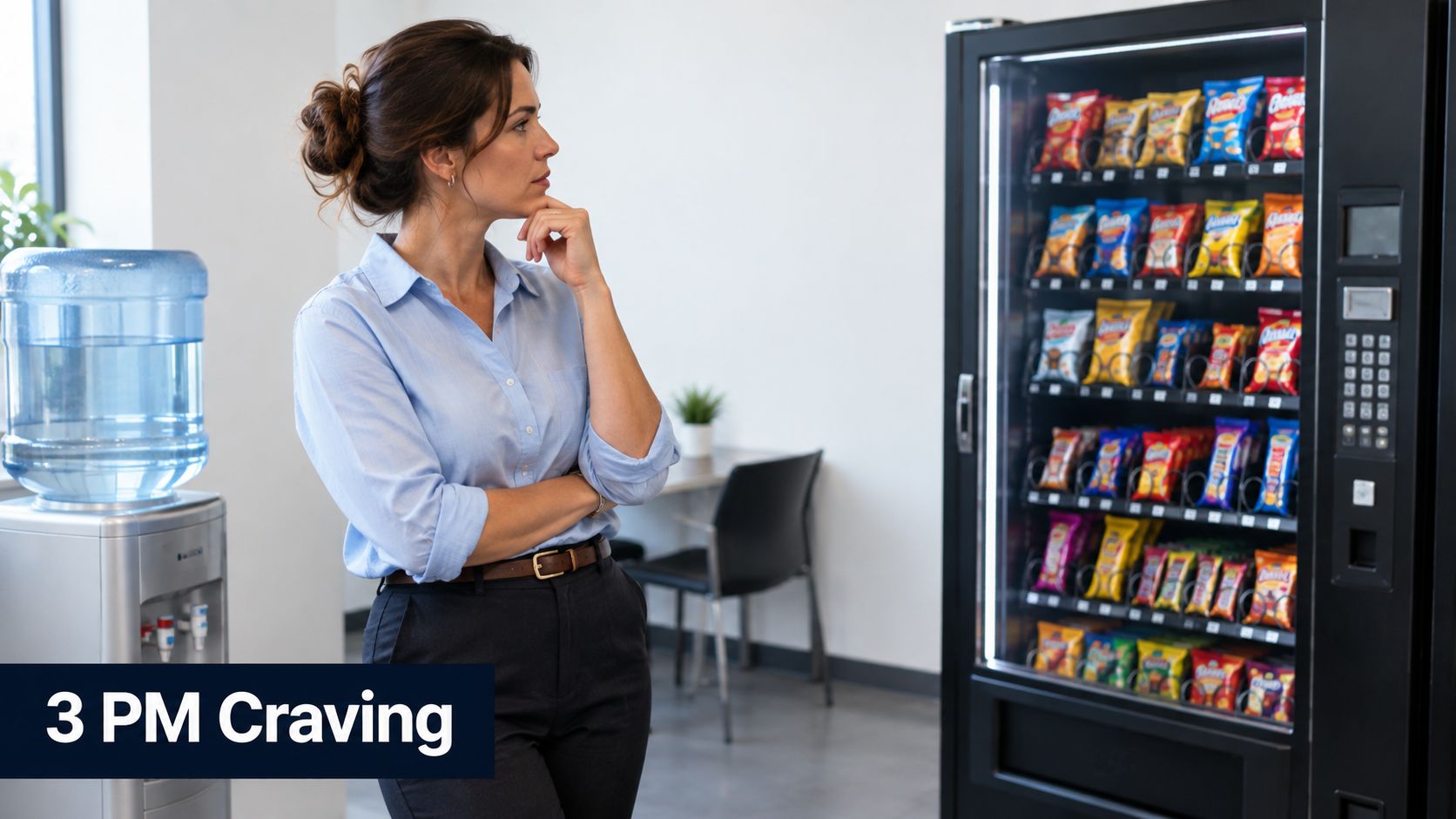
That scene captures the workplace vending dilemma. Employees want convenience and choice. Business owners want a break room that supports morale and productivity. A vending operator wants products that sell. Candy satisfies the first and third priorities immediately, but it doesn't do much for the second.
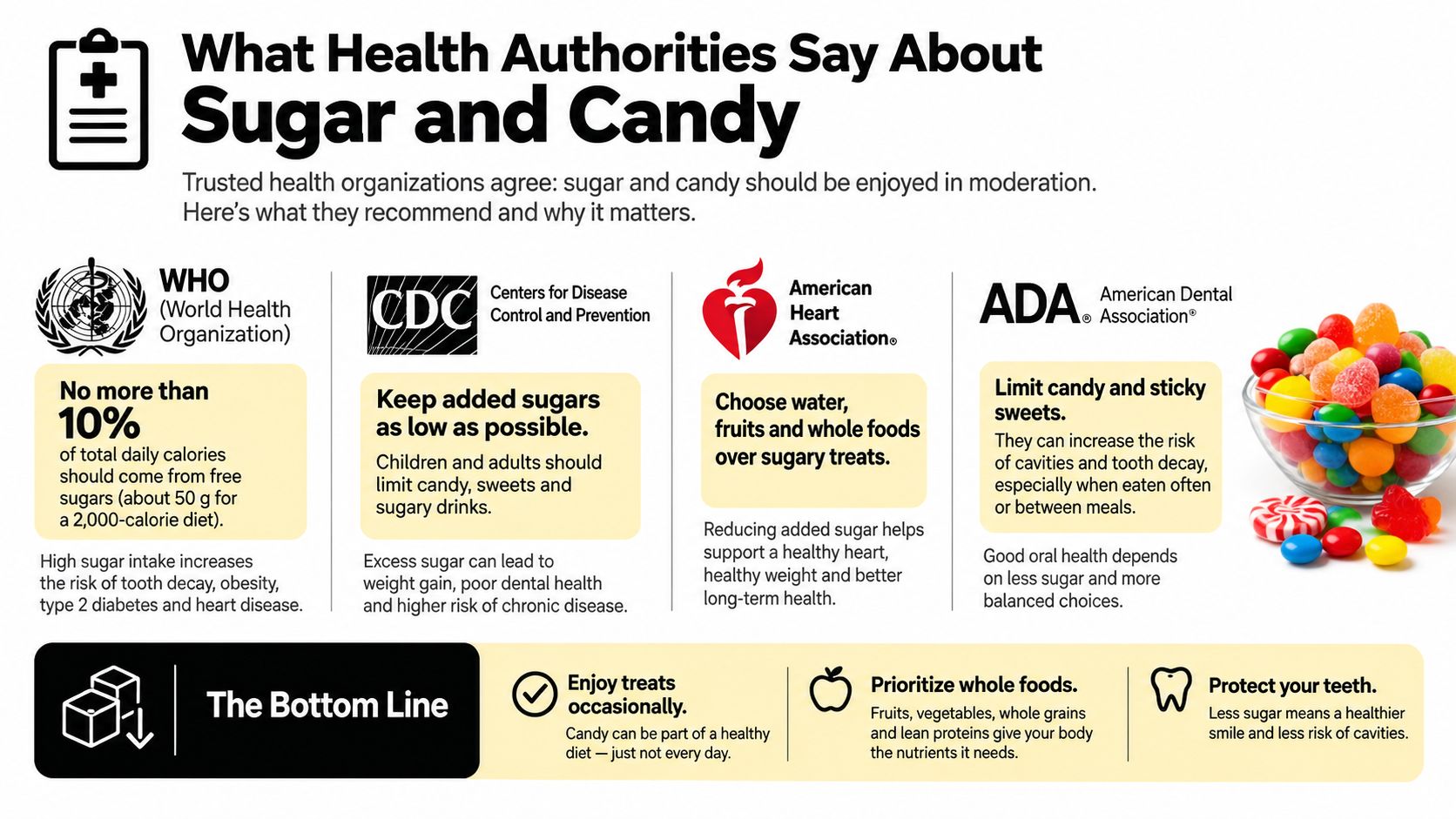
Major health authorities don't classify candy as a food to eat freely. The World Health Organization recommends limiting free sugars because high intake contributes to concerns including unhealthy weight gain and dental caries (WHO's sugars guideline). Candy can fit into an overall diet occasionally, but regular availability and repeated grazing make it easier for employees to consume sugar without thinking about the total.
Why employees keep choosing it
Candy wins the break room contest through convenience. A bar or small bag requires no preparation, refrigeration, utensils, or explanation. It also provides an immediate sensory reward during a tedious afternoon, which is why removing it can create frustration rather than healthier habits.
Office managers should avoid moralizing about individual choices. Employees have different dietary needs, preferences, budgets, and schedules. The employer's responsibility is more practical: make the healthier choice visible, available, and reasonably convenient alongside familiar treats.
That can begin with better product placement, clearer labeling, and a broader assortment. Workers who want candy should still be able to find it, but they shouldn't have to choose between candy and nothing.
Practical rule: Keep treats available, but stop treating them as the default fuel for the workday.
Employees who want to reduce cravings may also benefit from practical guidance outside the workplace, such as this advice from Maximum Health Products. For the business, the more immediate step is reviewing whether the machine is dominated by products with high sugar and low nutritional value. Vendmoore's discussion of unhealthy vending machine snacks offers a useful starting point for that review.
What Health Authorities Say About Sugar and Candy
The WHO guidance behind workplace sugar decisions covers the entire diet, not a daily candy allowance. It counts free sugars from sweets, sweetened drinks, desserts, and sugars added to other foods. WHO also presents a lower target, below 5% of total daily energy intake, for additional health benefits. For business owners, the practical lesson is clear: candy should be an occasional option, not the break room's routine fuel.
Why frequency matters
Sugar affects teeth through repeated exposure, not only through the size of one serving. Oral bacteria metabolize free sugars into acids that remove minerals from enamel and dentine, making free sugars a primary dietary factor in dental caries, according to WHO oral-health guidance.
The Minnesota WIC oral-health guidance classifies candy as highly cariogenic and describes sticky or slowly eaten candy as especially risky. It advises limiting sugary foods and drinks to mealtimes. In a workplace, an open candy bowl can encourage employees to take small pieces repeatedly across the day, extending sugar exposure.
A dental-prevention reference from NCBI reports low dental-caries levels when populations consume less than 15 to 20 kilograms of free sugars per person per year. It also recommends limiting sugar intake to four times or less per day, because more frequent consumption is associated with higher caries levels.
Office managers should act on that mechanism. Keep candy available in controlled portions, place it alongside more filling choices, and avoid making it the easiest item to grab between meetings. A planned treat with a meal or scheduled break creates less repeated exposure than unrestricted grazing.
Clear nutrition information supports better choices. Vendmoore's guide to vending machine nutrition labeling explains how calorie information can appear at the point of selection. Employees reducing sugar can also use a personalized sugar-free meal plan to organize choices beyond the vending machine.
Beyond Sugar, The Ultra-Processed Food Pattern
Candy is an obvious source of added sugar, but it is only one part of a workplace food environment. A vending machine stocked mainly with candy, sugary drinks, refined snack cakes, and other heavily processed products makes those choices routine during long shifts and busy workdays.
A 2025 systematic review described sweets and sugary foods as energy-dense and nutrient-poor. It also reported associations between higher ultra-processed food intake and greater risks of hypertension, cardiovascular events, digestive disease, cancer, and all-cause mortality, including risk changes per 100 grams per day increase, while noting that evidence about direct health outcomes remains limited. The findings concern overall eating patterns, not one candy bar. Businesses should use them to improve the assortment, not to make exaggerated claims about individual products.
Look at the whole assortment
The practical question for an office manager is simple: what does the vending program make easiest?
If the most visible selections are sweet, salty, or highly processed, employees have limited convenient choices during a long shift. Put nuts, fruit-based options, whole-grain snacks, and lower-sugar drinks beside familiar treats. That arrangement gives employees a realistic way to choose according to hunger, schedule, and energy needs.
The useful workplace unit is the repeated choice structure around a snack, not one isolated purchase.
What this means for Oklahoma workplaces
Manufacturing sites, healthcare facilities, schools, offices, and multi-tenant buildings operate on different schedules. An overnight hospital employee may need a compact snack with more staying power. An office worker may want something sweet after lunch. A school setting requires closer attention to age, supervision, and product suitability.
Review the complete assortment before replacing one candy brand with another. Vendmoore's guide to healthy grab-and-go snacks offers examples of varied vending choices. Oklahoma businesses can apply the same principle by placing filling snacks and lower-sugar drinks within easy reach, while keeping treats available in controlled variety.
The goal is practical. Candy can remain an occasional option without becoming the only convenient response to hunger, fatigue, or a missed meal. A vending strategy that offers choice supports employee well-being without turning the break room into a nutrition lecture.
Practical Candy Portions for Busy Workdays
A vending machine can turn a rushed afternoon into an automatic candy purchase. Translating the 50-gram free-sugar limit into a workplace decision takes four moves, starting with what the package says about servings and ending with how the machine presents alternatives.
Start with the label
Check sugar per serving, then check the number of servings in the package. A small-looking bag may contain more than one serving, so eating the entire package can change the sugar total quickly. Display calorie and nutrition information where employees can see it before buying, not only after opening the snack.
Treat candy as one part of the day
Candy has to fit alongside the day's other sources of sugar. Breakfast foods, sweetened drinks, and dessert may already account for part of a person's intake before the break-room visit. A single portion is a more practical default than an automatic second purchase.
Prefer planned consumption over grazing
Dental guidance makes the timing and format of a treat relevant. Sticky candy or candy eaten slowly keeps sugar in contact with teeth longer, while repeated exposure throughout the day creates a poor routine. A defined break or meal is easier to manage than a bowl beside reception that invites continuous picking.
Give employees better defaults
A vending machine can support portion awareness without removing familiar products:
Keep candy in individual portions: Smaller packages make the choice clearer than oversized bags designed for sharing or repeated snacking.
Place alternatives at eye level: Employees see products presented first, especially during a rushed afternoon.
Add water and unsweetened options: A sweet snack should not automatically be paired with a sweet drink.
Review slow-moving products: Items that rarely sell occupy space that could serve more useful choices.
A U.S. dietary analysis found that candy supplied 6.4% of added sugars and about 2.2% of total calories, equal to 45.2 kilocalories per person per day, among Americans aged 2 and older (national candy-intake analysis). It also found that 26% of Americans aged 2 and older consumed candy on a given day, with average per-capita candy intake at 10 grams per day. Candy is common, but these findings do not make it nutritious or support unrestricted workplace availability.
Use Vendmoore's guide to best workplace snacks when reviewing product selection with the vending operator. For Oklahoma businesses, the practical test is simple: keep portions clear, place water nearby, and make the machine's default choices support a workable break rather than repeated grazing.
Smarter Vending Alternatives for Oklahoma Businesses
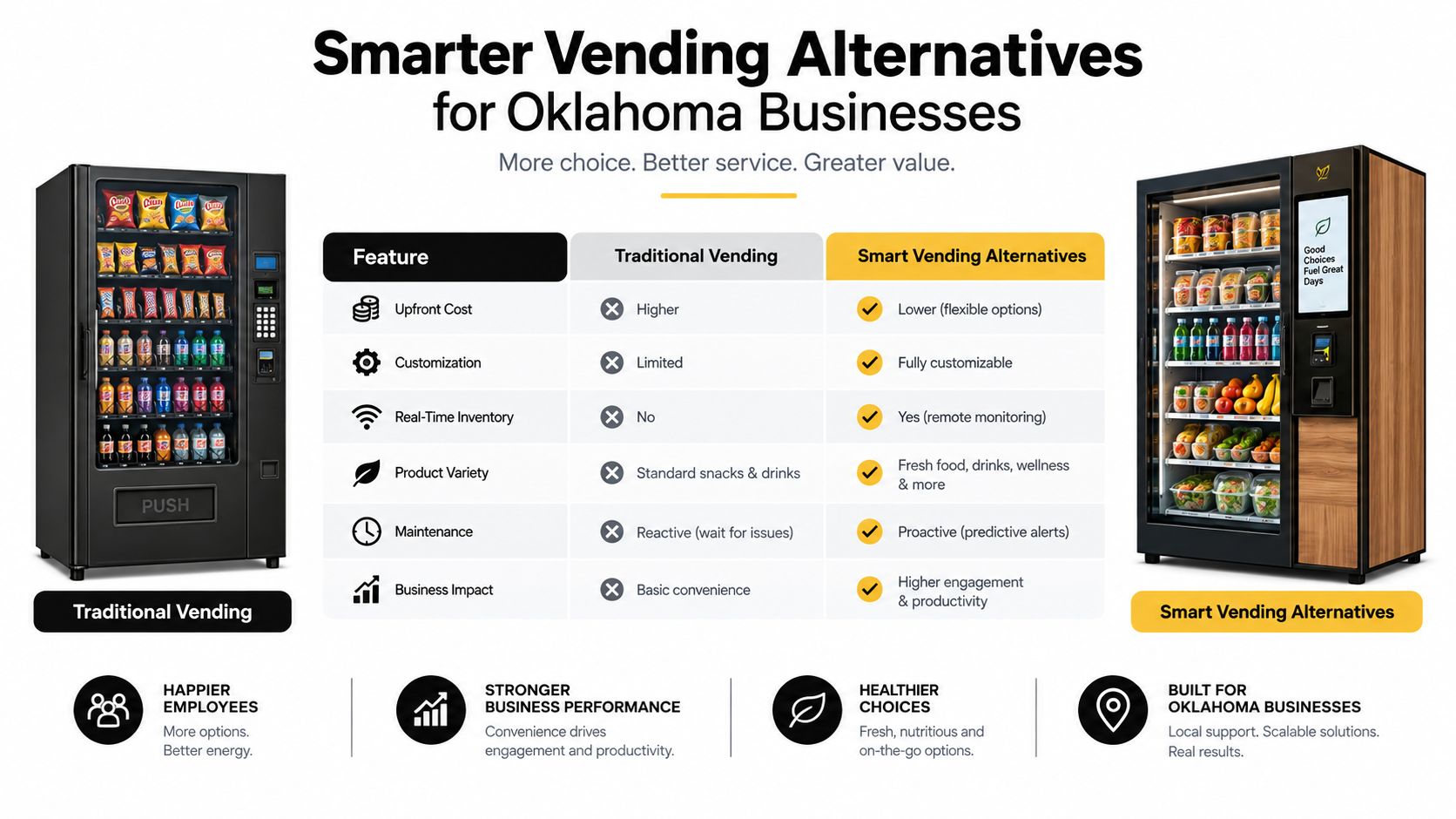
A healthier vending program shouldn't force every employee into the same snack choice. It should offer a clear range, then use sales and feedback to refine the mix. Candy provides sweetness and familiarity. Nuts, whole-grain snacks, and other more substantial options can provide a different kind of break, especially for employees who need sustained satisfaction during a long shift.
Traditional candy focus | Smarter vending approach |
|---|---|
Fast sweetness with limited nutritional value | A mix of treats and snacks with more varied nutritional profiles |
Repeated grazing encouraged by constant visibility | Individual portions and clearer point-of-selection information |
One assortment for every location | Products selected around the site's workforce and schedule |
Restocking based mainly on empty slots | Assortment changes informed by inventory and employee feedback |
Build a balanced product mix
Potential alternatives include nuts, dried-fruit blends, protein bars, yogurt-covered raisins, dark-chocolate squares, and whole-grain snack packs. They aren't automatically health foods, and labels still matter, but they give employees more variety than a machine dominated by candy and sweetened drinks.
A snack-focused resource on how to boost energy at work with snacks can help office managers think beyond the traditional candy-bar lineup. The right mix depends on the location, storage requirements, employee preferences, and the balance between healthier products and familiar treats.
Match the machine to the site
An Oklahoma manufacturing facility may need durable snacks that work around shift changes. A medical office may value compact refreshments and clear labels. A college campus or school needs products appropriate for its audience, while a residential property may benefit from a wider mix that serves residents at different times.
Vendmoore Enterprises offers AI-powered vending services with cashless payment options, connected inventory and performance insights, location-specific assortments, compact refreshment centers, bottle-and-can vendors, dual-zone chill centers, and frozen food machines. The company serves Oklahoma City, Norman, Edmond, and surrounding areas, while gathering feedback and adjusting selections for each location.
For educational settings, Vendmoore's information on healthy vending machine snacks in schools provides a relevant comparison point. A business doesn't need to copy a school assortment, but it can apply the same principle: make the healthier option practical, visible, and suited to the people using the machine.
Making Vending Work for Workplace Wellness
A vending machine is a small operational decision with a daily audience. Employees see it during breaks, shift changes, long meetings, and stressful deadlines. Business owners can't control every meal, but they can control the convenience environment inside the workplace.
Start with the assortment. Keep a reasonable selection of candy so the program doesn't feel restrictive, then add products that offer more variety in texture, satiety, and dietary fit. Include clear nutrition information where possible, especially for calories and sugar, and avoid positioning every sweet product as the obvious first choice.
Use feedback instead of assumptions
Employees will tell you what works if you give them a simple way to respond. A short survey can ask which products they want added, which items they never buy, and whether they need options for allergies, dietary preferences, or different work schedules.
Sales data adds another layer. Connected inventory tools can show which products move quickly, which sit untouched, and when replenishment is needed. That information helps an operator adjust the assortment based on actual behavior rather than relying on generic ideas about what an Oklahoma workforce wants.
Set a review routine
A practical review can cover:
Product balance: Check whether candy occupies too much of the visible assortment.
Portion sizes: Favor individual servings that make consumption easier to understand.
Employee access: Make sure healthier items aren't hidden behind less convenient payment or placement.
Stock reliability: Remove empty spirals and stale choices quickly, since availability determines trust.
Location fit: Adjust products for offices, schools, clinics, industrial sites, airports, stadiums, or residential properties.
A wellness-minded vending program doesn't lecture employees. It gives them better options at the moment they're deciding.
Candy isn't good for you in the way that nutrient-dense foods are, and health authorities recommend limiting its free-sugar contribution. That conclusion doesn't require eliminating every treat. It requires business owners to stop confusing popularity with nutritional value and to treat vending as part of the workplace environment.
The strongest strategy is a balanced one: keep occasional treats, add useful alternatives, display relevant information, monitor what employees choose, and revise the mix. That approach respects personal choice while making it easier for employees to support their own energy and well-being during the workday.
Vendmoore Enterprises provides managed and flexible vending solutions for Oklahoma workplaces, including cashless smart machines, customized snack assortments, refreshment centers, chilled products, and frozen food options. Visit Vendmoore Enterprises to discuss a break room program that keeps popular treats available while giving employees more practical, health-conscious choices.
Comments