_edited.png)
Vending Machine Capacity: A Practical Planning Guide

The machine in your Oklahoma break room looks full on Monday morning. By Wednesday, the popular bottled drinks are gone, the best-selling chips have empty spirals, and someone has already emailed the office manager asking when the vending service is coming back. The cabinet didn't necessarily lack space. It may have had the wrong vending machine capacity for the location's traffic pattern, product mix, or refill schedule.
That distinction matters in offices, schools, clinics, manufacturing plants, and public venues. A machine can hold a large number of products yet provide poor service if high-demand selections sell out before the next visit. Effective capacity means the sellable inventory that lasts through the service interval, not just the number printed on a specification sheet.
What Capacity Really Means on a Vending Machine
A Norman office can have a machine that looks well stocked on Monday and still leave popular drinks unavailable before Friday. The cabinet may contain plenty of products overall, while its fastest-selling selections run out first. For an account manager, vending machine capacity means the inventory that can serve customers until the next refill, not just the number of spaces inside the cabinet.
Start with the physical layout. A snack-and-beverage machine may provide approximately 30 to 60 unique selections, with fully loaded inventory ranging from roughly 300 to more than 600 individual items, depending on its format and package sizes. Machines commonly use 5 to 7 trays. Snack sections often provide 16 to 24 selections, while drink sections offer about 8 to 12 selections. A breakdown of snack and beverage slot counts and unit capacities provides comparable planning context.
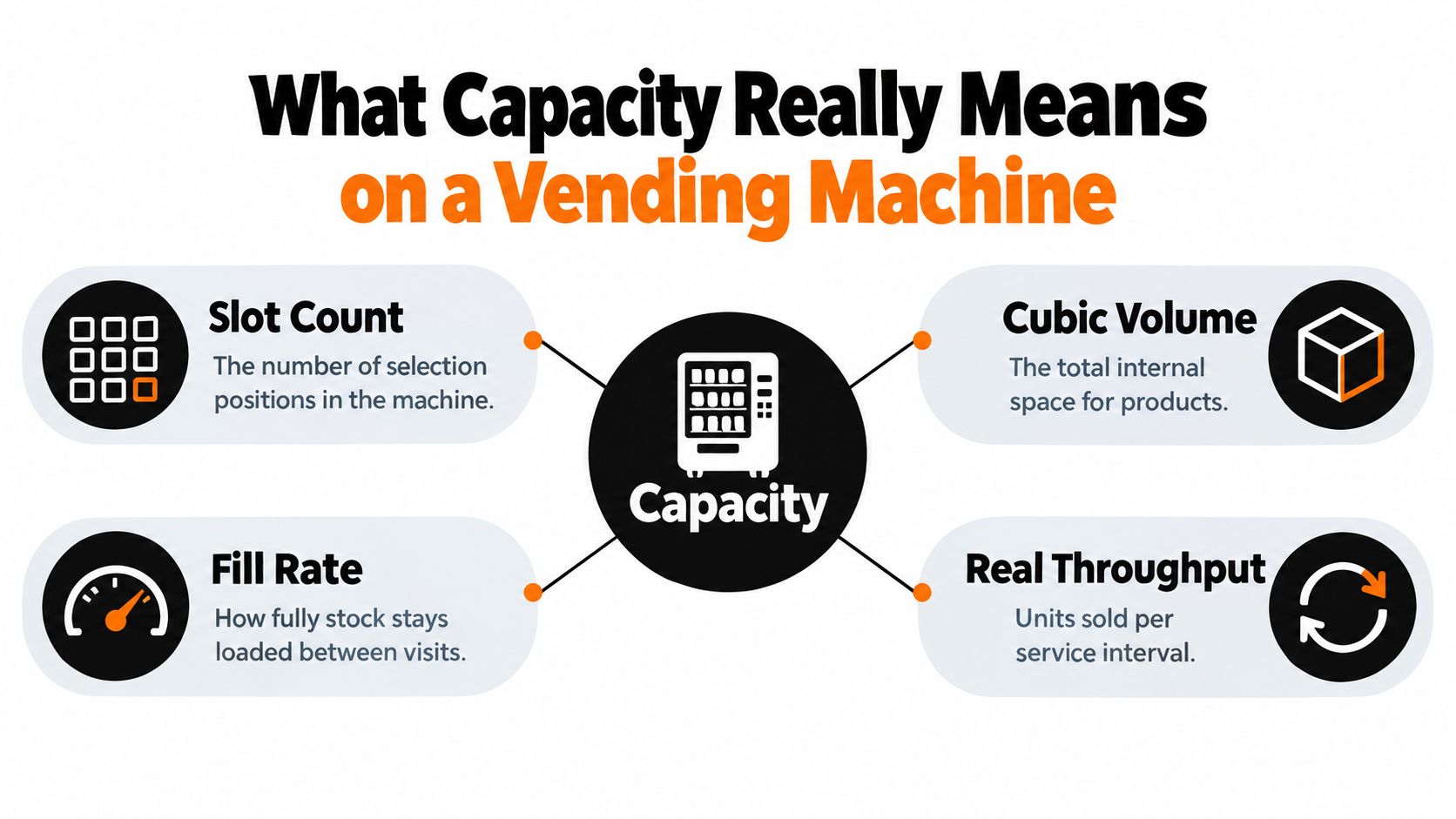
Four numbers that answer different questions
Term | What it counts | Why it matters |
|---|---|---|
Selection count | Different products customers can choose | Measures variety |
Slot or lane count | Physical selling positions | Shows how the assortment is organized |
Unit capacity | Individual products loaded inside | Indicates inventory depth |
Effective capacity | Units likely to sell before the next service visit | Connects cabinet size to actual performance |
A machine with 40 spirals can display 40 products, but each spiral stores several units. A beverage stack machine may assign one column to a single can or bottle type and hold hundreds of units. A snack machine usually divides its space among more choices, leaving fewer units behind each selection. The explanation of vending machine purpose and configuration helps clarify why the cabinet's function matters alongside its visible product faces.
Use a simple operating test: effective capacity = units loaded in a selection minus units expected to sell before the next visit. If a Norman office sells 10 bottles of water between visits and the column holds 12, that selection has only a small service buffer, even if other columns remain full.
Operator's rule: Ask how many units each location needs between visits, then ask how many selections customers expect. Do not reverse those questions.
A hospital lobby serving staff and visitors around the clock may need deeper stock in fast-moving drink columns. A school may need broader variety with smaller quantities per selection. Capacity is a service decision shaped by demand, refill timing, and slot allocation, not a cabinet headline.
The Building Blocks Slots Trays and Cubic Volume
To compare vending proposals fairly, separate the physical terms. A selection is the product a customer sees and chooses. A slot, lane, spiral, or column is the mechanism that stores and delivers that product. A tray or shelf groups those selling positions, while cubic volume describes the internal space available for inventory.
Start at the front of a snack machine. A spiral rotates one product forward after payment. Package width determines how many facings fit across a tray, and package depth determines how many units the spiral can hold. A narrow granola bar and a large chip bag may occupy different amounts of useful space even when each receives one selection label.
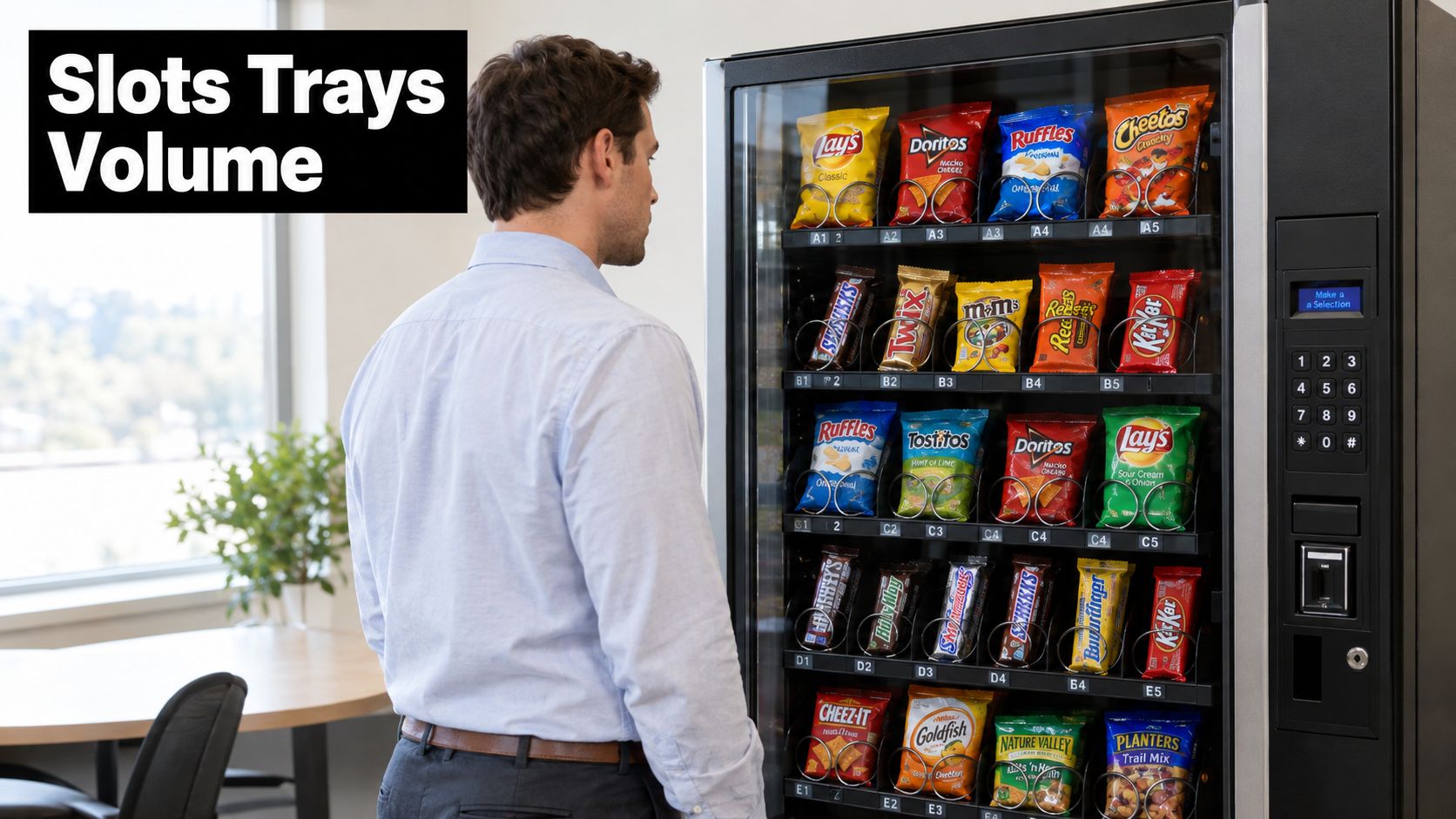
Read a machine from the inside out
A beverage stack machine works differently. Each column usually holds one can or bottle type, with products stacked vertically so the next unit drops when the customer buys one. That design gives the operator more depth for a popular drink, but it can limit the number of distinct beverage choices compared with a snack tray.
Basket trays or adjustable shelves create another configuration. They can handle products with irregular shapes, but usable space depends on clearance, package stability, and the delivery mechanism. Frozen food equipment adds temperature zones and food-safety requirements, so the theoretical cabinet volume doesn't translate directly into sellable inventory.
Use these four checks when reading a specification sheet:
Count selections: How many different products can customers choose?
Count selling positions: How many spirals, lanes, columns, or shelves are available?
Estimate units per position: How many packages fit safely in each lane?
Subtract practical losses: Allow for package dimensions, clearance, temperature requirements, and dedicated space for fast sellers.
A listed slot total can overstate operational capacity because large bottles, irregular packages, safety gaps, and dedicated facings consume space. The Vendmoore planogram guide is useful when converting a product list into a physical arrangement that customers can follow and operators can refill.
The cabinet is only the container. The planogram determines how much of that container becomes useful selling space.
Consider a clinic in Edmond. A machine filled with small snacks may have plenty of visible variety, but it may not provide enough chilled drinks during afternoon appointments. A nearby manufacturing floor may have the opposite problem, with a narrow snack mix selling rapidly during shift changes. In both cases, cubic volume exists, but the wrong allocation makes the effective capacity feel small.
Capacity by Machine Type Snack Beverage Combo and Frozen
A Norman office may have room for one cabinet, yet employees may want cold drinks, snacks, and occasional meals. A combination machine can cover those categories, but its total capacity is divided among them. A beverage machine may hold more units of fewer products, while a snack machine offers broader choice with less depth per selection. Format determines both variety and effective capacity, meaning the units likely to sell before the next refill.
Format | Typical selections | Typical units loaded | Best fit location |
|---|---|---|---|
Snack machine | 16 to 24 snack selections | Fewer units per selection than beverage columns | Offices, schools, break rooms |
Beverage stack machine | 8 to 12 drink selections | Hundreds of cans or bottles | Clinics, plants, public venues |
Combination machine | Approximately 30 to 60 total snack-and-beverage selections | Roughly 300 to more than 600 items, depending on configuration | Offices and sites needing one compact cabinet |
Frozen machine | Configuration-dependent | Configuration-dependent, with space reserved for temperature control | Healthcare, campuses, public sites, and locations seeking frozen meals |
These figures are planning baselines, not guarantees. A large bottle, bulky meal, or unusual package can reduce the number of units that fit safely in a lane. Capacity guidance for snacks and drinks should therefore be checked against the actual machine, package dimensions, and product mix rather than treated as a promise.
Match the tradeoff to the location
Snack machines usually spread space across many product types. That suits an Oklahoma school or break room where customers want chips, candy, crackers, and healthier options. The tradeoff is shallower inventory in each position, so a popular item can sell out before the next service visit.
Beverage stack machines assign columns to cans or bottles. A busy Edmond clinic may need deep inventory in water, sports drinks, and soft drinks, particularly if visitors and staff buy throughout the day. If one column sells quickly, its depth may matter more than adding another drink selection.
Combination machines suit locations where floor space is limited and demand is divided between snacks and drinks. A Norman office may prefer one cabinet instead of separate machines, while a manufacturing break room may need the operator to give more facings to products that move during shift changes.
Frozen machines address a different demand pattern. They can offer meals or frozen snacks where a cafeteria is unavailable, but temperature control and product fit reduce the space available for sale. Frozen food vending guidance from Vendmoore helps compare this format with equipment designed for shelf-stable snacks and bottled drinks.
Choose the format by the bottleneck. If customers lack choice, add selections. If fast sellers run out, add depth to those lanes or visit more often.
The history of vending also shows how machine formats expanded from simple dispensers to refrigerated and food-focused equipment. Early machines sold small items, while later designs supported drinks, sandwiches, coffee, and other temperature-sensitive products, as documented in this history of vending machines.
The practical lesson is simple: capacity includes storage, category range, temperature control, and sales speed. Use telemetry to track which selections sell before each refill. Then reallocate underused slots to proven sellers, turning the cabinet's fixed physical space into greater effective capacity.
Calculating Fill Rates and Required Stock
A Norman office machine can look full at 9 a.m. and still run dry before Friday's refill. Capacity therefore means the stock that can cover real demand between visits, not just the number of slots inside the cabinet.
Use this planning formula:
Required inventory = average daily sales × days between service visits × reserve factor
The reserve factor accounts for busy shift changes, delivery delays, and the chance that a popular item sells out early. It converts physical capacity into effective capacity, the number of units likely to sell before the operator returns.
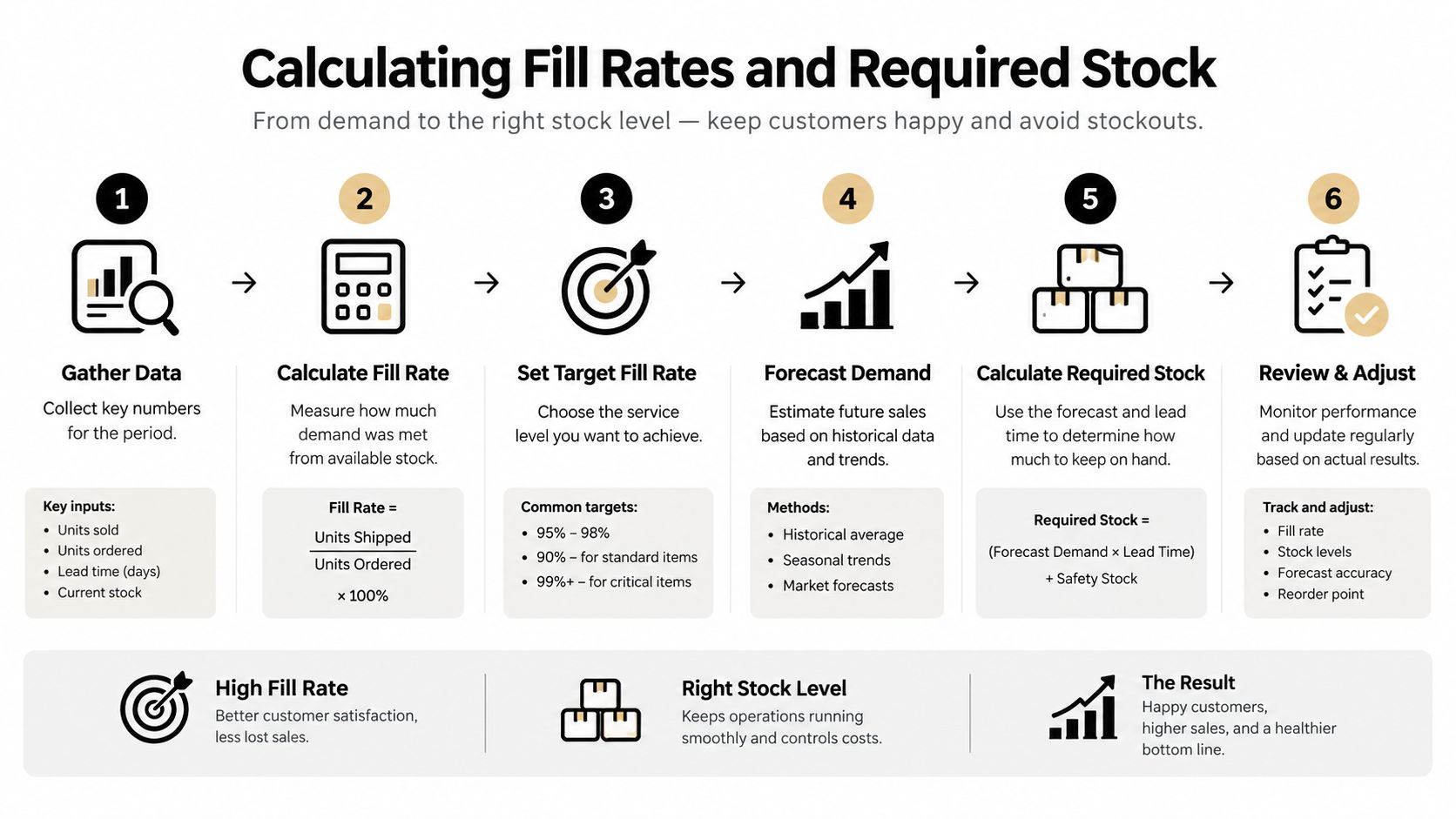
Suppose a clinic machine sells 45 units per day and receives service every three days. It needs at least 135 units to cover expected movement before adding a reserve, because 45 multiplied by three equals 135. The product mix and configuration factors behind this example are explained in this practical capacity calculation.
That 135-unit total applies to the cabinet, not to every product. Divide demand by SKU. If bottled water outsells juice, give water more facings or deeper columns. A snack that barely moves may surrender its space to a second high-demand item. In a school, that change might prevent a popular drink from selling out during lunch while unused stock remains elsewhere.
Fill rate adds a second measurement:
Fill rate = units sold ÷ units loaded
A low fill rate may point to weak demand, a poor product choice, overloading, or packaging that uses too much room. A high fill rate can show strong movement, or it may reveal that the machine was loaded too lightly for the interval.
Record five facts at each visit:
Beginning stock: What the operator loaded.
Ending stock: What remained before the next visit.
Units sold: Beginning stock minus ending stock, adjusted for spoilage or damage.
Days between visits: The actual interval, rather than the planned route schedule.
SKU movement: Sales by individual product, not just the cabinet total.
The inventory management KPI guide can help account managers turn these records into a repeatable operating routine.
Telemetry makes slot reallocation more precise. It shows which selections deplete first, so an operator can add depth to fast sellers and reduce space for slow ones before the next visual check. A 2025 survey-based study of 100 retail professionals reported inventory costs falling from $100,000 to $75,000, a 25% decrease, while stockouts and overstocking fell from 20% to 5% and product-availability satisfaction rose from 80% to 96%. Those findings are specific to that study, not a universal promise. The survey-based IoT and AI inventory study provides the source.
Designing the Assortment That the Capacity Serves
A full cabinet can still serve an Oklahoma break room poorly. Effective capacity means the units that sell before the next refill, not the number of spirals or shelves occupied. Match each slot to the people using the machine, their schedules, budgets, dietary restrictions, and payment habits.
Workplace demand is already present. A CDC presentation reports that approximately 50% of employees have food or beverage vending available at work. It also reports that 23.4% of working adults obtain food at work during a typical week, while work-provided foods average 1,292 calories per person per week. These findings appear in the CDC workplace vending presentation.
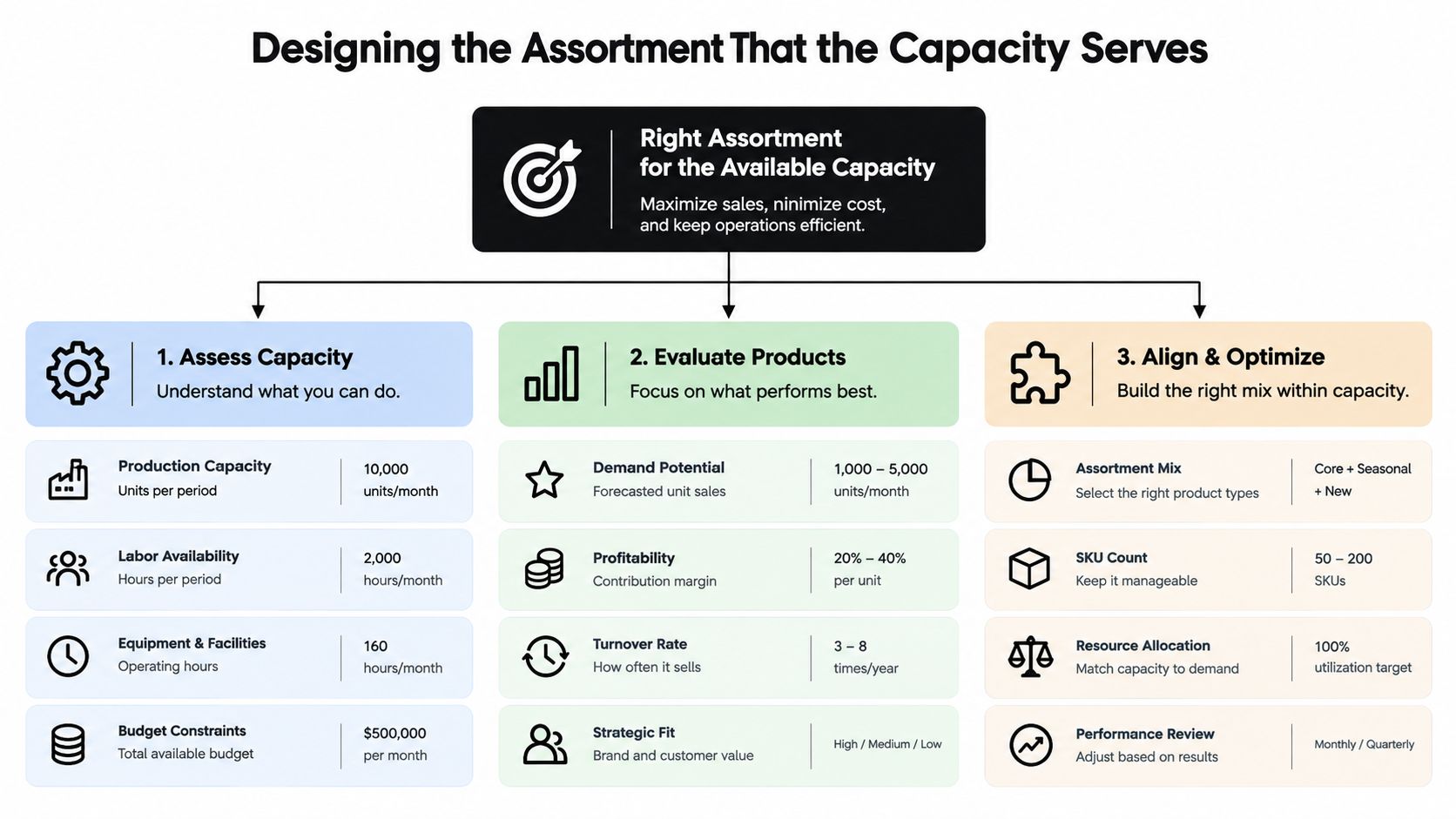
Start with a simple slot decision: what job must this position perform before the next service visit?
Core staples handle reliable requests, such as water, familiar soft drinks, coffee accompaniments, and common salty or sweet snacks. Rotating favorites create room for seasonal products, employee requests, or items suited to a particular shift. Protected specialty choices reserve space for lower-sugar, allergen-aware, nutritious, and clearly labeled products.
That third group belongs in the capacity calculation. Policy research found 81% of available snacks were high in fat, 61% high in saturated fat, 69% high in sugar, and 75% of drinks high in sugar. Those figures are reported in PolicyBristol's vending-machine briefing.
For an Oklahoma clinic, a school, or an office, the right mix serves the whole population rather than filling every slot with conventional snacks. A specialty item that sells steadily may produce more effective capacity than a familiar product that occupies a spiral and expires. Healthy choices do not automatically weaken sales. The same research reported sales of $70.71 at both comparison sites after a healthy-vending policy was implemented, supporting a test of balanced assortments instead of an assumption that nutrition and sales conflict.
Payment behavior changes the depth each slot needs. Cantaloupe reported average vending transactions of $2.45 for card or mobile-wallet customers compared with $1.57 for cash customers, a difference of $0.88, or approximately 56%. The report also stated that nearly eight in ten transactions were cashless and that 85% of cashless customers used contactless methods. These figures are detailed in Cantaloupe's micropayment trends report.
A phone tap can turn one visit into a multi-item purchase. Use sales by slot to reallocate space, adding depth to fast sellers and reducing positions devoted to products that remain untouched. The cabinet's useful capacity is the inventory likely to sell before service, not empty space or a full visual display.
Optimizing Refill Cadence and Slot Mix Over Time
A machine can look half empty and still have strong effective capacity if its remaining products sell before the next visit. A full cabinet can perform poorly when slow items occupy slots that should hold faster sellers. For an Oklahoma clinic, school, or office, refill cadence should follow depletion, traffic, and purchasing patterns rather than a fixed calendar alone.
Start with a simple operating measure:
Effective capacity = units likely to sell before the next service visit.
A connected machine helps estimate that number by showing which selections are nearing depletion, which remain untouched, and how demand changes by weekday, shift, or location. For example, a school may sell more drinks during afternoon dismissal, while a clinic may draw steady demand from visitors and staff throughout the day. Reallocating a slot before it becomes empty protects sales without adding cabinet space.
Review the machine in sequence. Compare stockouts with slow movers, then check whether the route arrived too early or too late. Add feedback from employees, students, patients, and visitors, and compare the category mix with the site's needs. A narrow assortment may suit a quiet office, while a clinic or industrial site may need deeper beverage capacity and more frequent service.
The workplace food environment study found 77% of employees spent lunch breaks at work, with 37% using an office break area and 19% using a worksite cafeteria. It also reported that 61.0% most often used a common break room and that 89.2% of SMEs had a coffee or tea vending machine. Placement can therefore shape demand as much as cabinet size.
Refrigerated capacity also affects facility planning. The NREL vending-machine energy document uses equivalent 12-ounce cans and lists benchmark limits of 7.2 kWh per day for a 500-can machine, 7.7 kWh per day for a 600-can machine, and 8.7 kWh per day for an 800-can machine. A larger cabinet may add inventory without raising benchmarked daily energy use in direct proportion, but it still requires suitable power, floor space, ventilation, and temperature conditions.
Use sales and service records to adjust both refill timing and slot depth. For operators seeking a structured replenishment process, vendor-managed inventory services offer a relevant operating model.
Common Capacity Myths and a Better Operator Mindset
Myth one: more filled slots always mean better service. A slow product can occupy valuable space while a popular drink sells out. Fullness is a visual condition, not proof that the assortment matches demand.
Myth two: a larger machine always beats a smaller one. A large cabinet may create unnecessary floor, energy, and service demands in a quiet office. A smaller machine with the right mix can perform better when the location has limited traffic or space.
Myth three: refill intervals should never change. A school, clinic, warehouse, and corporate office don't share the same traffic pattern. Demand can also vary by shift, break schedule, season, and payment behavior.
Use three habits instead:
Measure before scaling: Track units sold, service intervals, stockouts, slow movers, and SKU-level depletion before requesting another cabinet.
Protect usable choice: Treat healthier, allergen-aware, nutritious, and clearly labeled products as part of effective capacity.
Shorten the feedback loop: Use telemetry and customer feedback to move space toward products that sell, rather than waiting for a route problem to repeat.
For a new account, ask whether the location needs more variety, deeper inventory, shorter refill intervals, or a different machine type. That answer may lead to a compact refreshment center in an office, a bottle-and-can machine in a busy plant, a combination unit in a school, or a frozen format in a healthcare setting.
Vendmoore Enterprises provides site-fit guidance, smart cashless vending, connected inventory insights, and product assortments designed for workplaces and public spaces across Oklahoma. Visit Vendmoore Enterprises to discuss the right machine capacity, refill cadence, and break-room vending program for your office, school, clinic, plant, or community location.
Comments