
10 Examples of Beverage Options for Break Room Vending

What should be in your vending machines, and which drinks deserve space beyond the familiar soda lineup? A machine can look fully stocked and still disappoint the people using it. The problem usually isn't a lack of beverage examples. It's a mismatch between the assortment, the equipment, and the workplace.
An office employee looking for unsweetened coffee has different priorities from a manufacturing employee finishing a physically demanding shift. Hospital staff may want caffeine-free choices alongside energy drinks, while apartment residents may expect family-friendly juice options. Stocking every category equally won't serve those audiences equally well.
A drink earns its slot through dependable sales, manageable handling, and a margin that survives the cost of stocking it. A premium bottle isn't automatically profitable if it expires before purchase. An inexpensive water bottle isn't a weak performer if employees buy it consistently.
Stock for the people walking up to the machine, not for the assortment that looks most impressive in a product catalog.
These examples of beverage options put the stocking decision first: what each category offers, where it belongs, how to handle it, and when a different choice makes more sense. Start with broad everyday demand, then add specialty drinks only where customers give them a reason to stay.
1. Bottled Water (Still and Purified)
Bottled water belongs at the center of a break room beverage assortment. It offers a straightforward choice without caffeine, sweetness, or flavor preferences getting in the way. In national survey data summarized by USAFacts, water from bottled and unbottled sources accounted for approximately 50% of total U.S. beverage consumption.
Purified and spring water are practical starting points. Sealed bottles are straightforward to store before loading, but keep cases away from heat, direct sunlight, and chemicals. Bottle shape matters as much as capacity, so test the actual package in the machine rather than assuming every water bottle will dispense cleanly.
Make Water Easy to Find
In a corporate office, give water a clearly visible selection rather than hiding it beneath specialty drinks. In a hospital staff area, prioritize enough capacity to keep water available throughout changing shifts.
Placement: Use an easy-to-see selection row and clear product identification.
Machine fit: Include water in combination machines with beverage-compatible dispensing, not snack-only equipment that can't handle bottles.
Inventory: Carry dependable still water before expanding into multiple premium labels.
Water's lower selling price requires attention to purchasing and replenishment costs. Its value comes from consistent turnover, not an impressive markup on a slow-moving bottle. For another stocking consideration, explore Blue Sky Water alongside your existing water choices.
2. Sparkling and Flavored Sparkling Water
An employee who wants carbonation doesn't necessarily want soda. Unsweetened sparkling water fills that gap, giving an office assortment more variety without relying entirely on sweetened drinks.
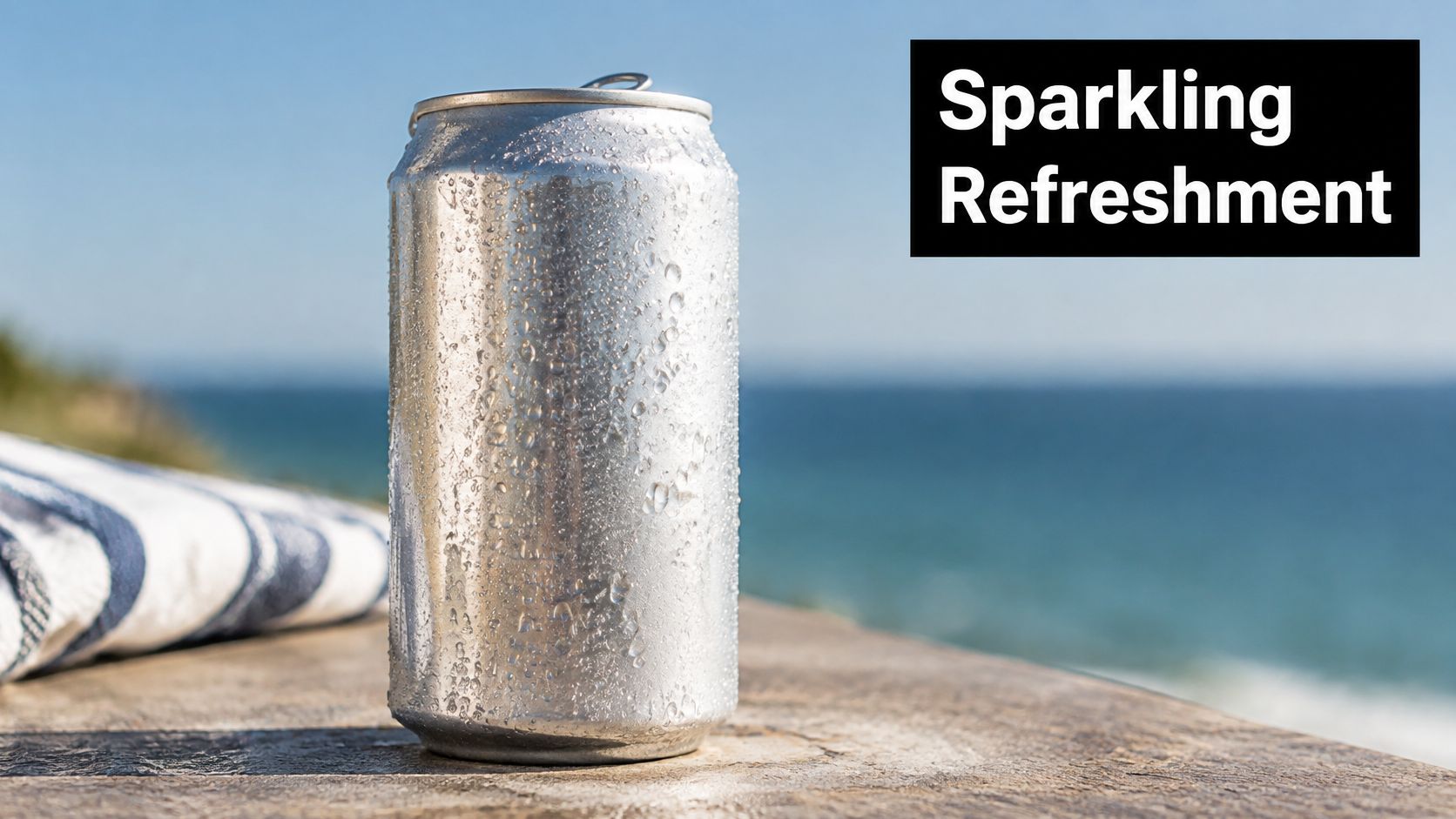
Bubly and LaCroix are recognizable examples to evaluate. Consumers in a U.S. beverage-industry survey reported a 16% increase in spending on seltzers and sparkling non-alcoholic beverages, according to Simon-Kucher's beverage-industry insights. That supports testing the category, not filling a machine with every available flavor.
Keep Flavor Variety Under Control
For an office break room, start with familiar citrus or berry profiles and place them near water and sugar-free soda. Store unopened cans according to package directions, protect them from freezing, and verify that the can dimensions match the vending column.
Sparkling water can support a higher selling price than basic water, but flavor fragmentation can leave you holding slow inventory. Replace weak sellers rather than continually adding choices.
Rotation: Compare sales by flavor before reordering cases.
Positioning: Make unsweetened products easy to distinguish from sweetened sparkling drinks.
Alternatives: Consider whether customers prefer packaged sparkling water or water-flavoring options.
The best assortment gives customers meaningful choices without turning the stockroom into a collection of unfinished cases.
3. Ready-to-Drink Coffee and Cold Brew
At an early-opening office or an airport staff lounge, a sealed coffee drink solves a specific problem: coffee without waiting for a fresh pot. Starbucks bottled Frappuccino, Dunkin' bottled coffee, and Chameleon cold brew illustrate different styles, from sweet dairy-based drinks to coffee-forward alternatives.
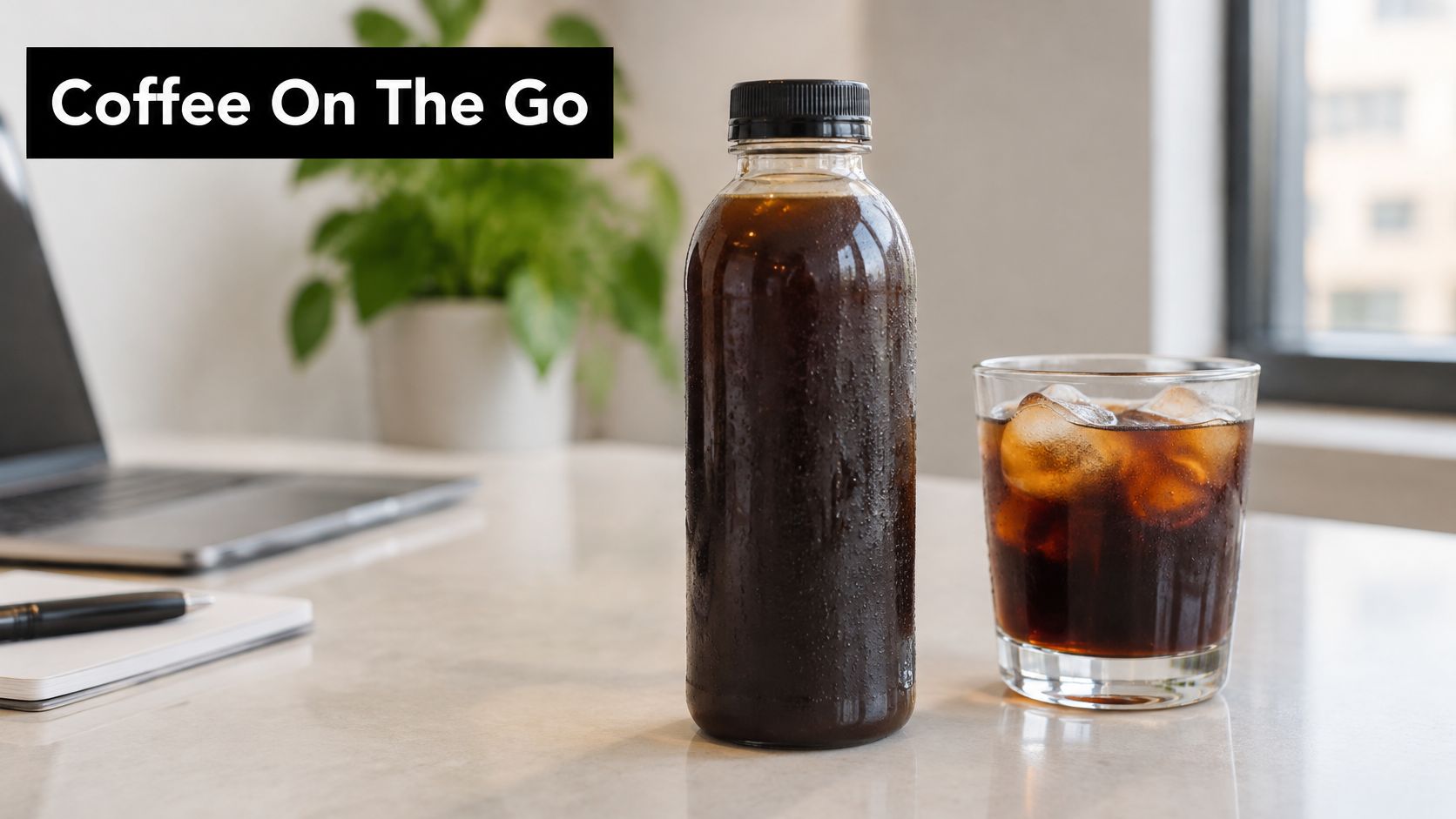
Don't treat those products as interchangeable. Sugar, dairy, caffeine, package dimensions, and storage requirements differ. Some unopened products are shelf-stable; others require continuous refrigeration, so classify each product from its label before loading it.
Charge for Convenience, Protect Against Waste
Ready-to-drink coffee can support premium pricing, but purchase cost and expiration losses can erase the advantage. Use refrigerated beverage equipment for chilled service, rotate by earliest expiration, and avoid deep inventory until demand is established.
For a healthcare staff room, a practical mix might pair a familiar sweet coffee with an unsweetened dairy-free choice. Confirm the labels rather than assuming black coffee branding guarantees a particular formulation.
The distinction between iced coffee and cold brew helps explain flavor expectations. Cartograph Coffee's discussion of coffee convenience also offers context for the canned-coffee format. Stock the style customers request, not just the brand they recognize.
4. Canned and Bottled Iced Tea
Iced tea provides a middle ground between plain water and strongly flavored specialty drinks. Lipton and Pure Leaf are useful examples, but sweetened and unsweetened tea should be treated as different purchasing decisions, not minor variations.
For a business center, pair a familiar sweet tea with an unsweetened option. A school staff lounge might favor a straightforward lemon tea, while a stadium employee break area could test peach alongside its established selections.
Storage: Shelf-stable sealed tea can simplify backstock, but check each product's instructions.
Dispensing: Verify bottle height, neck shape, and package weight before assigning a column.
Pricing: Compare landed cost across cans and bottles instead of assuming the larger-looking package provides the better margin.
Tea doesn't need a sprawling flavor range to sell. Extra flavors divide demand and occupy slots that could hold more of the products customers already buy.
Don't Confuse Tea With a Nutrition Claim
Check sugar and caffeine on the actual package. Unsweetened tea and sweet tea may share a brand name while serving very different preferences, and caffeine content varies by formulation.
For employees asking whether tea fits their everyday fluid choices, provide clear product information and context through tea and hydration. During warmer weather, test additional stock only when sales justify it. Seasonal expectations shouldn't override what remains in the machine.
5. Sports Drinks and Electrolyte Beverages
Sports drinks make the strongest stocking case where people are physically active. A manufacturing break area, stadium operations room, or athletic facility gives Gatorade and Powerade a clearer purpose than a desk-based office does.
These beverages contain electrolytes, but formulations differ in sugar, sodium, and other ingredients. Don't present every electrolyte drink as necessary for every employee, and don't position vending as a substitute for a workplace heat-safety program.
Match the Drink to the Shift
Say a manufacturing site has active production employees and administrative staff sharing a break room. A conventional sports drink and a zero-sugar alternative can address different preferences without forcing everyone toward the same formulation.
Placement: Keep the category visible near water in physically active settings.
Flavor selection: Test familiar options such as lemon-lime or orange before adding unusual flavors.
Storage: Use label-approved backstock conditions and chill for service where appropriate.
The trade-off is capacity. A broad sports-drink lineup can displace water or other daily sellers, while bulky bottles may require specific machine settings.
Stocking judgment: Give electrolyte drinks more space when customers buy them for the setting, not simply because the label suggests performance.
For related reading, hydration guidance for athletes and professionals discusses the category. Keep point-of-purchase language factual, with no promises that a drink prevents heat illness or replaces individualized medical advice.
6. Energy Drinks
Energy drinks can deliver an attractive selling price, but a high ticket price isn't the same as a strong margin. Red Bull and Monster Energy also carry meaningful purchasing costs, and an oversized selection can tie up cash in slow flavors.
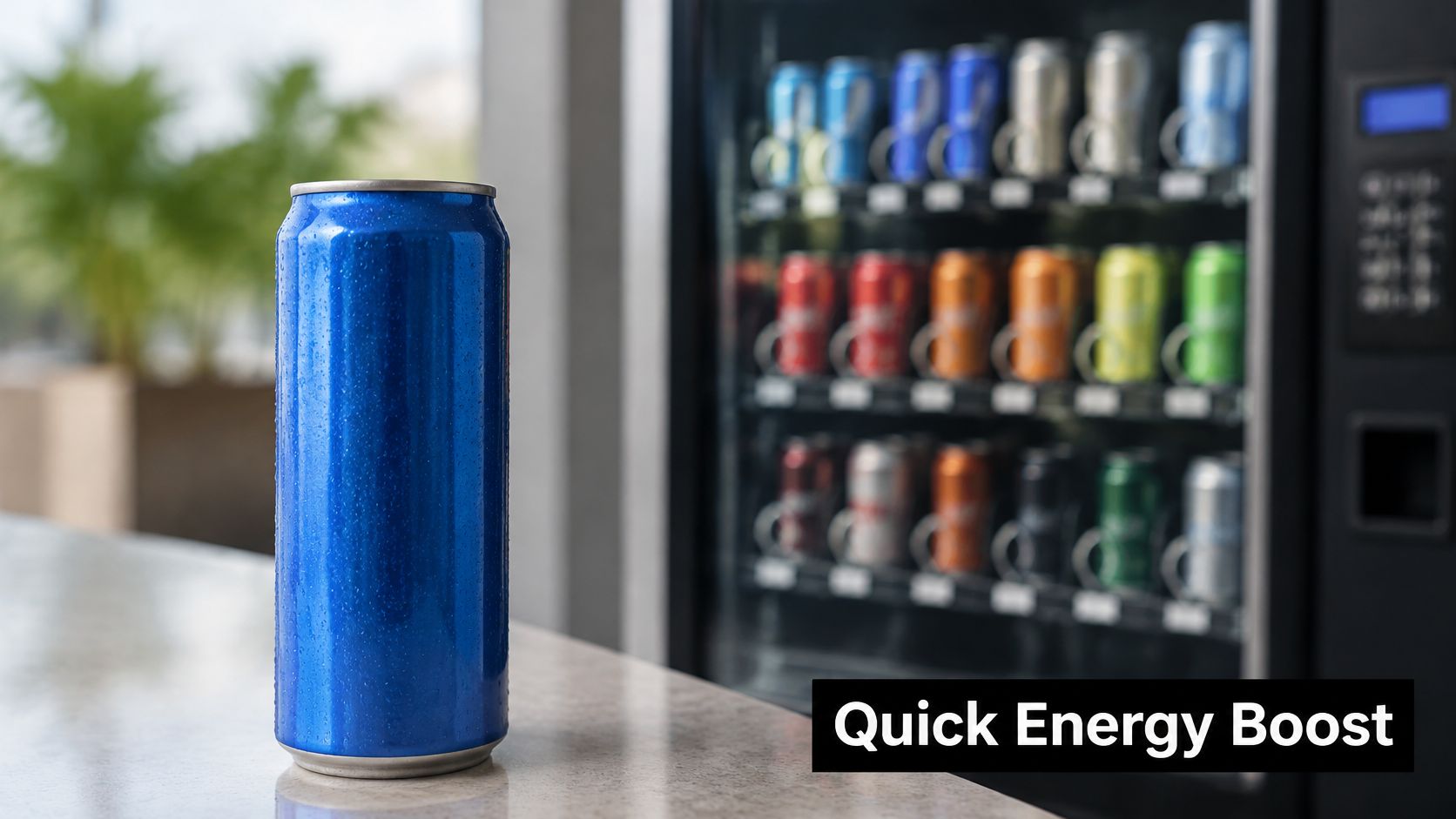
An adult manufacturing shift-change area or call-center break room is a reasonable place to test demand. A youth-focused school area isn't. In healthcare settings, make caffeine-free alternatives equally easy to find rather than treating energy drinks as the default late-shift choice.
Separate Caffeine From the Marketing
Caffeine, sugar, taurine, and added vitamins aren't interchangeable ingredients. Show caffeine information from the package and avoid claims that a product guarantees focus, safe driving, or better work performance.
Selection clarity: Give regular and sugar-free versions separate, clearly identified selections.
Package fit: Confirm tall cans dispense correctly before committing a column.
Backstock: Protect cans from heat and freezing, following product storage directions.
Mixing regular and sugar-free cans behind the same selection creates an avoidable customer-service problem. Buyers should receive the formulation they selected.
For a brand-specific stocking discussion, see Monster drink vending machine options. Start with recognizable products, then let repeat purchases determine which flavors deserve permanent space.
7. Coconut Water
Coconut water is a specialty hydration choice, not a replacement for the water anchor. Vita Coco is an example worth considering where employees specifically request it, such as a wellness-oriented office, hospital staff area, or airport workplace.
The main stocking risk is assuming wellness interest automatically translates into repeat purchases. In an office with limited demand, a premium coconut-water bottle may occupy valuable space longer than a basic water or tea.
Test Demand Before Buying Deep
Choose a clearly labeled formulation and compare added sugar, serving size, and ingredients. Don't assume every coconut-water drink has the same composition, and don't describe it as nutritionally interchangeable with a sports drink.
Shelf-stable cartons and bottles can simplify unopened storage, but the package controls the handling requirements. Test cartons carefully because lightweight or flexible packaging may behave differently from rigid bottles in a dispensing mechanism.
Placement: Group coconut water near still and sparkling water so customers can compare.
Margin: Include higher acquisition cost and possible markdowns when judging profitability.
Rotation: Use earliest-expiring stock first and reduce orders when demand softens.
For a hospital staff lounge, start with a modest allocation beside familiar drinks. Keep it if customers buy it consistently; replace it if it becomes a permanent display.
A specialty drink earns space through purchases, not through a wellness label. Avoid paying for premium inventory that the location's customers don't value enough to buy.
8. Kombucha
Kombucha brings a tangy fermented-tea option to a refrigerated assortment. GT's Kombucha, Health-Ade, and KeVita illustrate the range customers may recognize, although individual products can differ substantially in formulation and handling.
In a college staff lounge or wellness-focused corporate office, kombucha can differentiate a chilled selection from conventional bottle-and-can vending. It also introduces more operational work than shelf-stable water.
A premium refrigerated drink only makes sense when the machine, service routine, and customer demand can support it.
Treat Refrigeration as Part of the Product Cost
Follow the package's refrigeration instructions throughout receiving, storage, transport, and vending. Check machine temperature consistency, keep expiration dates visible during loading, and protect bottles from rough dispensing.
Ginger or berry can provide an approachable starting point without dividing demand across too many flavors. Glass bottles, where used, need equipment designed to handle them safely.
Customer fit: Test where people already request fermented beverages.
Label review: Check caffeine, sugar, alcohol labeling, and any live-culture statements.
Profitability: Include refrigeration, handling, and unsold inventory in the margin calculation.
Don't promise digestive improvements or assume every kombucha contains the same live cultures. Sell the actual drink, not an unsupported health outcome.
For a visual introduction to the category, watch the video below.
9. 100% Fruit Juice and Juice Boxes
Fruit juice, juice drinks, and juice cocktails aren't interchangeable. If the assortment promises 100% juice, verify that wording on the actual package rather than relying on fruit pictures or a familiar brand.
Minute Maid and Capri Sun offer products worth evaluating by formulation and format. Naked Juice bottles represent a different stocking decision from shelf-stable juice boxes, particularly where the chosen product requires refrigeration.
Put Family Demand Ahead of Assumptions
An apartment community room may benefit from familiar apple or orange juice because adults and children share the space. In a school, product selection must also fit the institution's nutrition and purchasing requirements.
Package handling: Test boxes and pouches in compatible equipment rather than forcing them into bottle columns.
Storage: Separate shelf-stable products from refrigerated juices in both backstock and loading routines.
Nutrition: Distinguish no added sugar from low total sugar; they don't mean the same thing.
Juice boxes can offer convenient portions, but package damage and dispensing problems can undermine the margin. For refrigerated blends, order conservatively until sales establish a reliable replenishment pattern.
Related wellness beverages, including those discussed in organic aloe vera juice for daily wellness, should remain a separate stocking decision. They aren't substitutes for accurately labeled fruit juice. Keep the everyday selection familiar before testing specialty alternatives.
10. Ready-to-Drink Protein Shakes
For an employee who wants something more substantial than a soft drink, ready-to-drink protein shakes offer a different use case. Fairlife and Premier Protein are examples to compare for protein content, ingredients, allergens, package size, and storage instructions.
A gym-connected workplace, stadium staff area, or manufacturing break room can be a suitable test location. In a corporate office, demand may depend on whether employees want a shake during a break rather than another snack.
Sell Convenience Without Overpromising
A protein shake isn't automatically a complete meal replacement. Review the whole nutrition label before describing its role, and make milk or other allergen information easy to access.
Some products are shelf-stable unopened; others require refrigeration. Use the exact formulation's instructions, not assumptions based on another product from the same brand.
Placement: Position shakes near compatible fitness-oriented snacks or more substantial food choices.
Inventory: Start with familiar flavors such as chocolate or vanilla and expand only after repeat sales.
Margin: Weigh premium selling prices against acquisition cost, slow turnover, and expiry risk.
Say a manufacturing location sells shakes mainly during morning breaks. Give that demand enough stock, but don't duplicate flavors across multiple selections without evidence of stockouts.
The operational advantage is convenience: a sealed, portable option without mixing powder or washing a shaker. Its place in the machine still depends on whether customers will buy it regularly.
Beverage Examples Compared
A vending menu must fit the machine's storage setup and the way people use the space. The table compares common beverage sizes, storage needs, sugar levels, and settings where each option may suit the audience.
Beverage | Typical Size | Storage Requirement | Sugar Level | Best Vending Setting |
|---|---|---|---|---|
Bottled Water (Still and Purified) | 12, 16.9, or 20 oz | Shelf-stable | Zero sugar | Offices, hospitals, and clinics |
Sparkling and Flavored Sparkling Water | 12 oz cans | Shelf-stable | Zero or minimal sugar | Offices and grab-and-go coolers |
Ready-to-Drink Coffee and Cold Brew | 9–12 oz bottles or cans | Shelf-stable or refrigerated, depending on product | Sweetened or sugar-free options | Offices, healthcare settings, and airports |
Canned and Bottled Iced Tea | 12 oz cans or 16–20 oz bottles | Usually shelf-stable | Sweetened or unsweetened | Corporate and school vending |
Sports Drinks and Electrolyte Beverages | Typically 20 oz bottles | Shelf-stable | Often added sugar; reduced-sugar options available | Manufacturing sites, stadiums, and athletic facilities |
Energy Drinks | 8.4–16 oz cans | Shelf-stable | Sweetened or sugar-free options | Manufacturing sites, call centers, and late-shift workplaces |
Coconut Water | 11–17 oz cartons or bottles | Usually shelf-stable | Lower than most juices and sports drinks | Healthcare, wellness areas, and airports |
Kombucha | 12–16 oz bottles | Refrigerated | Small amounts of natural sugar | Wellness-focused workplaces, colleges, and healthcare facilities |
100% Fruit Juice and Juice Boxes | 6.75–12 oz boxes or bottles | Shelf-stable | Natural fruit sugars | Schools and family-focused residential settings |
Ready-to-Drink Protein Shakes | 11–14 oz bottles | Shelf-stable or refrigerated, depending on product | Often sweetened; reduced-sugar versions available | Gyms, stadiums, and workplace wellness areas |
Storage affects both machine choice and product handling. Shelf-stable cans and cartons offer more flexibility, while refrigerated drinks require suitable equipment and attention to expiry dates. Coffee and protein shakes vary by product, so follow each package's storage instructions.
Sugar preferences also call for a mix rather than a single default. Stock sweetened choices alongside unsweetened or reduced-sugar options where available, and use sales to judge which selections earn their space. For chilled drinks, balance potential margin against refrigeration needs and the risk of slower turnover.
Turn These Beverage Examples Into a Smarter Break Room
The best beverage assortment isn't the one with the most categories. It's the one that matches the people using the machine, stays available, and earns enough to support dependable service. Water provides the foundation, familiar coffee and tea cover everyday preferences, and specialty chilled drinks belong where customers demonstrate premium demand.
Build the menu around actual workplace routines. An office needs a different balance from an industrial site, and a teacher lounge shouldn't automatically copy a student-facing assortment. Apartment community areas need their own mix of portability, familiar flavors, and family preferences.
Measure Purchases, Not Just Requests
Employee feedback helps identify gaps, but sales show whether customers keep choosing a product. Track units sold, stockouts, expiration losses, and gross profit after product cost. Then consider the service burden, because a fragile refrigerated bottle requires different handling from a shelf-stable can.
A UK public-sector vending pilot evaluation reported that average sugar per unit sold declined by 35% after nutritional standards and assortment changes. The practical lesson is to measure what customers purchase, not merely count the healthier labels on display.
Keep dependable sellers available: Don't sacrifice water capacity for an unproven specialty flavor.
Test substitutions deliberately: Replace weak products, record the change, and compare purchasing patterns.
Match equipment to handling: Refrigerated drinks need appropriate temperature control, while packages need compatible dispensing.
Across Oklahoma, we customize menus for each location rather than assigning every break room the same lineup. Vendmoore Enterprises stocks Coca-Cola, Pepsi, iced coffees and teas alongside snacks and breakfast, lunch, and dinner items. Our equipment includes the BC10 Bottle & Can Vendor, Trimline II Refreshment Center, Compact 23/10 Refreshment Center, MPZ Frozen Food, and 40-Select Dual Zone Chill Center, allowing the equipment plan to reflect beverage storage requirements and the broader food assortment.
Our full-service vending covers stocking, service, and support, so managing refreshments doesn't become another task for the office manager or property team. For workplaces in Oklahoma City, Norman, Edmond, and surrounding communities, the useful starting point is a beverage plan based on who uses the space, what they want, and what the equipment can handle reliably.
Vendmoore Enterprises offers customized break room vending with stocking, service, and support for Oklahoma workplaces and community spaces. Visit Vendmoore Enterprises to request a beverage plan matched to your employees, available space, and mix of everyday and specialty drinks.
Comments