
Office Machines List: 8 Smart Picks for Break Rooms

What do you put in a break room with eleven feet of wall, one working outlet, and forty people who all want something different at two in the afternoon?
Most office machines lists answer a different question. They sort equipment by category, with printers in one section and vending machines in a lump at the end, which gives you a catalog instead of a decision. Nobody buying for a break room needs a category. They need a machine that solves the problem in front of them: not enough floor space, cold drinks gone by Thursday, no fresh food after the cafeteria closes, or a second shift eating dinner at eleven at night.
Office machines have always been adopted for that reason. The typewriter spread through American offices after its commercial debut in 1874, in large part because typing was estimated to be roughly five times faster than handwriting and produced more uniform, legible text, as this history of office machinery documents. Speed and consistency won then. Footprint, uptime, and payment options win now.
So this office machines list is organized by problem. It covers eight machine types, from compact refreshment centers and bottle-and-can vendors through dual-zone chill centers, frozen food machines, smart connected units, coffee vendors, healthy snack machines, and full micro markets. Each entry explains the problem it solves, the trade-off it carries, and how to run it well. Use the comparison table to shortlist, then the tips to size the choice to your building.
1. Compact Refreshment Center for Break Rooms
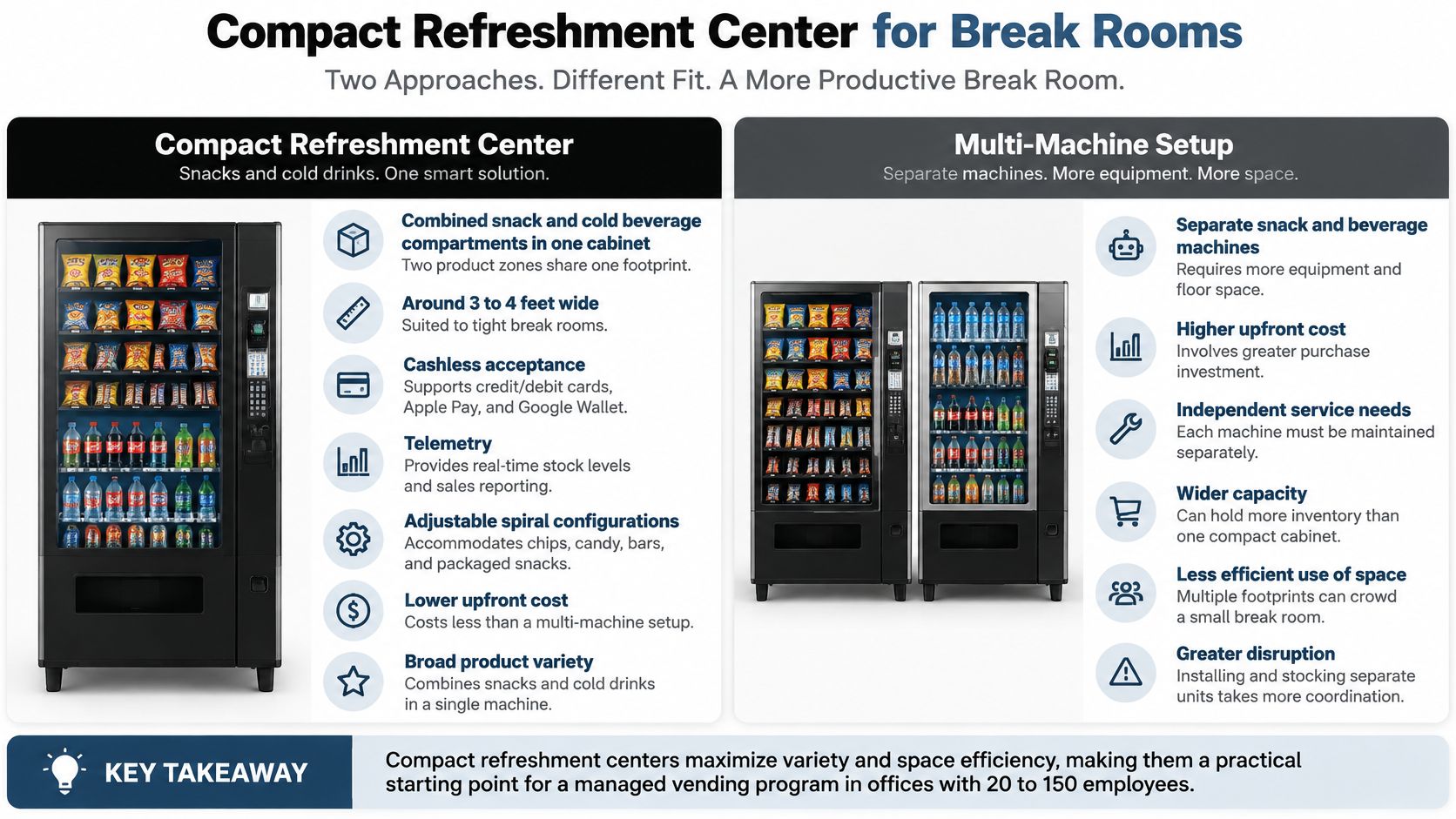
A compact refreshment center puts a snack spiral vendor and a cold drink cooler in one cabinet. A user keys in a code or taps a screen, and a spiral or drop mechanism releases the snack while the cooler side dispenses bottles and cans. It's the default first machine for a room serving 20 to 150 people, because it delivers both categories without eating floor area.
Say a 60-person accounting firm in Oklahoma City clears out two mismatched snack bowls and a failing office fridge, then puts a single combo unit against the wall outside the copy room. The assortment goes from whatever an office manager remembered to buy to a stocked, priced, rotating selection. A medical office in Edmond runs the same setup with rotations chosen from a monthly staff survey, and the machine keeps selling because the mix keeps changing.
Setup checks that prevent callbacks
Measure the wall, the door swing, and the outlet. Confirm clearance for the door to open fully and space for a person to stand back with a bag in hand.
Read the sales data every four to six weeks. Pull the two slowest rows and replace them, rather than waiting for a quarterly reset.
Ask for requests once a month. A two-question survey on the break room board beats guessing at what people want.
Restock during quiet hours. Early morning or right after lunch keeps the aisle clear and the machine full when traffic hits.
The room usually exists already. A Staples survey of office workers found that 91% of employer organizations provided a break room or kitchenette, and that 57% of workers preferred healthier snacks such as granola bars, against 10% who preferred candy or chips (Staples break room report). That split belongs in the planogram: nuts, bars, and baked chips across several rows, candy in one.
If the break room doubles as a client or hospitality space, noise matters as much as capacity, and this comparison of quiet minibar fridges explains which cooling designs stay silent overnight.
2. Bottle-and-Can Vending Machine
Beverages move faster than snacks in most break rooms, and a bottle-and-can vendor is built for that demand in a way that a combo unit's cooler side isn't. These machines use a front-loading glass door with internal refrigeration and either gravity-fed shelves or spirals, so you can load tall bottles, cans, and sports bottles in the same cabinet.
Placement matters more than the machine
A manufacturing site in Norman puts a beverage vendor in the production floor break area and stocks water and electrolyte drinks next to the soda, because the people using it are replacing fluids rather than chasing a treat. A community college in the Oklahoma City metro runs a beverage unit in its student lounge with rotating sparkling water, which outperforms the same machine's plain water by a wide margin.
A glass-front cooler in direct afternoon sun will run its compressor harder all summer and still struggle to hold temperature. Shade is a specification, not a preference.
Payment shapes sales here too, because beverage purchases are small, fast, and often made one-handed. A 451 Research study found that 53% of U.S. consumers preferred contactless in-store payments, rising to 65% among Generation Z consumers, with tap-to-pay cards the preferred method for 36% of respondents (451 Research).
Stock roughly 60% core brands and 40% rotating. Core brands carry predictable volume; the rotating slot keeps regulars checking the machine.
Watch temperature alerts through telemetry. Catch a failing compressor before a full cabinet spoils overnight.
Pair the unit with a snack machine. Combined purchases lift the whole bank; put them side by side, not across the room.
Test premium drinks carefully. Before you commit a shelf to a better-for-you brand with short code dates, find certified organic kombucha details so you know what you're taking on.
3. Dual-Zone Chill Center
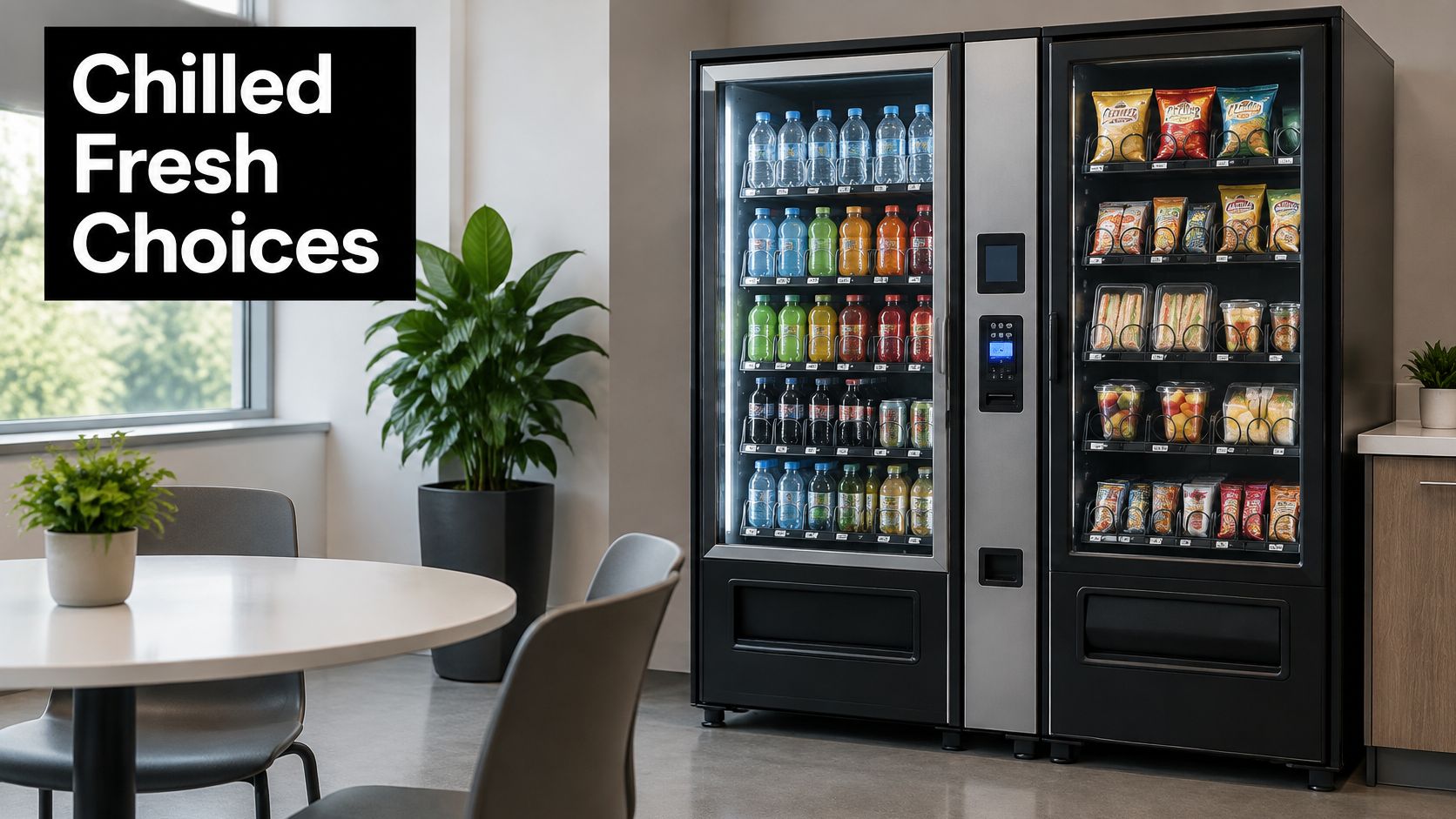
Two independently controlled temperature zones in one cabinet solve a specific problem. You want ready-to-eat food on site, and you don't have room for a separate refrigerated case beside a separate snack machine. One zone holds cold beverages, the other runs warmer for yogurt, fruit cups, sandwiches, cheese packs, and anything else that can't sit at beverage temperature.
A hospital outpatient clinic in Oklahoma City uses a dual-zone unit to keep yogurt, fruit cups, and cold sandwiches available to staff working long shifts, when the cafeteria is closed and nobody wants to leave the building. A corporate campus in Edmond added one to its main break room and saw lunch-hour sales climb once fresh options appeared next to the drinks.
Fresh food changes the labor, not just the menu
More perishable product means more work. The cabinet is simple; the discipline around it isn't.
Verify the cold zone with a thermometer during the first week. Don't trust the display alone on a new install.
Rotate perishables at least twice a week. Short-date items need a fixed rotation day, not a calendar reminder someone ignores.
Label nutrition information on the front of the machine. People buy what they can read at a glance, especially in a healthcare setting.
Confirm electrical capacity before installation. Dual-zone units draw more power than a single-compartment cooler, and a shared circuit will trip.
The payoff is social as much as nutritional. Compass Group's 2023 Global Eating at Work Survey, covering 35,000 workers across 26 countries, found that 85% believed regular workday breaks improved overall productivity, and that 70% of workers in workplaces with an advanced food offering ate lunch with colleagues, compared with 38% where no food or drink facilities were provided (Compass Group).
4. Frozen Food Vending Machine
A frozen food machine answers a schedule problem, not a snack problem. It stores and dispenses meals, frozen burritos, pizza-style items, ice cream, and desserts at sub-freezing temperature using spirals or drawers inside an insulated freezer compartment. For a plant running second and third shifts, or a hospital unit where breaks land at three in the morning, it turns "nothing's open" into a hot meal in four minutes.
A manufacturing plant in Norman installed a frozen meal unit near its second-shift break area so overnight staff could eat without driving into town. A healthcare facility placed one beside the staff microwave station for nurses on extended shifts. Both work for the same reason: the machine sits where the meal gets finished.
Put it next to the microwave, not in the lobby
Placement rule: a frozen meal nobody can heat is just a cold box. The microwave is part of the machine's specification, and the distance between the two decides whether the unit earns its footprint.
Keep it within a few steps of a microwave. Anything farther than that becomes a vending purchase people make once and regret.
Set power alerts through telemetry. A freezer that loses power overnight is a total loss by morning; an alert turns it into a service call.
Carry three categories. Meals, desserts, and snacks serve different moods and different break lengths, and the meal is what justifies the freezer.
Survey staff before you reset the mix. Regional preferences in frozen food are strong, and a bad rotation takes eight weeks to sell through.
If you're weighing freezer formats, this breakdown of frozen food vending machines covers the drawer versus spiral trade-off and what each one means at restock time.
5. Smart Connected Vending Machine with Telemetry
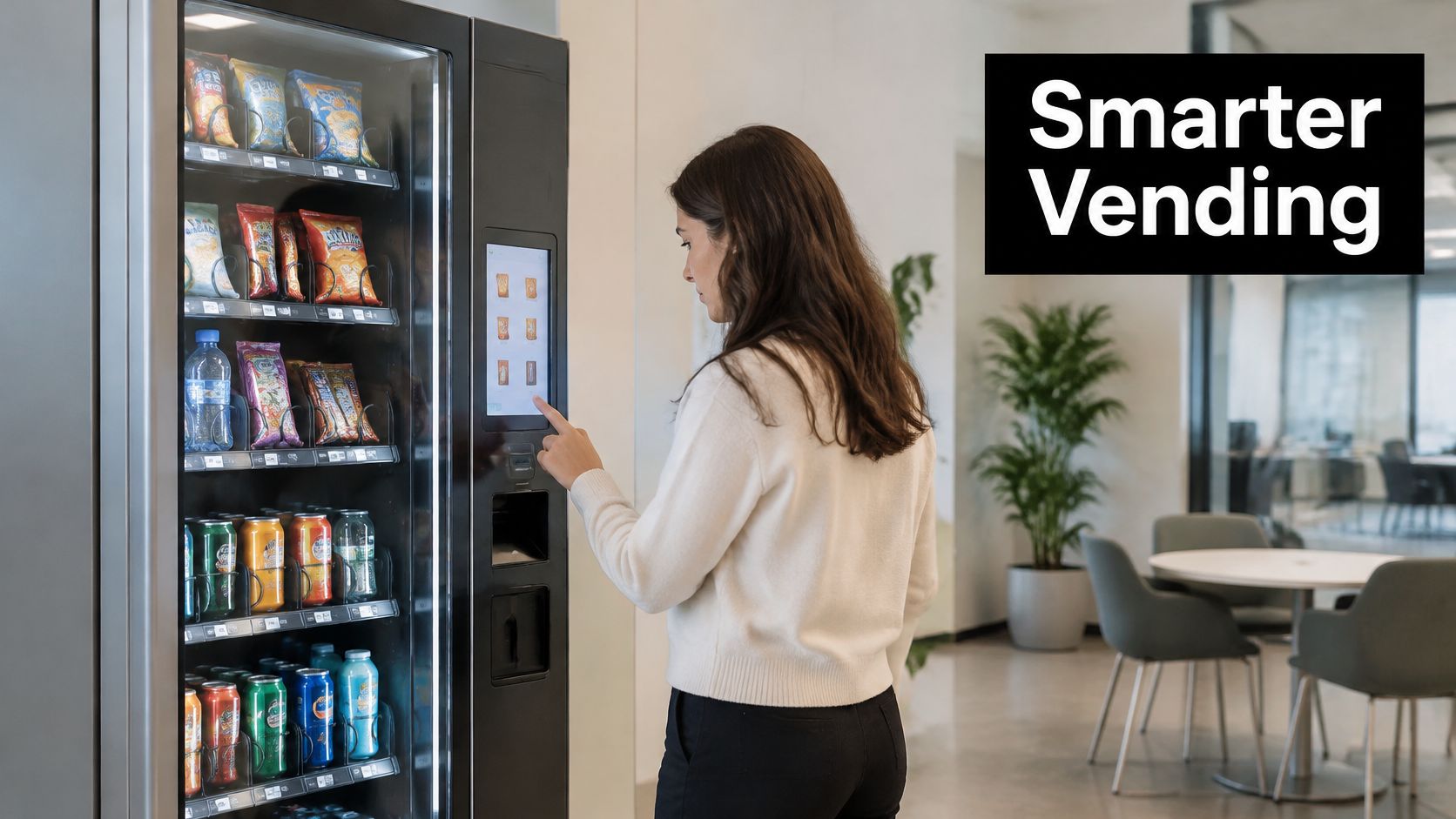
Sensors and a network connection turn a vending machine into a reporting device. It tracks inventory, sales by slot, cabinet temperature, and mechanical faults, then pushes that to a dashboard. The practical effect isn't novelty. Restocking runs on what sold instead of what an operator guesses from a windshield survey, and a failing compressor gets caught before a full cabinet of product spoils.
Downtime is what erodes trust in shared equipment. In a municipal print-environment assessment, only 59% of surveyed employees rated their shared devices 4 or 5 out of 5, and downtime was the leading operational complaint, ahead of slow output and toner problems (print optimization survey results). A vending program gets judged the same way. The machine that's out of order on Tuesday is the one people remember in December.
What telemetry actually changes
Confirm signal strength at the machine location. Interior break rooms, basements, and steel-framed plants are where connectivity drops and alerts stop arriving.
Review dashboards weekly for the first quarter. Early trends are where assortment changes pay, before habits harden.
Set low-stock thresholds on top sellers. The three items that empty first should never run dry during peak hours.
Run small promotions to build habit. Monthly prize draws and app-based offers pull people past the hesitation of trying a new machine.
Say an Oklahoma City office consolidates restocking into scheduled windows built on real sales data instead of fixed routes, and a corporate client in Edmond uses six months of slot data to justify expanding its assortment. Both outcomes come from reading the data, not from owning the hardware. The mechanics of telemetry data collection matter less than the habit of acting on it.
Connected machines also mean networked devices that IT will eventually ask about, and this guide to avoiding surprise software audits covers the asset-tracking basics before that conversation turns difficult.
6. Hot Beverage Coffee Vending Machine
Coffee is the machine everyone has an opinion about, and it's also the one that fails most visibly. A hot beverage vendor brews or mixes coffee, tea, hot chocolate, and soup from fresh grounds or powders through a water heater and a cup drop. Done right, it replaces the shared pot, the burned carafe, and the argument about whose turn it is to clean the break room sink.
A healthcare office in Oklahoma City swapped a shared coffee pot for a hot beverage vendor and cut both cleanup complaints and the mid-morning queue. A university student center in Norman runs a coffee station with multiple cup sizes and tea options to handle traffic that arrives in bursts between classes.
Maintenance is the product
Set a descaling and cleaning schedule with the operator. Every few weeks, on the calendar, not on request after someone complains about the taste.
Test water hardness and add filtration if the supply needs it. Hard water scales heaters and flattens flavor faster than any other failure mode.
Offer a premium and a standard tier. The gap costs you almost nothing and keeps the people who care about coffee from walking out to a drive-through.
Post clear cup-size instructions. Ambiguity at the selection screen produces more complaints than the drink itself.
Hot beverage equipment also sits near the top of the break room's plug load, which makes energy behavior a fair question at procurement time. ENERGY STAR reports that certified imaging equipment, a category covering printers, copiers, scanners, and multifunction devices, is on average 40% more energy-efficient than standard alternatives (ENERGY STAR imaging equipment), and the same scrutiny applied to heater idle time, standby draw, and overnight shutdown is worth applying to a coffee machine.
If you're comparing formats, this overview of coffee service machines walks through fresh-ground versus powdered systems and what each one demands in cleaning time.
7. Fresh Food and Healthy Snack Vending Machine
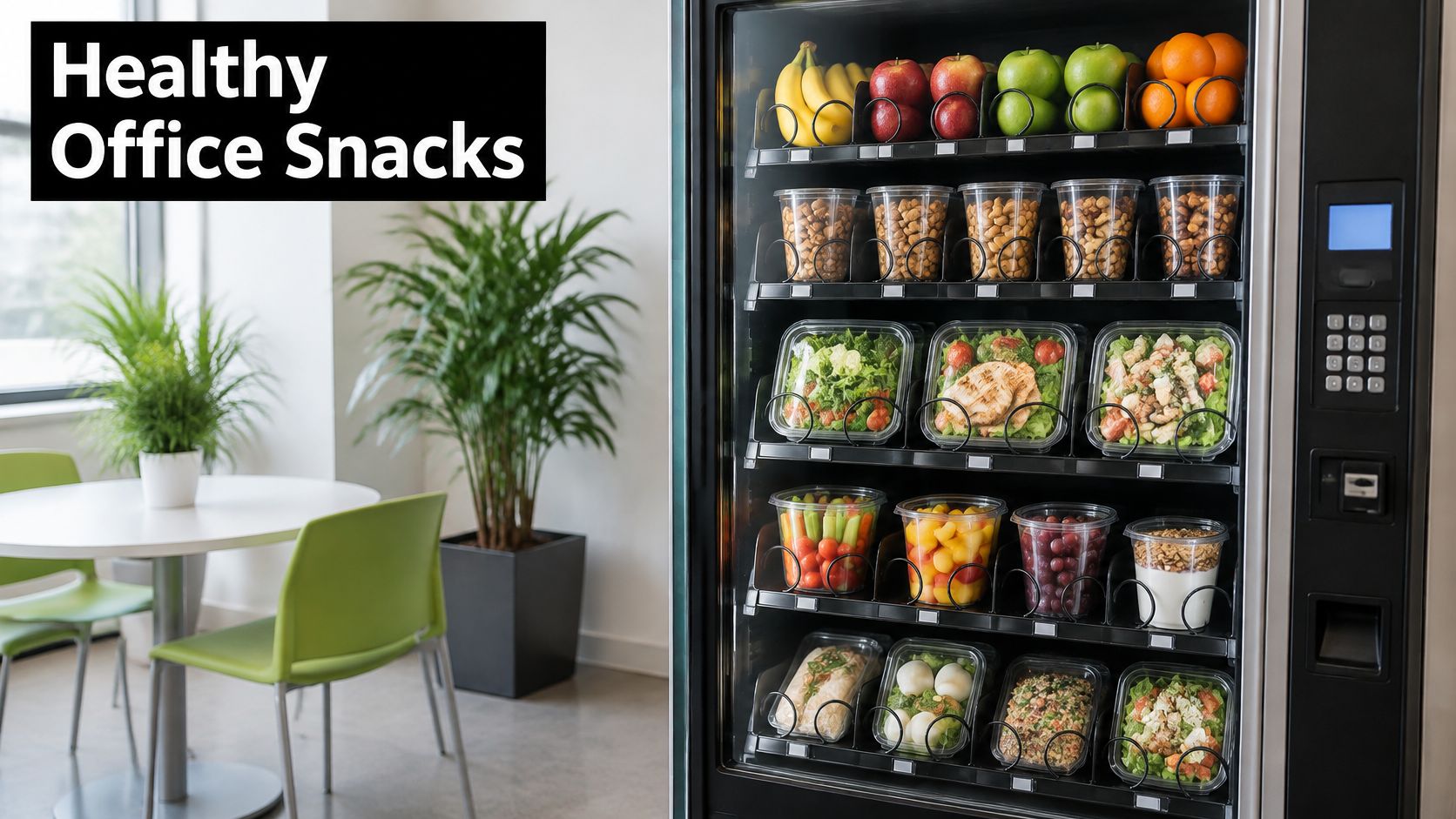
Healthy vending fails for one predictable reason. The machine gets stocked with what people think their coworkers should eat rather than what those coworkers buy. Units that work carry a deliberate mix: fresh fruit, single-serve salads and wraps, protein snacks, nuts, and whole-grain items, with at least one indulgent option so the machine doesn't read as a lecture.
Say a corporate wellness program in Edmond adds a nutrition-labeled healthy snack vendor to a break room that already has a candy-heavy combo unit. Engagement climbs among staff enrolled in the program because the healthy option is visible and labeled, not because the candy disappeared. A school district in the Oklahoma City metro runs the same approach in its staff lounge, pairing fresh fruit and protein snacks with the usual drinks.
Shrink is the hidden cost of fresh
Start narrow and expand on sales data. Three fresh SKUs, not fifteen, and add only what clears.
Put nutrition facts and calories on the machine front. Labeling does the selling that a product description can't.
Tie the assortment to wellness programming. A machine that shows up during a company health event gets tried; one that goes unnoticed doesn't.
Use expiration alerts to schedule rotation. Fresh product that expires on the shelf costs more than the sale it missed. Cut any item that fails to clear before its date twice in a row.
For the product side, this list of healthy grab and go snacks covers what holds up in a machine and what turns to mush by Thursday.
8. Micro Market (Unattended Self-Serve Retail Kiosk)
A micro market is a small unattended store: open coolers, snack shelving, a coffee station, and a self-checkout kiosk in a room or wide alcove. Customers pick items, scan them, and pay at the kiosk without staff involvement. It's the right answer when volume and variety outgrow a bank of machines, and the wrong answer for a 30-person office with a single hallway.
Say a large corporate campus in the Oklahoma City metro converts an underused conference room into a micro market with coffee, grab-and-go meals, and snacks. That room now covers breakfast and lunch without a cafeteria build-out. An airport concourse in the region uses the same model to serve travelers and staff across extended hours, when a staffed counter wouldn't stay open.
Build-out requirements that surprise people
Prove foot traffic before you build. Count transactions per occupied person over a month, not headcount on a roster.
Plan electrical, plumbing, and ventilation early. A room conversion looks cheap until it needs another circuit and a drain.
Reset shelf space quarterly. Slow categories should lose facings, not get a permanent home out of habit.
Phase the rollout. Open with coolers and snacks, then add coffee and hot food once volume holds through a full quarter.
Payment design isn't optional here, because a kiosk that only takes cash excludes most of its market. A 2025 payments analysis estimated that cash represented only 14% of all U.S. consumer payments in 2024, with mobile wallets and contactless cards absorbing the difference (Stripe payments analysis).
Start with one cooler, one shelf, and a kiosk. Prove the demand before you build the room around it.
For the operating model, this overview of unattended retail covers shrink control, kiosk placement, and restocking cadence.
Comparing the 8 Office Vending and Break Room Machines
Match the machine to the break room's main constraint: limited space, steady beverage demand, fresh food, or meals for workers outside standard hours. The table compares where each type fits, what it can stock, and the operational trade-offs to plan for.
Machine Type | Best For | Space Needed | Product Range | Key Consideration |
|---|---|---|---|---|
Compact Refreshment Center | Offices needing snacks and drinks in one unit | Small footprint; typically 3–4 feet wide | Packaged snacks and cold beverages | Saves space, but offers less capacity than a larger setup |
Bottle-and-Can Vending Machine | Break rooms and common areas with steady beverage demand | Space for one refrigerated machine | Bottled and canned beverages | Requires continuous refrigeration; snacks need a separate machine |
Dual-Zone Chill Center | Workplaces offering fresh options alongside cold drinks | Space for one refrigerated machine; confirm electrical capacity | Cold drinks and chilled foods such as yogurt, sandwiches, and cheese snacks | Perishables require temperature and expiration-date management |
Frozen Food Vending Machine | Facilities serving shift workers who need meals beyond standard hours | Space for a freezer machine, ideally near a microwave | Frozen meals, snacks, and desserts | Needs reliable power and nearby microwave access |
Smart Connected Vending Machine | Operators needing remote inventory, sales, and machine monitoring | Space for the selected vending machine and reliable connectivity | Snacks, drinks, or meals, depending on the machine it is built into | Check connectivity requirements, any subscription fees, and dashboard training |
Hot Beverage Coffee Vending Machine | Offices and high-traffic settings needing self-serve hot drinks | Space for a beverage machine; some models need a water line | Coffee, tea, hot chocolate, and sometimes soup | Requires regular cleaning and supply replenishment |
Fresh Food and Healthy Snack Vending Machine | Workplaces and schools offering fresh and balanced options | Space for a vending machine; refrigeration may be needed | Fresh fruit, salads, wraps, nuts, and other healthy snacks | Short shelf life can require more frequent restocking and create waste |
Micro Market | Large campuses and high-traffic facilities needing broad selection | Significant space for shelves, coolers, and checkout | Snacks, chilled foods, drinks, and coffee | Requires more space, investment, and security controls |
For a tight break room, a compact center combines snacks and beverages in one footprint, with lower capacity as the trade-off. Beverage-heavy traffic points to a bottle-and-can unit, while fresh choices call for chilled storage and closer perishables management. Frozen meals suit after-hours demand, provided workers can reach a microwave. Connected features add remote visibility, but require dependable connectivity and an operating plan for the dashboard.
Matching the Right Machine to Your Oklahoma Workplace
Work backward from the room. Headcount and traffic set capacity, and the shape of the workday sets the mix. A single-site office with 40 people and one wall of space needs one machine that covers snacks and drinks, not four that each do a little. A three-shift plant needs refrigeration and meals running around the clock, plus a microwave within arm's reach of anything frozen.
A short decision path
Under 40 people with limited wall space. A compact refreshment center covers both categories in one footprint and expands later if volume justifies it.
Beverage-heavy traffic. Lead with a bottle-and-can vendor and place a snack unit beside it so the two sell each other.
Fresh food demand with no cafeteria. A dual-zone chill center for ready-to-eat items, or a frozen machine if the meal needs heating.
High volume and varied needs. A micro market, phased in rather than built all at once.
Two features belong in every new installation regardless of type: remote monitoring and cashless payment. Machines that report their own inventory and temperature save service trips and prevent the empty-slot Tuesday that makes people stop walking over. Card and mobile acceptance removes the biggest friction point at the point of sale, and it matters most in unattended locations where nobody is standing by to make change.
Start compact, then let data drive expansion. Six to eight weeks of sales data tells you more about what your people want than any planning meeting, and it tells you where to add capacity rather than guessing at it.
For Oklahoma readers, Vendmoore Enterprises runs a free vending service across the OKC metro, including Moore, Norman, and Edmond, and customizes each machine's menu to the location, stocking Coca-Cola, Pepsi, iced coffees and teas, snacks, and breakfast, lunch, and dinner items. The machines accept Apple Pay, Google Wallet, credit and debit cards, and cash, so nobody gets stranded without the right payment method. You can request a break room plan for your building and compare formats against your actual headcount.
The best office machines list is the one matched to how your people actually use the break room.
Vendmoore Enterprises installs and services vending machines for office break rooms, teacher lounges, and community spaces throughout the Oklahoma City metro, with cashless payment, remote monitoring, and menus built around each location's traffic. If this office machines list gave you a shortlist, the next step is a walkthrough of your space and a stocking plan sized to it. Visit Vendmoore Enterprises to request a break room plan.
Comments